
I’ve been welding for years, and one question I hear all the time from folks just starting out is, “What’s the easiest welding process to learn?” It’s a great question, because welding can feel intimidating with all the equipment, techniques, and safety precautions involved.
Based on my experience teaching new welders, I’m excited to share why I believe MIG (Metal Inert Gas) welding is the easiest process for beginners to pick up.
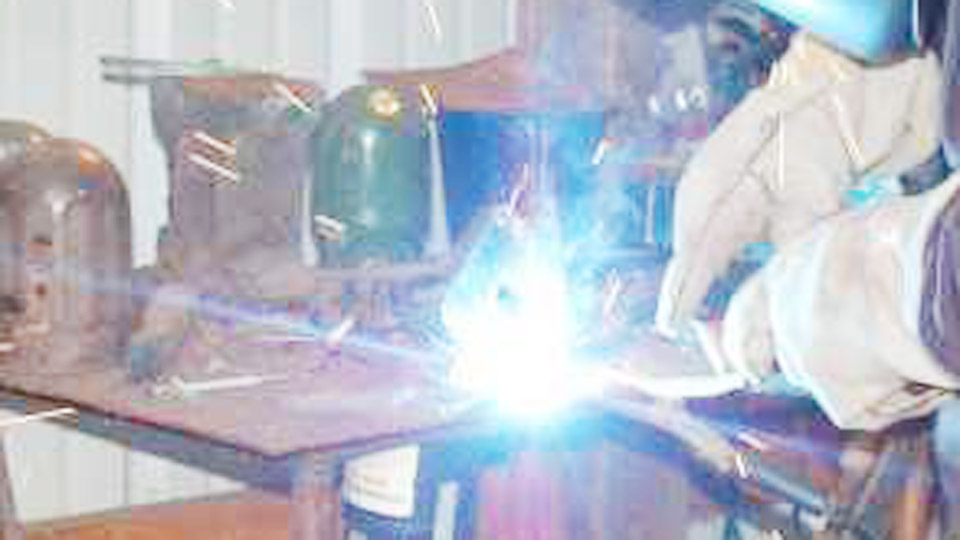
Photo by homestead
I’ll break down why MIG stands out, compare it to other common welding methods, and give you practical tips to get started. If you’re looking to fix a fence or dive into a welding career, let’s explore the simplest way to get welding.
Why MIG Welding Is the Easiest to Learn
MIG welding, also called Gas Metal Arc Welding (GMAW), uses a welding gun that feeds a continuous wire electrode through a spool while shielding the weld with an inert gas, like argon or a CO2 mix. The process is straightforward, forgiving, and versatile, making it perfect for beginners. Here’s why I think MIG is the easiest:
Simple Setup
You set your machine’s voltage and wire feed speed, pull the trigger, and start welding. There’s no need to constantly adjust electrodes or rods like in other processes.
Forgiving Technique
MIG allows you to focus on guiding the gun rather than mastering complex hand movements. Small mistakes in angle or speed are less likely to ruin the weld.
Automatic Wire Feed
The machine feeds the wire at a steady rate, so you don’t have to manually insert filler material, unlike stick or TIG welding.
Versatile Materials
MIG works on steel, stainless steel, and aluminum, so you can tackle a variety of projects without learning multiple processes.
Fast Learning Curve
I’ve seen beginners produce decent welds after just a few hours of practice, compared to weeks for TIG or stick.
When I started welding, MIG was my first process, and I was hooked after my first bead. It felt like drawing with a hot glue gun—simple but satisfying!
Comparing MIG to Other Welding Processes
To understand why MIG is the easiest, let’s look at how it stacks up against other common welding processes: Stick (SMAW), TIG (GTAW), and Flux-Cored Arc Welding (FCAW).
| Process | Difficulty Level | Why It’s Easy or Hard | Best For |
|---|---|---|---|
| MIG (GMAW) | Easy | Simple setup, automatic wire feed, forgiving technique, works on many metals. | Beginners, automotive, home repairs. |
| Stick (SMAW) | Moderate | Requires frequent rod changes, harder to control arc, slag cleanup needed. | Outdoor welding, construction, repairs. |
| TIG (GTAW) | Hard | Needs precise hand coordination, manual filler rod feeding, steep learning curve. | Precision work, aluminum, thin metals. |
| Flux-Cored (FCAW) | Moderate | Similar to MIG but no gas needed, can be messier, less forgiving than MIG. | Outdoor welding, thicker metals. |
Stick Welding
Stick is rugged and great for outdoor work, but it’s trickier for beginners. You need to strike and maintain an arc, change rods often, and chip away slag (the crusty coating over the weld). I struggled with arc control when I first tried stick—it’s less forgiving than MIG.
TIG Welding
TIG is the most challenging because it requires using both hands—one to hold the torch and one to feed a filler rod—while controlling a foot pedal for amperage. It took me months to get decent TIG welds, but with MIG, I was welding passably in a weekend.
Flux-Cored Welding
Flux-cored is like MIG but uses a wire with a flux core, so you don’t need shielding gas. It’s good for windy conditions, but the welds can be messier, and it’s slightly harder to control than MIG.
MIG’s simplicity and clean welds make it the clear winner for beginners. You can focus on learning the basics without getting bogged down by complex techniques.
What Makes MIG Welding Beginner-Friendly?
Let’s dive deeper into why MIG is so approachable based on my own time in the shop:
User-Friendly Equipment
MIG welders are designed with beginners in mind. Many have digital displays or preset settings for voltage and wire speed, so you don’t need to guess. My first MIG welder had a chart inside the cover telling me exactly what settings to use for different metal thicknesses.
Minimal Cleanup
Unlike stick welding, MIG produces little to no slag, so you don’t spend time chipping or grinding after each weld. This lets you focus on welding, not cleanup.
Consistent Arc
The continuous wire feed keeps the arc steady, so you don’t have to worry about restarting it constantly. This was a game-changer for me when I was learning—I could concentrate on my hand movement.
Wide Range of Applications
MIG works on thin sheet metal (like car panels) up to thicker steel plates, so you can start with simple projects and move to more complex ones without switching processes.
Gas or Gasless Options
You can use MIG with shielding gas for clean welds or flux-cored wire (gasless MIG) for outdoor work. This flexibility means you can weld in different settings without learning a new process.
I remember teaching a friend to weld with MIG. After an hour, he was laying down beads that looked decent enough to hold. That’s the kind of quick progress that makes MIG so appealing.
Getting Started with MIG Welding
Ready to try MIG welding? Here’s a step-by-step guide based on how I teach beginners:
Get the Right Equipment:
- MIG Welder: A 110V welder (like a Hobart Handler or Lincoln Easy MIG) is perfect for home use and can handle mild steel up to 1/4-inch thick. Expect to spend $300-$600 for a good entry-level machine.
- Wire and Gas: Use 0.030-inch or 0.035-inch wire for general-purpose welding. For shielding gas, a 75% argon/25% CO2 mix is standard for steel. Get a small cylinder to start.
- Safety Gear: You’ll need a welding helmet (auto-darkening is best), gloves, a long-sleeve jacket, and closed-toe shoes. Never skip safety gear—sparks and UV light are no joke.
Set Up Your Welder
- Check the welder’s manual or settings chart for your metal thickness. For example, 1/8-inch steel might need 18-20 volts and a wire speed of 200-250 inches per minute.
- Install the wire spool and thread it through the gun. Make sure the polarity is set correctly (usually DCEP for MIG with gas).
- Connect the gas cylinder and set the flow rate to 20-25 cubic feet per hour (CFH).
Prepare Your Material:
- Clean the metal with a wire brush or grinder to remove rust, paint, or oil. Clean metal equals clean welds.
- Clamp the workpiece securely and attach the ground clamp to ensure a good electrical connection.
Practice Your Technique
- Hold the welding gun at a 10-15° angle from vertical, pointing in the direction you’re welding (push technique).
- Keep the nozzle about 1/4-inch to 1/2-inch from the workpiece.
- Pull the trigger and move the gun steadily along the joint, using a slight side-to-side weave for wider welds.
- Practice on scrap metal to get a feel for the speed and motion. Aim for a consistent “sizzling bacon” sound—that’s a good arc.
Inspect and Adjust
- A good MIG weld looks like a stack of dimes—smooth and even. If it’s blobby, increase voltage or reduce wire speed. If it’s too flat, do the opposite.
- Don’t get discouraged if your first welds are ugly. I burned through plenty of metal before I got the hang of it!
My first MIG practice session was messy—welds looked like lumpy oatmeal—but after a few hours, I was making beads I was proud of. Keep practicing, and you’ll see progress fast.
Tips for Success with MIG Welding
Here are some tricks I’ve learned to help beginners master MIG welding:
- Start with Mild Steel: It’s cheap, easy to weld, and forgiving. Try 1/8-inch or 1/4-inch thick steel plates for practice.
- Keep It Clean: Dirty metal causes bad welds. Spend a minute cleaning to save hours fixing mistakes.
- Use a Steady Hand: Rest your arms on a table or use both hands to stabilize the gun. Shaky hands lead to wobbly welds.
- Watch Videos: Online tutorials (like those from Weld.com or Jody at Weldmonger) show proper technique. I learned a ton from watching pros.
- Practice Different Joints: Start with flat butt joints, then try lap and T-joints. Each teaches you control and positioning.
- Check Your Gas: If welds look porous (full of holes), your gas flow might be too low or there’s a leak in the line.
I forgot to turn on the gas, and my welds looked like Swiss cheese. Double-check your setup, and you’ll avoid those rookie mistakes!
Challenges of MIG Welding for Beginners
While MIG is the easiest, it’s not without hiccups. Here’s what to watch for:
- Burn-Through on Thin Metal: Too much heat can melt through thin sheets. Use lower settings and move faster to avoid this.
- Wire Feed Issues: If the wire stutters or jams, check for kinks in the liner or a dirty contact tip. I’ve spent hours troubleshooting wire feed problems—clean equipment saves time.
- Gas Dependency: MIG with gas needs a cylinder, which can be bulky for mobile work. Gasless flux-cored wire is an option but produces messier welds.
- Equipment Cost: A decent MIG setup costs more upfront than a basic stick welder. Budget for the welder, gas, wire, and safety gear.
I once burned through a car panel because I didn’t lower the amperage enough. Start with scrap to dial in your settings before tackling important projects.
Why MIG Is Great for Beginners but Not the Only Option
MIG’s ease of use makes it ideal for starting out, but as you grow, you might explore other processes. Stick welding is better for outdoor or heavy-duty work, like pipelines, because it doesn’t need gas and handles dirty metal well.
TIG is perfect for precision and exotic metals like aluminum or titanium, but it takes patience to master. Flux-cored welding is a good middle ground for outdoor projects without gas.
I started with MIG, then learned stick for construction jobs and TIG for custom aluminum work. MIG gave me the confidence to branch out, and it’ll do the same for you.
Real-World Example from My Experience
A few years ago, I helped a friend fix a rusty trailer frame using MIG welding. He’d never welded before, so I set up a small 110V MIG welder, showed him how to clean the steel, and guided him through laying a bead. After 30 minutes of practice, he was welding patches onto the frame. The welds weren’t perfect, but they held strong, and he was grinning ear to ear. That’s the beauty of MIG—it’s approachable enough for a total newbie to get results fast.
Conclusion
If you’re new to welding and wondering where to start, MIG welding is hands-down the easiest process to learn. Its simple setup, forgiving technique, and automatic wire feed let you focus on welding rather than juggling complex skills. With a basic MIG welder, some practice, and the right safety gear, you can be laying down decent welds in no time. It has challenges like burn-through or wire feed issues, but the learning curve is gentle, and the results are rewarding.
Frequently Asked Questions
Why is MIG welding easier than TIG or stick?
MIG uses an automatic wire feed and simple gun trigger, so you focus on guiding the weld rather than managing rods or precise hand movements like in TIG or stick.
Can I learn MIG welding at home?
Yes! With a 110V MIG welder, safety gear, and scrap metal, you can practice at home. Online videos and manuals make it easy to learn.
What metals can I weld with MIG?
MIG works on mild steel, stainless steel, and aluminum. It’s versatile for beginners tackling automotive, home, or hobby projects.
How long does it take to learn MIG welding?
With a few hours of practice, you can make basic welds. Mastering different joints and metals might take weeks, but MIG’s learning curve is fast.
Do I need shielding gas for MIG welding?
Yes, for clean welds, use a gas like argon/CO2 mix. Gasless flux-cored wire is an option for outdoor welding but produces messier welds.
Is MIG welding expensive to start?
A basic MIG setup (welder, gas, wire, safety gear) costs $500-$800. It’s pricier than stick but worth it for ease and versatility.


