One of the most frustrating jobs I’ve run into in the shop is stripping old paint and rust off a metal frame before welding. I used to burn through wire wheels and flap discs like candy, only to end up gouging the base metal or spending way too long on surface prep.
That’s when I started testing different paint stripping discs for my angle grinder, and the difference was night and day. A good stripping disc can chew through layers of paint, rust, or primer without thinning your workpiece — whether you’re getting ready for a MIG weld on mild steel, cleaning up stainless, or prepping aluminum joints for better arc control.
Choosing the right disc saves time, keeps the metal intact, and helps your welds bite into a clean surface for stronger results. In this guide, I’ll break down the best paint stripping discs I’ve actually used in the shop — so you can skip the trial and error and get straight to welding-ready metal.
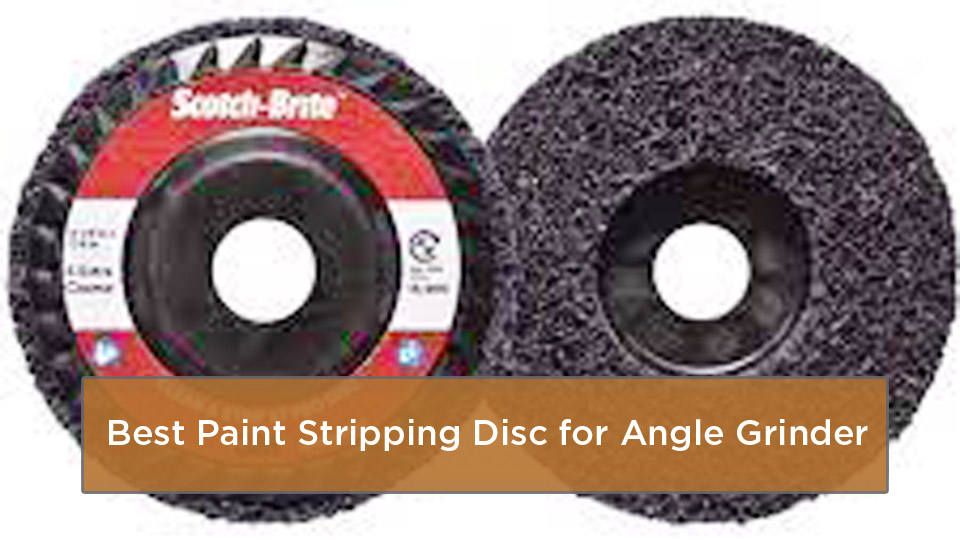
Image by adk
What Is a Paint Stripping Disc and How Does It Work?
A paint stripping disc is essentially an abrasive wheel that mounts on your angle grinder, designed specifically to remove coatings like paint, varnish, rust, and scale from metal surfaces. Unlike grinding discs that can dig in and remove material, these are gentler, using materials like silicon carbide grains embedded in a non-woven nylon web or poly fiber.
When you spin it up on your grinder, the abrasive action scrubs away the top layers without gouging the underlying metal, leaving a smooth profile ready for welding.
How it works is all about the design. The open-web structure lets debris escape, preventing clogging and overheating. I’ve used them on everything from mild steel pipes to aluminum sheets, and they excel because the fibers conform to contours—great for irregular shapes like brackets or frames.
For welders, this means better joint prep; you can clean up edges without altering the fit-up. Think of it as a hybrid between a wire wheel and a sanding disc, but safer and more efficient.
When to use one? Anytime you’re dealing with painted or coated metals before welding. In my experience, it’s crucial for repair jobs on vehicles or machinery where old paint hides corrosion.
Why bother? Because contaminants like paint residues can cause weld spatter, incomplete fusion, or even safety hazards from fumes. I’ve had projects where ignoring this led to rework—lesson learned the hard way.
Why Surface Preparation Matters for Weld Integrity and Safety
In the welding world, surface prep isn’t optional—it’s the foundation. Paint and rust act like barriers, preventing proper penetration and leading to defects like lack of fusion or inclusions. I’ve seen welds fail on job sites because someone rushed prep, resulting in costly repairs or even accidents.
Using the right stripping disc ensures clean metal-to-metal contact, improving arc stability and reducing porosity.
Safety-wise, these discs minimize risks compared to alternatives. No flying wires like with brushes, and less dust if you use a good model. But always gear up—respirator, gloves, eye protection. In US shops, OSHA guidelines stress dust control, so pair it with a vacuum attachment if possible.
Cost efficiency? A durable disc lasts through multiple jobs, saving you from buying disposables. I’ve stripped entire trailer frames with one disc, keeping overhead low.
From a material compatibility standpoint, stripping properly preserves the base metal’s properties. Over-aggressive tools can introduce heat-affected zones or scratches that weaken the material. For hobbyists or students, this means learning good habits early—clean preps lead to stronger, more reliable welds.
How to Choose the Best Paint Stripping Disc for Your Angle Grinder
Picking the right disc starts with your grinder’s specs. Most welders use 4.5-inch angle grinders, so look for discs with a 7/8-inch arbor hole—they fit standard models like DeWalt or Makita. Size matters; a 4.5-inch disc covers enough area without overwhelming smaller tools.
Material type is key. Silicon carbide discs are aggressive for heavy paint and rust, while poly strip versions are milder for finishes. I prefer non-woven ones for welding prep because they don’t load up with residue. Check RPM rating—most handle 11,000 to 13,000 RPM, matching common grinders.
Consider your project. For DIY welders fabbing furniture, a versatile disc like a clean-and-strip type works on metal and wood edges. Pros on structural jobs might need something tougher for mill scale. Brand-wise, I’ve had great luck with ones that resist clogging, extending life.
Semantic fits like “rust removal wheel” or “coating stripper disc” pop up in searches, but focus on features: clog-resistant, low-heat, surface-safe. Budget? Entry-level at $5-10, premiums up to $20 for longevity.
Early in my career, I grabbed a cheap disc that shredded after 10 minutes on a rusty gate. Switched to a better one, and it handled the whole job smoothly. Lesson: Invest in quality for efficiency.
Top Recommendations for Paint Stripping Discs in Welding Applications
I’ve tested dozens in my shop. Here’s what stands out for welders.
First, the 3M Scotch-Brite Clean and Strip XT Pro Disc. This purple beast is my top pick for heavy-duty stripping. It’s silicon carbide on a non-woven web, stripping paint and rust fast without damaging steel. Great for pre-weld cleanup on pipes or frames.
Pros: Durable, low vibration, minimal dust. Cons: Pricier, around $15 each. I’ve used it on a forklift repair, stripping old epoxy paint in half the time of a wire wheel.
Next, the Avanti Pro Non-Woven Quick-Strip Disc from Home Depot. Affordable at under $10, it’s perfect for hobbyists. Non-woven design removes multiple layers gently, ideal for aluminum where you can’t risk scratches.
Pros: Quick action, fits most grinders. Cons: Wears faster on thick rust. I keep a few in my toolbox for quick jobs like prepping brackets.
For budget options, BHA Easy Strip Discs in packs of five. They’re silicon carbide infused, stripping bondo and paint from auto parts without gouging.
Pros: Value pack, versatile. Cons: Dusty on large areas. Used them on a trailer hitch weld—cleaned up rust spots flawlessly.
If you’re into poly strips, Norton Blaze or similar. Aggressive yet safe, good for curved surfaces in fab work. Pros: Conforms well, long-lasting. Cons: Can clog on soft paints.
Compare them based on your needs—aggressive for pros, mild for students.
| Disc Type | Brand Example | Best For | Pros | Cons | Price Range |
|---|---|---|---|---|---|
| Silicon Carbide Non-Woven | 3M Scotch-Brite XT Pro | Heavy rust/paint on steel | Durable, low heat, no damage | Higher cost | $12-20 |
| Quick-Strip Non-Woven | Avanti Pro | Light coatings on aluminum | Affordable, fast | Wears quicker | $5-10 |
| Easy Strip Pack | BHA | Auto body prep | Value, versatile | Dusty | $20-30/pack |
| Poly Strip | Norton Blaze | Curved surfaces | Conforms, aggressive | Possible clogging | $10-15 |
This table helped me decide for a recent shop upgrade.
Step-by-Step Guide: Using a Paint Stripping Disc for Effective Welding Prep
I’ll walk you through like we’re in the shop together.
Step 1: Gear up. Respirator for dust, safety glasses, gloves, long sleeves. Secure your workpiece—clamp it down.
Step 2: Inspect your grinder. Ensure it’s 4.5-inch with variable speed if possible. Set to 8,000-10,000 RPM—too high risks burning the disc.
Step 3: Mount the disc. Thread it onto the spindle, use the lock nut. Hand-tighten, then wrench it secure. Check for wobble.
Step 4: Test on scrap. Light pressure, let the disc do the work. Angle at 15-30 degrees for best contact.
Step 5: Strip in sections. Start on flat areas, move to edges. For welds, focus on joint areas—remove paint 2 inches around.
Step 6: Monitor progress. If clogging, pause and clean with compressed air. Switch directions for even wear.
Step 7: Finish up. Wipe with solvent, inspect for residues. You’re ready to weld.
Machine settings tip: On my MIG setup, after stripping, I dial in 18-20 volts for clean steel to avoid spatter.
Common mistake: Pressing too hard—causes glazing. Fix: Lighten up, let speed strip.
I once stripped a entire gate this way; clean prep led to perfect TIG welds.
Common Mistakes When Using Paint Stripping Discs and How to Fix Them
Rushing and messing up.
One biggie: Using the wrong size disc. A 5-inch on a 4.5 grinder vibrates like crazy, risking control loss. Fix: Match sizes exactly.
Another: Ignoring RPM. Too fast melts the web; too slow ineffective. Stick to manufacturer specs.
Overheating the metal—happens with prolonged contact. Fix: Work in short bursts, cool with air.
Clogging from soft paints. Fix: Choose aggressive grains, clean often.
On a job site, a trainee pressed hard and ruined a disc. I showed him light touches—saved the day.
For students: Practice on junk to build feel.
Pros and Cons of Different Paint Stripping Disc Types for Welders
Non-woven silicon carbide: Pros—fast, safe, versatile for metals. Cons—can wear on thick scale.
Poly fiber: Pros—conforms to shapes, low heat. Cons—less aggressive, clogs easier.
Vs. wire wheels: Stripping discs win for no wires, better finish.
In welding, non-woven shines for prep without altering profiles.
Safety Considerations When Stripping Paint Before Welding
Safety first, always. Dust from paint can be toxic—use N95 masks, ventilation.
Eye protection against debris. Gloves for vibration.
Secure grinder—two hands, stable stance.
For US codes, ensure tools meet ANSI standards.
Tip: Attach a dust shroud to your grinder.
I’ve avoided injuries by following this—don’t skip it.
Practical Tips for Machine Settings and Joint Preparation
For angle grinders, variable speed helps—lower for delicate work.
Joint prep: Bevel edges after stripping for better penetration.
Filler compatibility: Clean surfaces ensure no reactions with rods like ER70S-6.
Anecdote: Adjusted speed on aluminum, prevented warping.
For hobbyists: Start low, build up.
Real-World Applications in Welding Shops and DIY Projects
In shops, use for pipeline repairs—strip coatings for inspections.
DIY: Custom racks—strip old paint for fresh welds.
Students: Practice on scrap for technique.
Industry workers: Heavy machinery maintenance.
Cost savings: Less rework.
Integrating Paint Stripping into Your Overall Welding Workflow
Prep fits early—after cutting, before fitting.
Combine with sandblasting for tough jobs.
Efficiency tip: Batch prep pieces.
I’ve streamlined my process this way.
In fabrication, stripping ensures compatibility with processes like stick or flux-core.
For outdoor jobs, weather-resistant discs help.
Mistake fix: If you over-strip, light sanding restores.
Table for processes:
| Welding Process | Stripping Tip | Why It Helps |
|---|---|---|
| MIG | Remove all paint | Reduces spatter |
| TIG | Clean to bare metal | Better arc control |
| Stick | Strip rust | Prevents sticking |
Pros for pros: Time-saving.
Wrapping Up
Everything you need to pick and use the best paint stripping disc for your angle grinder. From understanding how these discs preserve weld integrity to avoiding common pitfalls, you’re now equipped to tackle surface prep like a seasoned pro. Remember, clean metal means stronger welds, fewer defects, and safer projects.
Whether you’re a DIYer fixing up your garage setup or a full-time fabricator, investing in the right disc pays off in efficiency and quality. Go ahead, grab one that fits your needs—maybe start with that 3M XT Pro—and see the difference in your next weld. Always keep a spare disc handy; nothing kills momentum like running out mid-job.
FAQ
What’s the difference between a paint stripping disc and a wire wheel for angle grinders?
A paint stripping disc uses abrasive fibers to gently remove coatings without damaging the metal, while a wire wheel can be more aggressive and risks flying wires or gouging. For welding prep, I prefer stripping discs for a smoother, safer finish.
Can I use a paint stripping disc on aluminum before welding?
Absolutely, but choose a non-woven type to avoid scratches. Light pressure and lower RPMs prevent heat buildup, ensuring clean joints for TIG welding.
How long does a typical paint stripping disc last?
It depends on the job— a quality one like silicon carbide can handle 50-100 square feet of moderate paint before wearing out. Clean it between uses to extend life.
Is it safe to use paint stripping discs indoors?
Yes, with proper ventilation and a respirator. They produce less dust than sanding, but always use dust control to meet shop safety standards.
What RPM should I set my angle grinder to for paint stripping?
Aim for 8,000-11,000 RPM. Too high can glaze the disc; test on scrap to find the sweet spot for your material.