When you’re joining plastic parts in a shop—especially for things like tanks, housings, or small components—the process you choose can make or break the final product. I’ve seen parts come out perfectly sealed one day, and then fail under pressure the next, just because the wrong method was used.
That’s why understanding Hot Plate Welding Vs Ultrasonic Welding isn’t just theory—it directly affects strength, consistency, and production speed.
In real-world use, hot plate welding gives you strong, uniform joints, especially on larger or thicker plastic parts. On the other hand, ultrasonic welding is incredibly fast and precise, making it ideal for smaller components and high-volume production. But both come with trade-offs—cycle time, equipment cost, material compatibility, and joint design all play a role.
Choosing between these two isn’t about which one is “better”—it’s about what fits your job. In this guide, I’ll break down the key differences, practical advantages, and limitations of each process so you can confidently pick the right method for your work.

Image by thepipingmart
What Is Hot Plate Welding?
Hot plate welding is a process that uses a heated metal plate to melt the surfaces of two thermoplastic parts. Once melted, the plate is removed, and the parts are pressed together to form a strong bond as the material cools and solidifies.
This method is commonly used for larger or complex plastic components. It delivers reliable, airtight seals, which is why you often find it in automotive, appliance, and even medical device manufacturing.
How Hot Plate Welding Works
Here’s how the process typically unfolds:
- Preparation: The plastic parts are positioned in a holding fixture.
- Heating: A metal plate, heated to a precise temperature (usually 150°C to 400°C depending on the plastic), is placed between the parts.
- Melting: The surfaces touch the plate and begin to melt.
- Plate Removal: After a set time, the plate is quickly withdrawn.
- Joining: The melted surfaces are pressed together and held under pressure until cool.
The result is a strong, permanent weld. The process requires careful temperature and timing control to avoid weak joints or excessive flash (excess melted material).
Advantages Of Hot Plate Welding
- Strong bonds: Suitable for large, load-bearing parts.
- Versatile: Works with many types of thermoplastics, including hard-to-weld materials.
- Airtight and watertight: Excellent for parts needing fluid or gas containment.
Limitations
- Slower cycle times: Heating and cooling take time.
- More flash: Excess melted plastic may need trimming.
- Not ideal for small, delicate parts: The heat and pressure can deform tiny features.
What Is Ultrasonic Welding?
Ultrasonic welding uses high-frequency mechanical vibrations (usually 20–40 kHz) to generate heat at the joint between two plastic parts. The vibrations come from a tool called a sonotrode. It presses against the plastics, causing their molecules to move rapidly and heat up. The plastic melts locally at the joining surface, and as the vibration stops, the plastic cools and solidifies, forming a bond.
This process is fast, clean, and well-suited to high-volume production. It’s common in electronics, medical devices, packaging, and even toys.
How Ultrasonic Welding Works
Here’s a step-by-step overview:
- Setup: Parts are placed in a fixture, and the sonotrode is aligned to the joint.
- Vibration: The machine delivers ultrasonic vibrations through the sonotrode, pressing it onto the parts.
- Melting: The energy focuses at the interface, quickly melting the plastic.
- Cooling: The vibrations stop, and pressure is maintained while the plastic resolidifies.
The key is that heat is generated only where it’s needed—right at the joint.
Advantages Of Ultrasonic Welding
- Very fast: Cycle times of less than one second are common.
- No need for extra materials: No adhesives or solvents.
- Clean and precise: Minimal flash, suitable for small parts.
- Energy efficient: Only the joint area is heated.
Limitations
- Not for large or thick parts: The vibrations can’t penetrate deeply.
- Material limitations: Best with certain plastics (like ABS, polystyrene, polypropylene).
- Requires tight tolerances: Parts must fit closely for good results.
Credit: rlhudson.com
Comparing Hot Plate Welding And Ultrasonic Welding
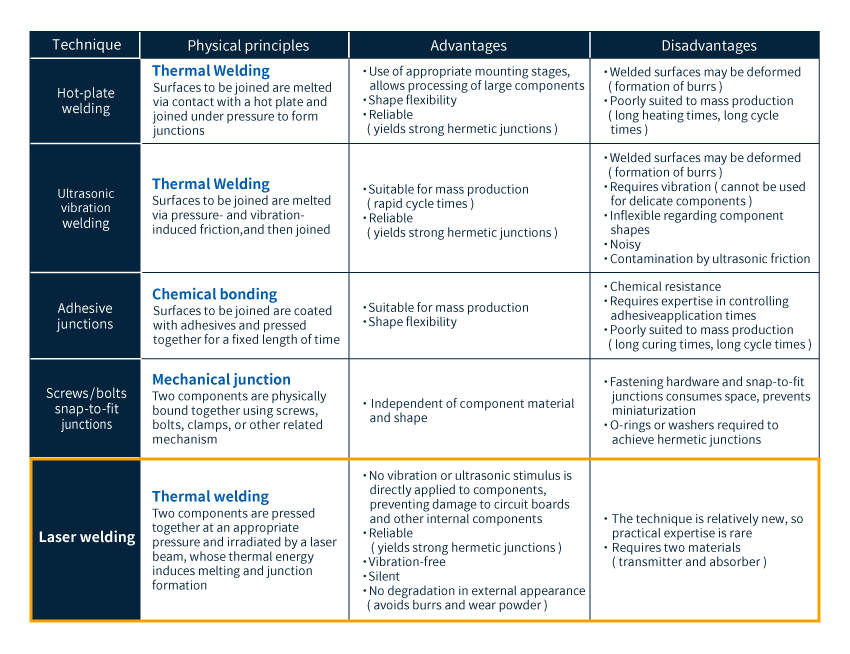
To make sense of these methods, let’s break down the main differences and see how they stack up.
Process Speed
- Ultrasonic welding is much faster. Typical cycle times are under 1 second.
- Hot plate welding can take 10–20 seconds or more per cycle, depending on part size and material.
Joint Strength
- Hot plate welding usually produces stronger, more durable joints, especially for large or thick parts.
- Ultrasonic welding creates strong bonds, but not always as robust as hot plate welds in heavy-duty applications.
Part Size And Geometry
- Hot plate welding handles large, complex, or irregular parts.
- Ultrasonic welding is ideal for small, simple, or delicate pieces.
Material Compatibility
- Hot plate welding works with a wider range of thermoplastics, including difficult-to-weld types.
- Ultrasonic welding is limited to plastics that transmit ultrasonic energy well.
Cleanliness And Finish
- Ultrasonic welding leaves almost no flash, making it suitable for visible or clean-room products.
- Hot plate welding may leave some flash that needs to be trimmed.
Here’s a summary in a comparison table:
| Feature | Hot Plate Welding | Ultrasonic Welding |
|---|---|---|
| Speed | 10–20 seconds/cycle | <1 second/cycle |
| Best For | Large, complex parts | Small, simple parts |
| Joint Strength | Very strong | Strong (for small parts) |
| Material Range | Broad | Limited |
| Cleanliness | Some flash | Minimal flash |
| Energy Use | Higher | Lower |
| Precision | Medium | High |
Applications: Where Each Method Shines
Both methods have found their place in modern manufacturing. Understanding these applications can help you see which process matches your needs.
Hot Plate Welding In Action
- Automotive fuel tanks: Large, thick-walled, and must be airtight.
- Appliance housings: Washing machines, dishwashers, and vacuum cleaners.
- Medical containers: Where a strong, leak-proof seal is critical.
- Large industrial parts: Containers, bins, and water tanks.
Ultrasonic Welding In Action
- Electronics: Enclosing circuit boards in plastic cases.
- Medical devices: IV filters, pipette tips, and small diagnostic cartridges.
- Consumer products: Toys, toothbrushes, and packaging.
- Textiles: Bonding synthetic fabrics for masks and filters.
It’s important to note that ultrasonic welding can join other materials too, such as some metals and fabrics, but its use with plastics is by far the most common.
Key Factors To Consider When Choosing A Welding Method
Your choice between hot plate welding and ultrasonic welding will depend on several practical factors.
1. Part Size And Shape
Larger and more complex parts usually require hot plate welding. The process can handle parts with big surface areas, thick sections, or irregular shapes. Ultrasonic welding, on the other hand, is limited by the reach of the sonotrode and the ability of the vibrations to pass through the plastic.
2. Material Compatibility
If you’re working with uncommon or high-performance plastics (like PEEK or certain blends), hot plate welding is often your only choice. Ultrasonic welding works best with amorphous plastics (like ABS, polystyrene, PMMA), and some semi-crystalline ones (like polypropylene and polyethylene) if conditions are right.
A common mistake is to assume ultrasonic welding works with any plastic. In reality, if the material doesn’t transmit vibrations well, the weld will be weak or incomplete.
3. Production Volume And Speed
For very high-volume production, speed matters. Ultrasonic welding can join thousands of parts per hour, making it ideal for mass production lines where every second counts. Hot plate welding is slower but may be necessary for parts that ultrasonic can’t handle.
4. Joint Strength And Quality Requirements
If your product needs to withstand high pressure, impact, or must be completely leak-proof, hot plate welding offers better guarantees. For less demanding applications, ultrasonic welding may be sufficient and more cost-effective.
5. Aesthetics And Cleanliness
If the welded joint will be visible or needs to be very clean (such as in medical or consumer devices), ultrasonic welding has the edge. There’s little or no flash, and the process is particle-free, which is important in clean room environments.
6. Tooling And Setup Cost
Ultrasonic welding equipment generally has a higher upfront cost, especially for custom sonotrodes. Hot plate welding machines can be less expensive, but the heating plates must be tailored to each part design. For small runs or prototypes, this cost can be significant.
7. Maintenance And Operation
Hot plate welding equipment requires regular cleaning of the heated plates to avoid material buildup and contamination. Ultrasonic machines need periodic tuning and maintenance of the sonotrode and generator. Both require operator training, but ultrasonic systems can be more sensitive to setup errors.
Real-world Example: Automotive Fuel Tank Welding
The production of automotive fuel tanks is a perfect example of why hot plate welding is sometimes the only option. These tanks are large, often made from high-density polyethylene (HDPE), and must pass rigorous leak tests.
Ultrasonic welding cannot deliver the necessary weld strength or reach across such a large part. Hot plate welding, with its ability to join thick sections and create strong, uniform welds, is the industry standard.
Credit: www.asahi-kasei-plastics.com
Real-world Example: Medical Device Assembly
For disposable medical devices like IV filters and diagnostic cartridges, ultrasonic welding is ideal. The process is fast, produces almost no particles, and doesn’t require adhesives that could contaminate the device. It’s also gentle on delicate parts, ensuring that sensitive components inside the device are not damaged by heat.
Data: Joint Strength Comparison
When comparing joint strength, studies show that hot plate welds often exceed the strength of the parent material. For example, welded HDPE fuel tanks can have joint strengths of 95–100% of the base material. Ultrasonic welds typically reach 60–90% of the base material strength, depending on material and process settings.
Here is a quick comparison of joint strengths for common plastics:
| Material | Hot Plate Weld Strength (% of base) | Ultrasonic Weld Strength (% of base) |
|---|---|---|
| HDPE | 95–100% | 70–85% |
| ABS | 90–98% | 80–90% |
| Polypropylene | 92–98% | 65–85% |
| Polystyrene | 93–99% | 85–90% |
Cost Considerations
Cost is always a factor in manufacturing. Here’s how the two methods compare:
- Equipment cost: Ultrasonic systems are usually more expensive up front, but they save money over time in high-volume production.
- Tooling cost: Both require custom tools, but ultrasonic sonotrodes are more complex and costly to make.
- Running cost: Ultrasonic welding is more energy-efficient and requires less operator intervention, reducing labor costs.
- Maintenance: Hot plate welders need regular cleaning; ultrasonic systems need less frequent, but more specialized, maintenance.
It’s a mistake to focus only on machine price. The total cost of ownership—including speed, scrap rates, energy, and labor—often makes ultrasonic welding the more economical choice for smaller parts and large-scale production.
Non-obvious Insights: What Beginners Miss
Joint design matters more than you think: Many assume you can simply weld any two plastic parts together. In reality, both hot plate and ultrasonic welding require careful joint design—such as energy directors (small ridges) for ultrasonic, and flat, clean surfaces for hot plate welding. Skipping this step can lead to weak welds or failed parts.
Environmental factors can impact welding: Humidity, dust, and even small differences in plastic additives can affect weld consistency. Both methods benefit from controlled environments, but ultrasonic welding is especially sensitive to part cleanliness and exact dimensions.
Credit: www.credenceresearch.com
Common Mistakes To Avoid
- Ignoring material compatibility: Using a welding method not suited to your plastic can lead to weak joints or incomplete welds.
- Overlooking joint design: Not designing the interface for welding reduces bond strength.
- Skipping testing: Always test welds under real-world conditions, especially for critical parts.
Sustainability: Environmental Impact
Both hot plate and ultrasonic welding are more environmentally friendly than adhesive bonding, as they do not use chemicals or create much waste. Ultrasonic welding is especially energy efficient and produces minimal scrap. However, hot plate welding can create more flash, which sometimes needs to be trimmed and disposed of.
Safety Considerations
- Hot plate welding involves high temperatures, so there is a risk of burns or fire if not handled properly. Proper shielding and operator training are essential.
- Ultrasonic welding operates at high frequencies, which can be harmful if exposed over long periods. Machines are usually enclosed, and operators should use hearing protection when necessary.
Innovations And Future Trends
Both technologies continue to improve. Hot plate welders now use infrared heating for cleaner, more precise joints, while ultrasonic systems are becoming smarter, with sensors and feedback controls for better consistency. As plastics evolve, so do welding methods, opening new possibilities for lighter, stronger, and more complex products.
Final Thoughts
Choosing between hot plate welding and ultrasonic welding is not always straightforward, but understanding their strengths, limits, and real-world uses helps you make the best decision.
By focusing on your part’s size, material, and production needs, you can select the method that delivers the right balance of speed, strength, and cost for your project.
Frequently Asked Questions
What Types Of Plastics Can Be Welded Using Hot Plate Welding?
Hot plate welding is suitable for a wide range of thermoplastics, including polyethylene (PE), polypropylene (PP), polyvinyl chloride (PVC), and even some engineering plastics like PEEK and polycarbonate. It is especially useful for plastics that are difficult to weld using other methods.
Is Ultrasonic Welding Safe For Electronic Components Inside Plastic Parts?
Yes, ultrasonic welding can be safe for electronic components if the process is carefully controlled. The vibration energy is localized at the joint, but sensitive parts should be shielded or positioned away from the weld zone to avoid damage.
Can Hot Plate Welding Be Used For High-volume Production?
Hot plate welding can be used for high-volume production, but it is slower than ultrasonic welding. It is ideal for large or complex parts where strength is critical, even if the cycle time is longer.
How Do I Know If My Part Design Is Suitable For Ultrasonic Welding?
Ultrasonic welding works best with tight-fitting parts made from compatible plastics. The joint should include features like energy directors—small triangular ridges that concentrate the vibration energy. For complex shapes or thick sections, hot plate welding may be better.
What Are The Main Maintenance Needs For Hot Plate And Ultrasonic Welding Machines?
Hot plate welding machines require regular cleaning of the heated plates to avoid material buildup and contamination. Ultrasonic machines need periodic tuning of the sonotrode and generator, and inspection for wear. Both benefit from preventive maintenance and trained operators.