Curious about how much MIG welding gas costs and how it affects your home or DIY projects? Whether you’re tackling small repairs, crafting custom furniture, or exploring metalworking as a hobby, understanding MIG welding gas prices is key to budgeting effectively. From cleaning up your workspace to maintaining equipment, knowing the cost of shielding gases—like argon or CO₂—helps you plan for safe and efficient welding sessions.
Many homeowners and DIY enthusiasts often wonder why prices vary and how to get the best value without compromising on quality. In this guide, we’ll break down the typical costs, share tips to save money, and highlight why using the right gas can make your welding cleaner, smoother, and more reliable—just like using the right products keeps your home sparkling and germ-free.
What is MIG Welding Gas and Why It Matters
MIG welding, or Metal Inert Gas welding, uses a continuous wire feed and an electric arc to fuse metal. The shielding gas flows from a cylinder through a regulator, blanketing the weld pool to block out oxygen and nitrogen that’d ruin your work. Without it, you’re looking at porous, brittle welds that could fail under stress.
I learned this the hard way early on, trying to cheap out with flux-cored wire on a car repair. The welds looked rough, and I spent hours grinding out spatter. Switching to gas-shielded MIG gave me cleaner beads and saved time.
Gas stabilizes the arc, cuts down on cleanup, and ensures strong joints, especially for structural work under US codes like AWS D1.1. It’s also safer—proper shielding reduces toxic fumes. Cost efficiency comes from picking the right gas to avoid wasting material or overpaying.
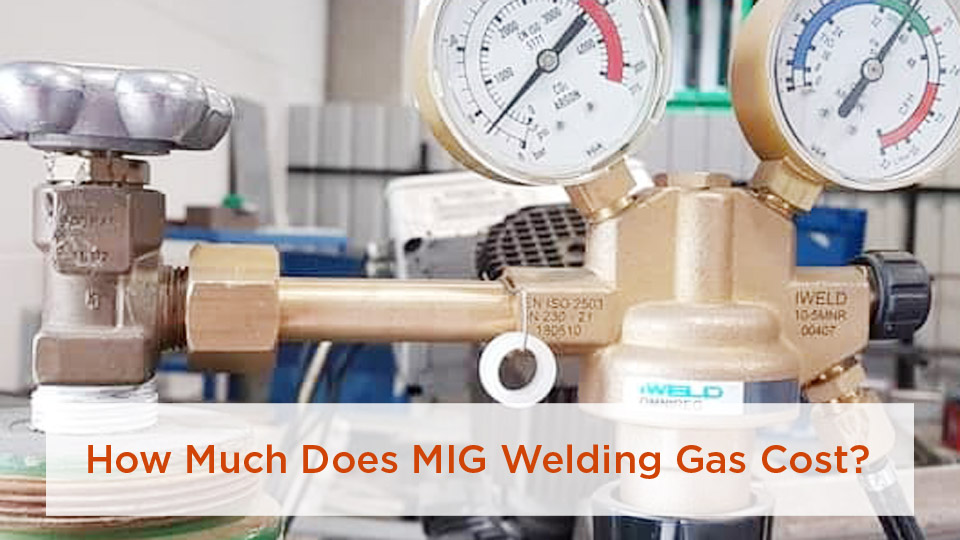
Image by nexair
Common Types of MIG Welding Gas
Your gas choice depends on what you’re welding—mild steel, stainless, or aluminum—and your budget. Here’s what I’ve used in the field.
Argon-CO2 Mixtures
The go-to for most MIG welding is a 75% argon and 25% CO2 mix, often called C25. It’s versatile for mild steel, offering a stable arc, good penetration, and minimal spatter. Argon shields without reacting, while CO2 adds heat for deeper welds.
I use C25 for automotive repairs and general fabrication—it’s forgiving for beginners and pros alike. Use it for steel up to 1/2 inch thick.
Set your flow rate to 15-25 cubic feet per hour (CFH) to avoid turbulence. Once, on a thin sheet job, I bumped to an 80/20 mix to prevent burn-through, and it worked like a charm.
Pure CO2 Gas
Pure CO2 is cheaper and creates a hotter arc, great for thick or rusty steel. It’s reactive, breaking down into carbon monoxide to shield the weld, but expect more spatter.
I’ve used it for outdoor repairs on farm equipment where wind’s a factor—it’s heavier and stays put. It’s budget-friendly, often half the price of C25, but you’ll need to tweak voltage to smooth the arc.
Don’t skimp on joint prep; grind surfaces clean to reduce spatter issues.
Pure Argon and Specialty Blends
Pure argon shines for aluminum and stainless, giving smooth, clean welds. It displaces air completely, ideal for non-ferrous metals. Adding helium or a touch of oxygen boosts heat or flow for specific jobs.
I splurged on argon for a custom motorcycle frame, and the beads were flawless. Use it when appearance matters, but it’s pricier. Helium blends are great for thick aluminum but can double costs. Machine tip: Lower amperage with argon to avoid warping thin materials.
Factors Affecting MIG Welding Gas Costs
Gas prices vary based on a few key factors I’ve navigated over years of welding.
Gas Type and Composition
Argon-based mixes like C25 cost more because argon’s production is pricier than CO2. Pure CO2 is the cheapest, while helium blends are the most expensive due to limited supply.
Cylinder Size and Capacity
Smaller tanks (20-40 CF) are cheaper upfront but cost more per cubic foot. Larger ones (125 CF+) save in the long run but require storage space. I started with a 40 CF tank and wished I’d gone bigger for fewer refills.
Supplier and Regional Differences
In the USA, prices vary by location—coastal areas like California are higher due to shipping, while Midwest shops are often cheaper. Local suppliers sometimes beat big chains like Airgas.
I’ve saved 10-15% by shopping local in Ohio. Ownership vs. rental matters too—renting adds yearly fees, while owning saves long-term.
Market Fluctuations
Helium shortages or industrial demand can spike prices. I’ve seen costs jump 20% during supply crunches. Keep an eye on trends to budget smarter.
How Much Does a Small MIG Gas Cylinder Cost?
Small tanks (20-40 CF) are great for hobbyists or light work.
Purchase Prices for Small Cylinders
A new 20 CF C25 tank runs $150-250, including gas. A 40 CF might cost $230-280. I bought a 20 CF for my garage and it was perfect for small jobs like fixing a gate.
Refill and Exchange Costs
Refills for 20 CF range $25-45 for CO2, $45-60 for C25. Exchanges are similar but faster—no waiting for hydro tests. Tip: Check tank weight before refilling; CO2 is liquid, so gauges aren’t always accurate.
How Much Does a Medium MIG Gas Cylinder Cost?
Medium tanks (60-80 CF) balance portability and capacity.
Buying Medium Cylinders
A full 80 CF C25 tank costs $290-330. Argon ones are slightly more. I used these on a pipeline job for uninterrupted welding.
Refill Costs for Medium Sizes
Expect $55-65 per refill. I’ve paid as low as $50 in rural areas, up to $70 in cities. Prep tip: Bevel joints on thicker metals to ensure gas covers properly.
How Much Does a Large MIG Gas Cylinder Cost?
Large tanks (125 CF+) are for pros or heavy hobbyists.
Costs for Large Tanks
A 125 CF C25 tank runs $350-400 full. Bigger 300 CF tanks can hit $700+. I upgraded to 125 CF and cut refills in half for shop work.
Refill and Maintenance Expenses
Refills cost $70-85. Valves and hydro tests every 5-10 years add $20-50. Setting tip: Use a flowmeter for precision to avoid waste.
Should You Rent or Buy MIG Gas Cylinders?
Renting means a deposit and annual fees—$100-200 yearly plus refills. Buying has a higher upfront cost but no contracts. I rented early on and regretted the extra fees.
Pros of Buying: Own forever, refill anywhere. Cons: Hydro testing costs.
Pros of Renting: No maintenance hassle. Cons: Ongoing fees. For DIYers welding often, buy. Pros might rent for tax benefits.
Step-by-Step Guide to Buying Your First MIG Gas Cylinder
Here’s how I’d guide a buddy starting out.
- Assess Needs: What metal? How often do you weld? Mild steel? Go C25.
- Choose Size: 80 CF for most; balances cost and frequency.
- Find Suppliers: Local weld shops or chains like Praxair.
- Compare Rent vs. Buy: Calculate refills for a year.
- Buy Regulator: $50-100 for dual-gauge.
- Set Up: Secure tank, attach hose, set 20 CFH.
Mistake: Over-tightening fittings—use Teflon tape to avoid leaks.
Where to Find MIG Welding Gas Refills
Local weld shops are fastest—better service than chains. Online retailers like PrimeWeld ship full tanks. Tractor Supply does exchanges. I’ve grabbed CO2 refills at beer supply stores for cheap.
Tip: Call ahead for stock; some require accounts. In a pinch, I’ve driven 20 miles to avoid downtime.
Pros and Cons of Different MIG Gas Suppliers
Local Welding Shops
Pros: Expert advice, often cheaper. Cons: Limited hours or stock.
National Chains
Pros: Reliable, nationwide locations. Cons: Pricier, less personal.
Online Retailers
Pros: Competitive prices, delivered full. Cons: Shipping adds up, no same-day refills.
I mix local for refills, online for new tanks to save.
Comparison Table of MIG Welding Gas Types
| Gas Type | Best For | Pros | Cons | Average Refill Cost (80 CF) |
|---|---|---|---|---|
| 75/25 Argon/CO2 | Mild steel | Stable arc, clean welds | More expensive | $55-65 |
| 100% CO2 | Thick/rusty steel | Cheap, deep penetration | More spatter | $30-45 |
| Pure Argon | Aluminum, stainless | Smooth, aesthetic welds | Costly | $60-75 |
| Helium Blends | Thick aluminum | High heat, fast welds | Very expensive | $80+ |
This table helped me pick gas for a stainless project—saved trial and error.
How to Reduce MIG Welding Gas Costs
Optimize flow—15-20 CFH is usually enough indoors. Use windshields outdoors; I lost half a tank once before rigging a tarp. Clean nozzles regularly for efficient flow.
Mistake: High flow wastes gas—calibrate with a flowmeter.
Common Mistakes with MIG Welding Gas and Fixes
- Overusing Gas: Fix by setting proper CFH; test on scrap.
- Wrong Gas Type: Causes bad welds; match to metal.
- Running Out Mid-Job: Check gauges daily; keep a spare.
I ran dry during a rush job once—now I always have a backup.
Safety Tips for Handling MIG Gas Cylinders
Secure tanks upright, away from heat sources. Wear gloves; dropping a tank is dangerous. Ventilate well—gases can displace oxygen. OSHA and US codes mandate proper storage, like chaining to a cart. I’ve seen loose tanks tip on job sites—double-check chains.
Alternatives to Gas-Shielded MIG Welding
Flux-cored arc welding (FCAW) skips gas, using self-shielding wire. It’s great for windy conditions or portability but produces more smoke and spatter.
Pros: No cylinders, works outdoors. Cons: Messier, more cleanup. I use it for quick field repairs to save on gas.
Step-by-Step Guide to Setting Up Your MIG Welder with Gas
- Secure Cylinder: Chain to cart or wall.
- Attach Regulator: Tighten gently, use Teflon tape.
- Connect Hose: Check for leaks with soapy water.
- Open Valve: Slowly, set pressure to 20-30 PSI.
- Purge Line: Brief burst to clear air.
- Adjust Flow: 15-25 CFH, test on scrap.
Match wire to gas—solid wire for gas-shielded setups.
Recommended Equipment for MIG Welding
- Welder: Lincoln Electric or Miller under $500 for starters.
- Regulator: Dual-gauge for accuracy, ~$60.
- Cart: For safe cylinder transport, ~$50.
Cheap regulators leak—invest in quality, learned from a bad seal once.
Real-World Applications of MIG Welding with Gas
- Auto Repair: C25 for body panels, clean and fast.
- Construction: CO2 for steel beams, deep penetration.
- Hobby Projects: Argon for stainless art pieces, smooth finish.
I welded a trailer hitch with C25, and it’s still holding strong.
Estimating Your Annual MIG Gas Costs
Calculate: Hours welded x flow rate = CF used. Multiply by refill cost. Hobbyists might spend $200-400/year; pros $500-1000. I track mine monthly to avoid surprises.
Conclusion
You’re now armed with everything you need to tackle MIG welding gas costs, from picking the right type to budgeting for refills. Whether you’re a student practicing in a tech school or a fabricator meeting tight deadlines, you can choose gas that fits your project and wallet. You’ll weld with confidence, knowing your setup maximizes strength and efficiency while keeping costs in check. Before welding, roll mixed gas cylinders gently on their side to remix gases—prevents uneven shielding and weak welds.
FAQ
What Gas Should I Use for MIG Welding?
For mild steel, a 75/25 argon-CO2 mix is best for clean welds. Use pure argon for aluminum or stainless, and CO2 for budget-friendly thick steel jobs.
How Long Does a MIG Welding Gas Cylinder Last?
An 80 CF tank at 20 CFH lasts about 4 hours of continuous welding. Real-world use with breaks stretches it further—track your hours.
Is Pure CO2 Okay for MIG Welding?
Yes, for thick or rusty steel, it’s cheap and effective but produces more spatter. Increase voltage slightly and clean joints well.
Should I Rent or Buy a MIG Gas Cylinder?
Buy if you weld regularly—saves on fees. Rent for occasional use or if you prefer no maintenance. Compare annual costs to decide.
How Do I Know When My MIG Gas Cylinder is Empty?
Check the pressure gauge—below 200 PSI means it’s low. For CO2, weigh the tank, as liquid gas doesn’t show on gauges accurately.