Standing in front of a vertical joint, the puddle starts fighting gravity almost immediately. Molten metal wants to drip, sparks fly back at your gloves, and the bead builds up faster than expected. Moments like that are usually when welders realize How to Weld Vertical Up with MIG is a different skill altogether—not just flat welding turned sideways.
This technique is learned through trial and error on real jobs, fixing welds that looked fine at first but failed on strength or penetration. Vertical-up welding matters because it directly impacts joint durability, safety, and inspection results. Get it wrong, and you waste wire, gas, and time reworking bad beads.
If sagging welds or messy uphill passes have been holding you back, you’re not alone. Let me walk you through the technique that actually works, step by step.
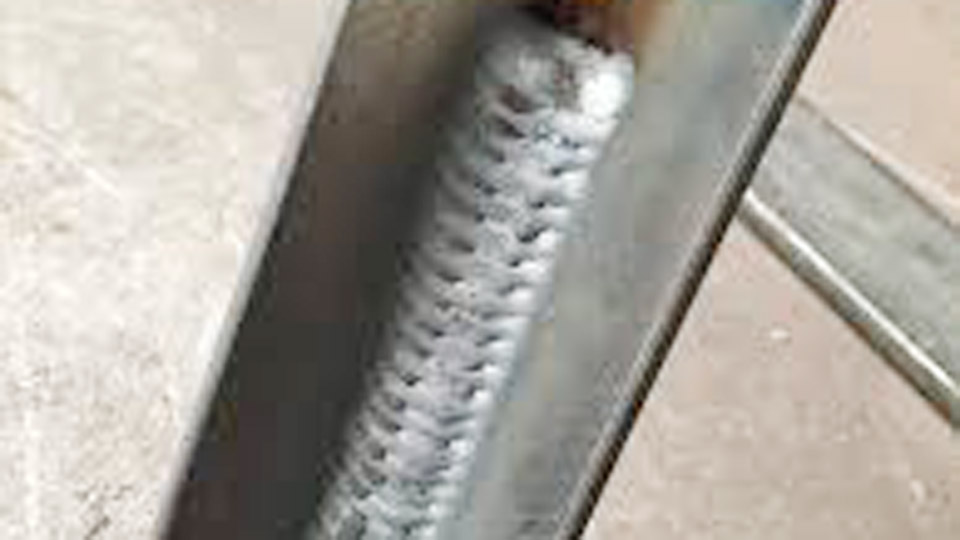
Image by DMgRGRhI0rs
What Makes Vertical Up MIG Welding So Tricky?
Vertical up MIG welding refers to the process where you run your MIG gun from the bottom of a vertical joint toward the top, fighting gravity to build a solid bead. Unlike flat welding, where the puddle stays put, here the molten metal wants to drip down, so you’re constantly managing heat and travel speed to keep it controlled.
It works by using the MIG process—Metal Inert Gas, where a continuous wire electrode feeds through the gun, shielded by gas like argon or a CO2 mix—to deposit filler metal into the joint.
The key is the short-circuit transfer mode, common for vertical work, where the wire touches the pool and sparks to transfer metal in tiny droplets. This gives you better control than spray transfer, which can get too hot and sag.
You’ll use this technique whenever you’re welding upright seams, like on structural beams, pipes, or trailer sides—common in fabrication shops or repair yards across the US. Why bother with vertical up over down? Up gives deeper penetration and stronger welds for thicker materials, reducing the risk of cracks under load. But it’s slower and demands more skill, so save it for when strength trumps speed, like in load-bearing repairs.
In my shop, I once rushed a vertical up on some 1/4-inch plate with the wrong settings, and the whole bead sagged, forcing a full grind-out and redo.
Lesson learned: Always prep your joint with a good bevel and clean surfaces. Start with a test piece—run a few inches and check for even fusion. And remember, wear your full PPE; sparks fly everywhere in vertical, and hot spatter can sneak up on you.
Essential Equipment for Solid Vertical Up MIG Welds
Before you strike an arc, you need the right gear. For vertical up MIG, a reliable US-made machine like a Miller Millermatic or Lincoln Power MIG shines—semi-automatic feeders that handle wire tension smoothly. Aim for one with adjustable voltage and wire speed; anything under 200 amps won’t cut it for most jobs.
The wire electrode is your lifeline here. Use ER70S-6 for mild steel—it’s got silicon for better wetting and deoxidizers to fight rust on shop metal.
Diameter-wise, stick to .035-inch for versatility on 1/8- to 1/2-inch plates; .030-inch is too fine and prone to burn-back in vertical. Gas mix? 75/25 argon/CO2 for a stable arc without too much spatter.
When to gear up? For any vertical joint over 3/16-inch thick, where penetration matters. Why? Thinner stuff can warp with up welding’s heat, so down might be better there. Pros: Deeper roots mean less distortion overall. Cons: More cleanup from the gas mix.
Shop tip from my bench: Check your drive rolls daily—they wear out fast on vertical, causing bird-nesting. I fixed a bad weld once by swapping to knurled rolls for better grip on the wire. Always match your contact tip to the wire size to avoid arcing inside the gun.
Picking the Right MIG Wire and Shielding Gas
ER70S-6 is my go-to for carbon steel vertical ups because it flows well against gravity. For stainless, switch to ER308L to match material and avoid cracking. Diameter affects everything: .035-inch balances speed and control, but if you’re on thin sheet, drop to .030-inch to prevent blow-through.
Shielding gas works by blanketing the weld pool, preventing oxidation. A 75/25 mix gives a soft arc ideal for vertical—too much CO2 (like 100%) gets aggressive and splattery. Use it when welding outdoors or in drafts; indoors, pure argon can work but watch for porosity.
Real-world use: On a recent gate repair, I mismatched gas and got pinholes—fixed by bumping up the flow to 25 CFH. Tip: Purge your lines before starting to avoid contaminants.
Setting Up Your MIG Welder for Vertical Up Success
Getting the settings dialed in is where most folks trip up. For vertical up, start with amperage around 120-180 amps for 1/4-inch mild steel—too low, and you get shallow penetration; too high, and it burns through. Voltage? 18-22 volts keeps the arc short and stable. Wire speed should match at 150-250 inches per minute, depending on your machine.
It works like this: Amperage controls heat input, voltage manages arc length, and wire speed feeds the metal. Use these when building multi-pass welds on thicker joints, like I-beams in structural fab. Why? Proper settings minimize distortion and ensure full fusion without excessive filler.
From experience, beginners often crank amps too high, leading to a drippy mess. I remember teaching a trainee who overheated a joint, causing warping—we had to clamp and cool it overnight. Fix bad welds by grinding back to sound metal and restarting with 10% less heat.
Practical tips: On a Hobart Handler, set inductance low for a focused arc. Joint prep is crucial—V-groove with 60-degree included angle for better access. For materials like galvanized steel, grind off the coating first to avoid toxic fumes.
Amperage and Voltage Ranges for Different Materials
Here’s a quick comparison to make it scannable:
| Material Thickness | Amperage Range | Voltage Range | Wire Speed (IPM) | Notes |
|---|---|---|---|---|
| 1/8-inch Mild Steel | 100-140 amps | 16-19 volts | 120-180 | Use weave technique for coverage. |
| 1/4-inch Mild Steel | 140-180 amps | 19-22 volts | 180-250 | Multi-pass for penetration; watch for undercut. |
| 3/8-inch Stainless | 160-200 amps | 20-24 volts | 200-280 | ER308L wire; slower travel to fight gravity. |
| 1/2-inch Aluminum | 180-220 amps | 21-25 volts | 250-350 | 100% argon gas; clean oxide layer thoroughly. |
These are based on my Miller setup—adjust for your machine. For aluminum vertical up, it’s tougher due to low viscosity; preheat to 150°F if possible.
Common mistake: Ignoring material compatibility, like using steel wire on alum—leads to brittle welds. Always match filler to base for strength.
Preparing Your Joint for Flawless Vertical Up MIG
Joint preparation isn’t glamorous, but skip it and your weld fails. For vertical up, bevel edges at 30-45 degrees per side for a 1/8-inch land, ensuring the gun fits without binding.
How it works: Clean prep allows the arc to penetrate fully, creating a keyhole effect as you progress upward. Use this for butt, lap, or T-joints in fabrication, like trailer hitches or pipework. Why? Poor prep causes lack of fusion, leading to cracks under vibration—I’ve seen it shear off in a shop accident.
Early on, I welded dirty mild steel vertical and got slag inclusions; had to X-ray and scrap the part. Fix by wire-brushing or grinding to bright metal. Tip: For oily parts, use acetone wipes—shop solvent leaves residue.
Safety note: Vertical means more overhead work, so secure your piece with clamps or magnets to avoid drops. Wear a helmet with auto-darkening for better visibility.
Common Joint Types and Prep Techniques
Butt joints need full beveling for thick stock; lap joints just need edge cleaning. For T-joints, fillet with a slight angle to direct the puddle.
Use prep when welding dissimilar metals—add a transition layer if needed. Pros: Stronger bonds. Cons: Time-consuming, but beats rework.
In the field, on a rusted silo repair, I plasma-cut and ground the edges—resulted in a clean, code-compliant weld.
Step-by-Step Guide to Running a Vertical Up MIG Weld
Let’s get hands-on. Step 1: Set up your workspace—secure the workpiece vertically, maybe on a stand or jig. Clamp it firm; I’ve had pieces shift mid-weld, ruining the bead.
Step 2: Fire up the machine—dial in settings per your material. Ground clamp close to the joint for stable arc.
Step 3: Start at the bottom. Hold the gun at 10-15 degrees push angle, perpendicular to the joint. Trigger and establish the arc—listen for a steady sizzle, not crackling.
Step 4: Travel upward slowly, about 1/4-inch per second. Use a slight weave: side-to-side motion, pausing briefly at edges to fill without undercutting. Keep the arc short—1/16-inch—to control the puddle.
Step 5: Build layers if multi-pass—clean between with a chipping hammer and wire brush. Feather the starts and stops for smooth ties.
Step 6: Inspect—cool, then hammer test or bend it. If porous, up your gas flow.
This sequence works by progressively stacking metal against gravity, ideal for out-of-position fab like overhead tanks. Why vertical up? For codes requiring full penetration in structural work.
My tip: Practice on scrap first. I once burned through on a newbie run—backed off the amps and slowed down, perfecting it. For distortion, tack weld every 6 inches and weld in segments.
Weaving Techniques to Control the Weld Pool
Straight stringer beads are basic, but for wider joints, weave in a C or J pattern. How? Rock the gun tip gently—too much, and the pool sags; too little, incomplete coverage.
Use weaving when filling gaps over 1/8-inch. Why? Even heat distribution prevents hot spots. Pro mistake: Over-weaving leads to convex beads—fix by straightening with a grinder.
In my shop, on vertical downspouts, a tight J-weave gave me clean fillets without excess buildup.
Troubleshooting Common Vertical Up MIG Problems
Nothing’s perfect, and vertical MIG loves to throw curveballs. If your puddle drips, slow your travel and shorten the arc—gravity’s pulling too hard.
Porosity shows as bubbles; cause is gas contamination. Fix by checking flow (20-30 CFH) and shielding. Undercut? You’re traveling too fast—slow down and angle the gun in.
Burn-through on thin spots: Drop amps 20% or use a smaller wire. Lack of fusion? Increase heat or improve joint prep—grind and retry.
These issues pop up in high-volume shops during rushed jobs. Why address them? Weak welds fail inspections or worse, in use. From experience, a dripping puddle once cost me a full day’s rework on a gate frame—now I always test settings.
Safety: If spatter builds up, stop and clean your gloves—burns sneak up in vertical positions.
Fixing Bad Welds from Incorrect Settings
Start by assessing: Visual cracks mean grind out entirely. For shallow penetration, add a root pass with lower amps.
Common pro error: Wrong electrode diameter—too big overloads the machine. Switch to match and retest. In a repair gig, I fixed an undercut vertical by filling with a hot pass, blending seamlessly.
Comparing Vertical Up MIG to Other Welding Processes
Vertical up MIG excels in speed for production, but how does it stack against stick (SMAW)? Stick uses coated electrodes like E7018 for vertical up—great for outdoors, no gas needed, but slower and messier slag.
TIG (GTAW) is precise for thin verticals, using AC for aluminum, but it’s hands-intensive. Why choose MIG? Faster deposition for fab shops, less skill barrier.
Pros of MIG: Clean, automated wire feed. Cons: Gas dependency, spatter cleanup. Use MIG for mild steel repairs; stick for dirty sites.
In my US shop with a Lincoln setup, MIG vertical up cut my time on trailer welds by half versus stick. But for cast iron, I’d go stick to control heat better.
Pros and Cons of MIG vs. Stick for Vertical Welding
| Aspect | MIG Vertical Up | Stick (SMAW) Vertical Up |
|---|---|---|
| Speed | Fast, continuous wire | Slower, electrode changes |
| Penetration | Good with proper settings | Excellent, deep roots |
| Cost | Higher (gas, wire) | Lower (rods cheap) |
| Skill Level | Moderate | Higher for out-of-position |
| Best For | Clean shop fab | Field repairs, dirty metal |
This table’s from real jobs—pick based on your setup. Anecdote: Switched from stick to MIG on a vertical tank seam and finished in hours, not days.
Safety Considerations for Vertical Up MIG Welding
Safety isn’t optional—vertical up puts you in awkward positions, increasing strain and spark exposure. Always use a welding jacket, gloves, and boots; the upright angle means more falling spatter.
Ventilation is key—MIG fumes from CO2 can build up fast in enclosed spaces. Use a respirator if needed, especially with stainless.
How it works: Proper gear and habits prevent burns, eye strain, or inhalation issues. Use this awareness every time you’re overhead or vertical—why? Accidents spike in out-of-position welding, per OSHA stats I’ve seen in shop training.
Tip: Secure your gun liner to avoid snags, which can jerk your hand. I slipped once on a ladder weld—now I use stable stands.
For materials like galvanized, fumes are toxic—weld outdoors or with exhaust. Ground everything to prevent shocks.
Advanced Tips for Pro-Level Vertical Up MIG Welds
Once basics are down, level up with pulse MIG if your machine has it—reduces heat input for less distortion on thin verticals. Or try stringer passes followed by cover weaves for aesthetics.
For filler compatibility, always match tensile strength—ER70S-6 for 70ksi steel. In multi-material jobs, like steel to alum, use specialized wires.
Shop anecdote: On a custom bike frame, pulsing helped me weld thin vertical tubes without warping—client loved the clean look.
Joint handling: Preheat thick plates to 100°F to slow cooling rates. And for rework, always PWHT if codes require.
These tips come from years of trial—confident execution means fewer callbacks.
Conclusion
From quick DIY fixes to demanding fab projects, it’s clear that getting the technique right transforms potential headaches into reliable results. You’ve got the rundown on settings, prep, and troubleshooting that equips you to handle any upright seam with confidence—whether it’s choosing the perfect wire diameter or dialing in amps to avoid common pitfalls like sagging puddles or poor fusion.
No more guessing; you’re set to produce welds that pass inspection and stand the test of time, saving you rework and boosting your skills across the board. As a final pro tip, always finish with a light grind and visual check under good light—it catches flaws early and gives that polished, shop-ready finish every time.
FAQs
What Amperage Should I Use for Vertical Up MIG on 1/4-Inch Steel?
For 1/4-inch mild steel, aim for 140-180 amps with 19-22 volts. This range ensures deep penetration without burn-through. Test on scrap first—adjust up if the puddle’s too cold, down if it’s dripping. In my experience, starting at 160 amps on a Miller machine gives a solid bead every time.
Why Is My Vertical Up MIG Weld Sagging at the Bottom?
Sagging happens from too much heat or slow travel, letting the pool droop under gravity. Slow your weave, shorten the arc to 1/16-inch, and drop voltage by 1-2 points. Clean the joint well beforehand. I fixed this on a trailer repair by reducing wire speed 20 IPM—weld straightened right up.
Can I Weld Vertical Up MIG Without Shielding Gas?
No, you need gas for proper shielding—skipping it causes porosity and weak welds. Use 75/25 argon/CO2 at 25 CFH. In a pinch for short runs, flux-cored wire works self-shielded, but it’s splattery and not ideal for clean verticals. Always gas up for best results.
What’s the Best Wire Diameter for Beginner Vertical Up MIG?
Go with .035-inch ER70S-6 for most beginners on mild steel—it’s forgiving and handles 1/8- to 3/8-inch thicknesses well. Avoid .045-inch; it’s too stiff for control. From training new guys, this size reduces bird-nesting and gives even beads with standard settings.
How Do I Prevent Undercut in Vertical Up MIG Welds?
Undercut comes from fast travel or high amps melting the edges. Slow down to 1/4-inch per second, use a slight push angle, and weave evenly without pausing too long on sides. Improve joint prep with a slight bevel. On a recent gate job, this tweak eliminated it completely after initial tries.