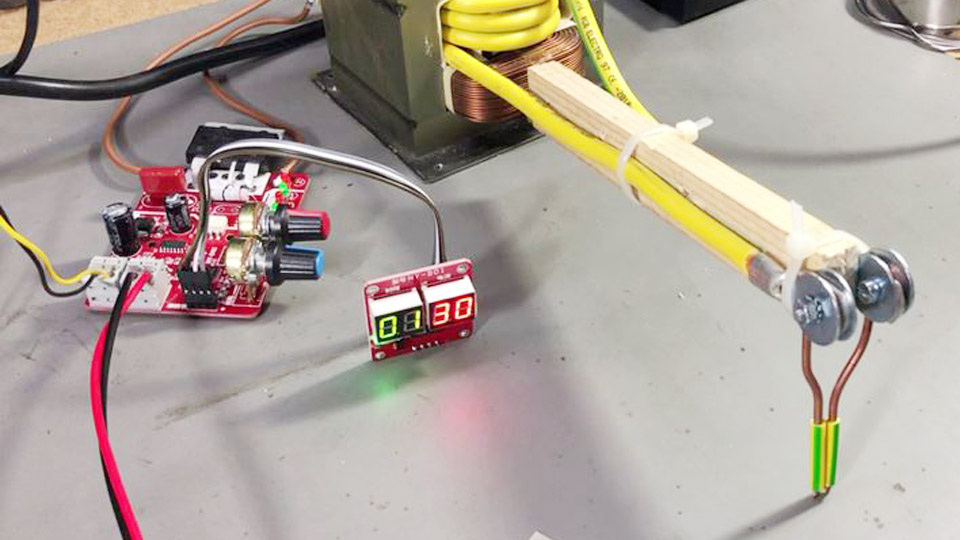
In a busy fabrication shop, you’re clamping 1.2 mm DP1000 ultra-high-strength steel sheets for a structural bracket that must survive 10 kN shear loads without pull-out or HAZ cracking. Spot welding forms a 6–7 mm nugget in 0.15–0.20 seconds using 10–13 kA current and 3–4 kN electrode force, delivering proven button-pull failure modes.
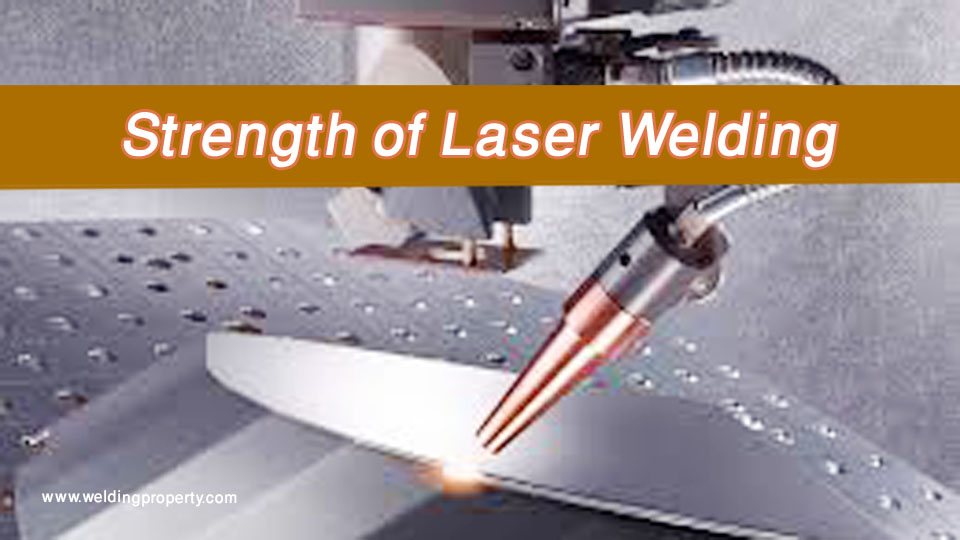
Laser welding concentrates 1–2 kW into a 0.3 mm keyhole spot, fusing the same stack with under 0.5 mm heat spread and adjustable seam lengths for equivalent or superior crash energy absorption.
Spot welding vs laser welding decisions directly control distortion, rework hours, electrode replacement costs, and part performance. The wrong choice on a 500-piece run can add 20–30 % to finishing time or drop joint efficiency below 80 %.
This comparison gives DIY welders, students, and professionals the exact parameters, thickness limits, strength data, and decision framework needed to match the process to real shop conditions—no fluff, just actionable numbers.

Process Fundamentals That Control Heat and Fusion
Resistance Heating and Nugget Formation in Spot Welding
Spot welding (resistance spot welding, RSW) relies on Joule heating: Heat input = I² × R × t, where contact resistance at the faying surface dominates the first 2–3 cycles. For two 1 mm mild steel sheets, standard schedules call for 8–13 kA current, 8–12 cycles (0.13–0.20 s at 60 Hz), and electrode force of 2.5–4 kN.
The resulting nugget diameter follows the 5√t rule—approximately 5–6 mm for 1 mm stock—producing a fusion zone that carries shear loads of 3–5 kN per spot in mild steel and up to 8–10 kN in AHSS when properly sized.
Electrode face diameter starts at 5–6 mm and must be dressed every 200–500 welds to maintain consistent current density. Higher force reduces surface expulsion but increases indentation depth to 10–15 % of sheet thickness if over 5 kN.
These values explain why spot welding remains the default for automotive body-in-white: repeatable nugget formation in under 0.5 s total cycle time, including robot indexing.
Focused Beam Energy and Keyhole Mode in Laser Welding
Laser welding delivers power density above 10⁶ W/cm² through a fiber-delivered beam (typically 1064 nm). At 900–1200 W and 25–40 mm/s travel speed on 1 mm stainless steel, the process shifts from conduction to stable keyhole mode within milliseconds. The vapor column transports energy deep into the joint, creating an aspect ratio >1.5:1 with fusion widths of 0.6–1.2 mm.
Shielding gas (argon at 10–15 L/min) prevents oxidation; nitrogen works for carbon steel. No mechanical pressure is required—fit-up gaps under 0.1 mm suffice. Pulsed operation (peak power 2–3× average) allows spot diameters down to 0.2 mm for microelectronics, while continuous-wave (CW) at 1.5–3 kW enables seam speeds up to 80 mm/s on 2 mm carbon steel.
These parameters explain laser welding’s edge on thin foils and dissimilar metals where resistance heating struggles with conductivity differences.
Thickness Ranges and Material Compatibility
Spot Welding Limits on Sheet Stacks and Dissimilar Combinations
Standard RSW handles total stack thicknesses up to 5–6 mm (e.g., three 2 mm sheets) before current shunting and heat balance become unreliable. Optimal range for automotive and DIY work is 0.5–3 mm per sheet. Mild steel and coated AHSS weld cleanly; aluminum requires 2–3× higher current (15–25 kA) and frequent electrode cleaning due to oxide and copper alloying.
Dissimilar thickness ratios beyond 1:3 or zinc-coated to bare steel often need pulsation schedules to avoid expulsion. Beyond 6 mm total, penetration drops sharply and expulsion risk climbs.
Laser Welding Penetration from 0.1 mm Foils to 10 mm+ Sections
Fiber lasers weld 0.1 mm stainless foils at 500–800 W and 40–60 mm/s without burn-through. At 1.5 kW and 20–30 mm/s, 1.5 mm stainless achieves full penetration in lap or butt joints. Carbon steel 2 mm runs at 1400–1800 W and 15–25 mm/s; aluminum 1.5 mm needs 1500–2000 W with excellent surface prep to counter reflectivity.
Higher power (3–6 kW) extends capability to 8–12 mm in a single pass with keyhole stability. Laser welding tolerates dissimilar metals (steel-to-aluminum with filler wire) and reflective materials far better than resistance methods because energy delivery bypasses bulk conductivity.
Heat-Affected Zone, Distortion, and Microstructure
Nugget Size, Softening, and Wider Thermal Spread in Spot Welds
A typical 1.2 mm AHSS spot weld creates a 6–8 mm HAZ where martensite tempers to ferrite, dropping local hardness 100–200 HV. Distortion reaches 0.2–0.5 mm across a 300 mm panel if clamping is insufficient.
In UHSS, this softening zone dictates cross-tensile failure at 60–70 % of base strength unless three-pulse schedules are used to refine grain structure.
Narrow Fusion Zone and Near-Zero Distortion with Laser Keyhole
Laser welds on the same 1.2 mm DP1000 produce <0.5 mm HAZ and residual stresses low enough for flat panels without post-flattening. Interfacial fracture risk exists in shear, but 25–30 mm seam length matches one spot weld’s tensile-shear load while delivering 15–20 % higher energy absorption in tearing modes.
Distortion stays under 0.05 mm, enabling thinner gauges and tighter tolerances in electronics housings or battery trays.
Joint Strength Data and Failure Modes
Shear and Cross-Tensile Performance of Resistance Nuggets
Minimum nugget shear strength follows AWS formulas: ST (kN) ≈ (–8.83×10⁻⁷ S² + 1.34×10⁻³ S + 1.514) × S × 4t¹·⁵ / 1000, where S is base tensile strength in MPa and t is thickness in mm. Real-world 1 mm mild steel spots deliver 3–5 kN shear; 1.2 mm DP1000 reaches 7–9 kN with button pull-out.
Cross-tensile values run 40–60 % lower. Pull-out failure is preferred—interfacial fracture signals undersized nuggets or excessive expulsion.
Laser Seam Length Equivalence and Optimized Fracture Behavior
Industry benchmarks show a 27 mm laser stitch equals one 1.2 mm AHSS spot weld in tensile-shear load. C- or S-shaped laser patterns eliminate interfacial fractures in crash tests (0 % vs 33 % for straight stitches). Coach-peel strength often exceeds spot welds by 15–25 % because the continuous fusion line distributes stress more evenly.
For battery tab welding, laser spots at 0.5–1 mm diameter achieve 1–2 kN pull strength on 0.3 mm nickel with zero splash when pulse energy is capped at 8–12 J.
Production Speed and Automation Throughput
Spot Welding Cycle Times in Robotic Lines
A single spot takes 0.1–0.3 s weld time plus 0.3–0.8 s robot move and gun close, yielding 3000–6000 spots per hour on body-in-white lines. Multi-gun stations push throughput higher; one robot can service 4–6 guns. High-volume automotive plants still rely on this because electrode life exceeds 2000 welds with proper dressing.
Laser Travel Speeds Enabling Continuous Seams
CW fiber lasers at 1.5–3 kW achieve 30–80 mm/s on 1–2 mm steel, replacing dozens of spots with a single 200–500 mm seam in under 10 s. Remote laser welding (scanner optics) eliminates physical gun motion, cutting cycle time another 30–40 %.
EV battery lines now use laser for tab-to-busbar seams at 50–100 parts per minute where spot welding would require 4–6 discrete welds per cell.
Equipment Investment and Lifecycle Costs
Spot Welder Options from DIY to Industrial
Entry-level DIY spot welders (capacitive discharge or transformer) cost $100–600 and handle 0.5–1 mm steel for battery packs. Professional pedestal or robotic guns range $5,000–$50,000. Operating cost centers on electrode caps ($2–5 each, replaced every 1,000–5,000 welds) and power consumption (20–50 kVA peaks). Maintenance is straightforward—tip dressing and water cooling checks.
Fiber Laser Systems and Long-Term Operational Savings
Handheld 1–2 kW fiber lasers now start at $3,000–$15,000; industrial robotic cells run $50,000–$200,000+. No consumable electrodes, no water chillers in many models, and post-weld cleanup drops 70–80 % because beads are smooth.
Automotive data shows spot/laser hybrid lines cut operating costs 38 % versus pure spot welding through fewer robots and reduced consumables. Energy use per meter of weld is lower once above 1 kW because travel speed offsets input.
Application-Specific Process Selection
Automotive Body-in-White: Spot Welding Still Dominates with Laser Hybrids
OEMs place 4,000–6,000 resistance spots per vehicle for consistent nugget strength and proven crash performance. Laser stitching supplements flanges in high-stress zones (rocker panels, B-pillars) where continuous joints raise stiffness 15–20 %. Hybrid lines use spot for initial tack and laser for final seams, delivering 4 % lower total cost and better down-gauging potential.
Precision Manufacturing in Batteries, Electronics, and Medical Devices
Laser welding rules here: zero splash on 0.2 mm copper tabs, hermetic seals on pacemaker cases, and clean joints on 0.1 mm stainless foil without electrode marks. Spot welding remains viable for cylindrical 18650 cells with nickel strips, but prismatic and pouch formats demand laser’s non-contact precision and ability to weld aluminum-to-copper transitions.
Decision Framework for Hobbyists and Professionals
Spot Welding Wins When Volume, Cost, and Shear Strength Matter Most
Choose spot welding for:
- Sheet metal under 3 mm total stack
- High-volume runs >500 parts
- Budgets under $5,000 for equipment
- Applications tolerating 0.2–0.5 mm distortion
- Materials where 5–9 kN nugget shear is sufficient
Start with AWS schedules, verify nugget size via peel test, and dress electrodes every shift.
Laser Welding Advantages for Precision, Thin Material, and Future Scaling
Switch to laser when:
- Distortion must stay below 0.1 mm
- Thickness <0.5 mm or >6 mm total
- Dissimilar metals or reflective alloys are involved
- Hermetic or cosmetic requirements exist
- Long-term operating savings outweigh $10k+ initial investment
Begin with 1 kW handheld for shop trials, optimize speed/power via bead cross-sections, and use argon shielding for stainless and aluminum.
| Metric | Spot Welding | Laser Welding |
|---|---|---|
| Typical Thickness | 0.5–6 mm total stack | 0.1–12+ mm |
| HAZ Width | 4–8 mm | <0.5 mm |
| Distortion (300 mm panel) | 0.2–0.5 mm | <0.05 mm |
| Shear Strength (1.2 mm AHSS) | 7–9 kN per spot | Equivalent at 25–30 mm seam |
| Cycle Time (1 m joint) | 15–30 s (multiple spots) | 10–20 s continuous |
| Entry Cost (DIY/Pro) | $100–$50k | $3k–$200k |
| Consumable Cost | Electrodes every 1–5k welds | Shielding gas only |
Use this matrix against your next project’s material certificate, annual volume, and tolerance callouts.
Wrapping Up
The real-world choice comes down to required shear strength per joint versus acceptable distortion and long-term operating cost. Spot welding still delivers the fastest, cheapest nugget for high-volume mild and AHSS sheet under 6 mm.
Laser welding provides unmatched precision and flexibility once part geometry or material complexity exceeds resistance limits.
Top fabricators increasingly hybridize—tacking with spot then finishing with laser—to combine both strengths without full capital replacement. That hybrid insight separates shops hitting 95 % first-pass yield from those chasing rework.
FAQs
Can laser welding fully replace spot welding in automotive body panels?
No. Laser seams match spot shear strength only at 25–30 mm length per equivalent spot, and current robotic infrastructure favors discrete nuggets for fixturing. Hybrids are the practical transition—spot for tacks, laser for critical seams.
Is spot welding stronger than laser welding for 1.2 mm steel?
In direct comparison on DP1000, resistance spots deliver 183 % higher tensile-shear and 63 % higher cross-tensile loads due to larger load-bearing nugget area. Laser compensates with longer continuous welds.
How much cheaper is spot welding equipment for DIY users?
DIY spot welders start at $100–600 versus $3,000+ for entry-level 1 kW handheld laser systems. Electrode maintenance adds $50–200 yearly; laser shielding gas is the only recurring consumable.
What thickness forces a switch from spot to laser welding?
Above 6 mm total stack or below 0.5 mm single sheet, spot welding reliability drops sharply. Laser handles both extremes without parameter gymnastics.