TIG welding cast iron to mild steel is one of the more advanced joining tasks in metal fabrication because these metals have very different thermal and mechanical properties.
The key challenge is that cast iron is brittle and has a high carbon content, while mild steel is more ductile and has different thermal expansion. If not managed properly, this mismatch can lead to cracking, poor fusion, or weld failure.
In real welding conditions, success depends on careful preparation: cleaning surfaces, removing impurities, and often preheating the cast iron to reduce thermal shock.
Using a nickel-based filler rod is standard because it accommodates the difference in expansion rates and creates a ductile, crack-resistant weld. Controlling amperage, travel speed, and interpass temperature is critical to prevent warping or porosity.
Mastering these techniques allows welders to create a strong, reliable joint between cast iron and mild steel, ensuring structural integrity while minimizing rework and inspection issues.

Photo by 4wdmechanix
Material Properties and Compatibility
Cast Iron Characteristics
Cast iron, typically containing 2-4% carbon along with silicon and manganese, exhibits excellent compressive strength and vibration damping, making it ideal for engine blocks, pipes, and heavy-duty fixtures. Its microstructure—graphite flakes in gray cast iron or nodules in ductile variants—affects weldability.
Gray cast iron, the most common type, has a brinell hardness of 180-220 and a tensile strength around 20-40 ksi. The high carbon forms hard, brittle phases like cementite during cooling, increasing susceptibility to cracking. Thermal conductivity is low at about 50 W/m·K, leading to uneven heat distribution during welding.
Mild Steel Properties
Mild steel, with carbon content below 0.3%, offers high ductility and weldability, with tensile strengths of 50-70 ksi and yield strengths around 30-40 ksi. Its thermal conductivity is higher, approximately 50-60 W/m·K, similar to cast iron, but it expands and contracts more uniformly.
Mild steel’s face-centered cubic structure allows plastic deformation, relieving stresses that would otherwise cause cracks in cast iron. This contrast in ductility is a key factor in dissimilar joints.
Dissimilar Welding Challenges
The primary issue in TIG welding cast iron to mild steel stems from differing coefficients of thermal expansion: cast iron at 10-12 × 10^-6 /°C versus mild steel’s 11-13 × 10^-6 /°C. This mismatch can induce residual stresses, promoting cracks in the heat-affected zone (HAZ) of the cast iron.
Carbon migration from cast iron into the weld pool hardens the fusion zone, potentially exceeding 500 HV hardness, reducing toughness. Dilution effects—where base metals mix with filler—must be minimized to avoid brittle martensite formation.
TIG’s localized arc exacerbates these issues by creating steep thermal gradients, unlike processes with broader heat input.
Essential Preparation Steps
Surface Cleaning and Joint Design
Thorough cleaning is non-negotiable to prevent contamination-induced defects like porosity. Remove graphite smears, oil, rust, and paint from cast iron using solvent degreasers or wire brushing; avoid abrasive grinding on cast iron as it can embed particles. For mild steel, grind to bright metal.
Joint design favors bevels: a 60-70° single-V groove for thicknesses over 1/4 inch, or a double-V for heavier sections to ensure full penetration.
Edge preparation on cast iron should include a slight radius to reduce stress concentrations. Chamfer the cast iron side more aggressively to limit melting, as excessive heat can graphitize the surface.
Preheating Protocols
Preheating slows cooling rates, reducing HAZ hardness and cracking risks. Target 200-400°C (392-752°F) for gray cast iron, measured with tempilsticks or infrared pyrometers. Heat uniformly using torches or ovens, avoiding hotspots; for large assemblies, insulate non-weld areas.
Ductile cast iron may require lower preheats (100-300°C) due to better toughness. When joining to mild steel, preheat both to equalize expansion, but monitor steel to prevent grain coarsening above 500°C.
Preheating duration depends on mass: 30-60 minutes for 1-inch thick sections to achieve core temperature equilibrium.
Equipment and Consumable Selection
TIG Welder Configuration
Use a DC TIG welder with high-frequency start for precise arc initiation.
Polarity: DCEN (electrode negative) to concentrate heat in the workpiece, minimizing tungsten contamination. Amperage ranges from 80-150 A for 1/8-1/4 inch thicknesses, scaling to 200 A for thicker joints; start low to control puddle size. Foot pedal control is essential for amperage modulation during welding.
Tungsten electrode: 2% thoriated or lanthanated, 3/32-1/8 inch diameter, ground to a sharp point for arc stability. Cup size #6-8 with gas lens for better shielding coverage.
| Material Thickness (inch) | Amperage Range (A) | Travel Speed (in/min) | Tungsten Diameter (inch) |
|---|---|---|---|
| 1/8 | 80-110 | 4-6 | 3/32 |
| 1/4 | 110-150 | 3-5 | 1/8 |
| 3/8 | 150-200 | 2-4 | 1/8 |
Filler Rod Recommendations
Nickel-based fillers are optimal for compatibility and crack resistance. ENi-CI (99% nickel) provides malleable deposits with tensile strength matching cast iron (40-50 ksi), ideal for machinable welds.
For cost-effective options, ENiFe-CI (55% nickel-iron) offers better fusion line integrity due to lower expansion (9 × 10^-6 /°C), reducing stresses at the cast iron interface.
Rod diameter: 1/16-3/32 inch. Avoid steel fillers as they harden excessively; phosphor bronze can work for low-stress joints but lacks strength.
Shielding Gas Choices
Pure argon at 15-20 CFH flow rate ensures stable arc and prevents oxidation. Argon-helium mixes (75/25) can increase heat input for thicker sections, improving penetration without excessive amperage. Avoid CO2 blends, as they promote carburization in the weld pool.
The TIG Welding Process
Initial Setup and Tack Welding
Position the assembly to allow flat or horizontal welding where possible, as TIG excels in all positions but requires steady hand control. Apply tack welds every 2-3 inches using minimal heat (60-80 A) to hold alignment without inducing cracks.
Start tacks on the mild steel side, transitioning to cast iron to build confidence in puddle behavior. Monitor for immediate cracking; if observed, increase preheat or adjust filler addition.
Executing the Weld
Initiate the arc on the mild steel to establish a stable puddle, then move to the joint. Use a weaving technique—small circular motions—to distribute heat evenly, maintaining a 1/8-inch arc length.
Dip the filler rod into the leading edge of the puddle, adding material in short bursts to control dilution (aim for 20-30% from cast iron). Weld in 1-2 inch segments, allowing 30-60 seconds interpass cooling to keep HAZ temperatures below 600°C.
Penetration should reach 80-100% on the steel side, but limit to 50-70% on cast iron to avoid excessive melting. Arc stability is critical; fluctuations indicate gas flow issues or contaminated tungsten.
Heat Management Techniques
Pulse TIG mode enhances control: set peak amperage 20-30% above base, with 50-100 pulses per second and 40-60% background current. This reduces overall heat input by 15-20%, minimizing distortion. Monitor interpass temperatures with contact thermometers, not exceeding 300°C. For large joints, alternate sides to balance stresses.
Post-Weld Procedures
Cooling Strategies
Slow cooling is paramount to prevent martensite formation. Immediately after welding, cover the joint with ceramic fiber blankets rated to 2300°F or bury in dry sand preheated to 200°C.
Cooling rate should not exceed 50°C/hour until below 100°C. For critical applications, use controlled furnaces for post-weld heat treatment at 500-600°C for 1-2 hours, followed by furnace cooling.
Stress Relief and Peening
Peen the weld bead lightly with a ball-peen hammer while hot (above 200°C) to induce compressive stresses, countering tensile forces that cause cracking. Limit to ductile nickel deposits; avoid on hard phases. Inspect for cracks using dye penetrant; grind out minor defects and reweld if needed.
Troubleshooting Common Defects
Cracking Prevention
Fusion line cracks arise from high dilution or rapid cooling. Solution: Increase filler addition to buffer carbon migration, ensuring weld metal composition stays below 1% carbon. HAZ cracks in cast iron stem from brittleness; mitigate by extending preheat zones 2-3 inches beyond the joint.
Porosity Control
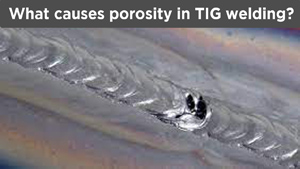
Porosity results from trapped gases in cast iron’s graphite. Pre-cleaning and dry filler rods reduce moisture; maintain gas coverage to exclude atmospheric nitrogen. If porosity exceeds 5%, grind back and reweld with higher argon flow.
Final Thoughts
In TIG welding cast iron to mild steel, the process demands a balance of precision and thermal discipline to produce joints with reliable performance. The nickel filler’s ability to accommodate material differences ensures tensile strengths approaching 45 ksi in the weld zone, with elongation up to 20% for enhanced toughness.
Key to success is minimizing heat-affected zone hardness below 350 HV through controlled preheating and cooling, which preserves the cast iron’s integrity while achieving full fusion with mild steel. This approach not only extends service life in high-vibration environments but also reduces rework in shop settings.
For an advanced insight, consider integrating pulsed TIG with real-time temperature monitoring via thermocouples. This allows dynamic amperage adjustment to maintain puddle fluidity without overheating, potentially improving penetration depth by 10-15% in ductile cast iron variants while cutting crack incidence in half.
FAQ
Can TIG welding be done without preheating cast iron to mild steel?
While cold TIG welding is feasible with nickel fillers and low heat input, it’s risky for sections over 1/8 inch thick, often leading to microcracks. Preheating remains the standard for defect-free results.
What filler rod diameter is best for 1/4-inch thick joints?
Opt for 3/32-inch nickel rods; they provide adequate deposition rates (0.5-1 lb/hour) without overwhelming the puddle, ensuring better control over dilution.
How does polarity affect TIG welds on these materials?
DCEN concentrates 70% heat in the workpiece, aiding penetration in cast iron, but switch to AC if aluminum contaminants are present, though rare in this pairing.
What interpass temperature should be maintained?
Keep it under 250°C to avoid cumulative heat buildup, which can exceed the cast iron’s critical transformation temperature and form unwanted phases.
Is post-weld machining possible on these joints?
Yes, with 99% nickel fillers, as deposits machine cleanly at speeds up to 50 sfm; 55% variants may require carbide tools for harder zones.