Welding defects are flaws that compromise joint strength, appearance, and service life, making them a critical concern in fabrication and repair work.
Understanding welding defects and remedies is essential because even minor imperfections—like porosity, undercut, or incomplete fusion—can lead to weld failure, costly rework, inspection issues, or safety hazards in structural applications.
In real welding conditions, defects often arise from incorrect amperage, poor joint preparation, wrong filler selection, unstable arc, or operator technique.
Each defect type has a specific cause and corresponding remedy, ranging from adjusting heat input, cleaning the base metal, modifying travel speed, to changing electrode angles or shielding practices.
This guide breaks down common welding flaws, their underlying causes, and practical remedies that keep joints strong, inspections compliant, and production efficient, helping welders reduce rework and maintain high-quality results consistently.

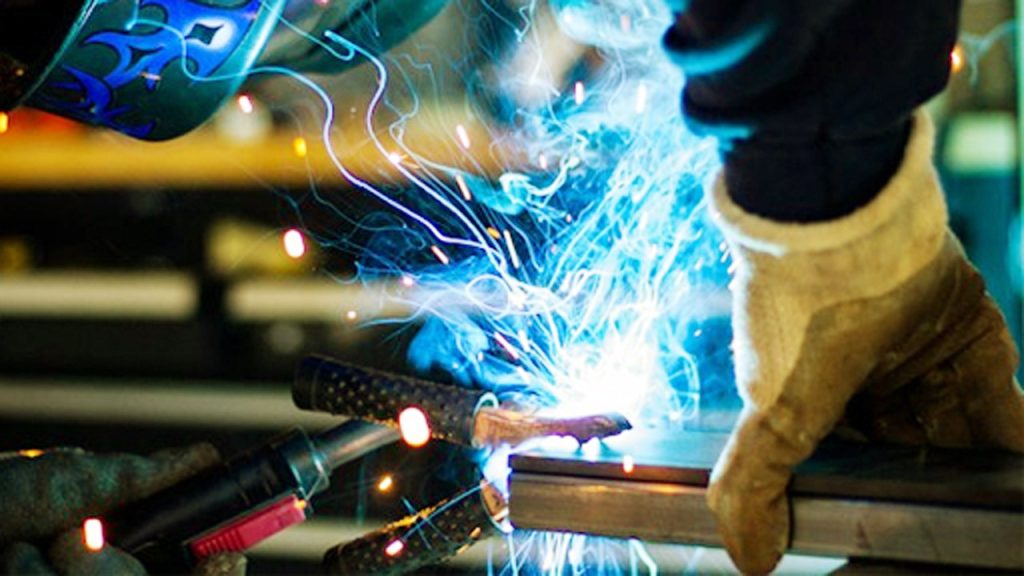
Image by eziil
Classifying Welding Defects
Welding defects fall into two primary categories: external and internal. External defects appear on the surface and are detectable through visual inspection, often indicating issues with technique or parameters.
Internal defects, hidden within the weld metal or heat-affected zone (HAZ), require non-destructive testing (NDT) methods like ultrasonic or radiographic examination to identify.
Both types can reduce tensile strength by up to 30-50% depending on severity, as quantified in AWS D1.1 standards. Understanding this classification aids in selecting appropriate inspection and repair strategies.
External defects include undercut, spatter, and cracks, while internal ones encompass porosity, slag inclusions, and lack of fusion. Factors like joint design, electrode polarity, and travel speed influence their occurrence across processes such as SMAW, GMAW, and GTAW.
Porosity: Gas Entrapment Issues
Porosity manifests as small voids or bubbles within the weld bead, resembling a Swiss cheese cross-section. This defect weakens the weld by creating stress concentrations that can initiate fatigue cracks under cyclic loading.
In technical terms, porosity arises when gases like hydrogen, nitrogen, or carbon dioxide become trapped in the solidifying weld pool, often due to dissociation from contaminants or inadequate shielding.
Root causes include surface contamination from oil, rust, or paint, which releases volatiles during arc heating. In GMAW, insufficient shielding gas flow—typically below 20 cubic feet per hour (CFH)—allows atmospheric intrusion, introducing nitrogen at levels exceeding 0.1% by volume.
Damp electrodes in SMAW, such as those with moisture content above 0.4%, contribute hydrogen, leading to diffusible hydrogen levels over 5 ml/100g in the weld metal. High travel speeds above 15 inches per minute (IPM) prevent gas escape, while long arc lengths increase exposure to air.
To remedy porosity, first clean base metals with wire brushing or solvent degreasing to remove contaminants. Adjust shielding gas to 25-35 CFH for GMAW on carbon steel, ensuring nozzle integrity to maintain laminar flow. For SMAW, bake low-hydrogen electrodes like E7018 at 250-300°F for 2 hours to reduce moisture.
Reduce travel speed to 10-12 IPM to allow bubble flotation, and maintain arc length at 1/8 inch. If porosity persists, switch to a gas mixture with higher argon content for better coverage.
| Cause | Technical Reason | Remedy |
|---|---|---|
| Contamination | Volatiles release gases during melting | Degrease and wire brush surfaces |
| Low gas flow | Atmospheric N2/O2 intrusion | Set to 25-35 CFH; check leaks |
| Damp consumables | Hydrogen diffusion into weld pool | Bake electrodes at 250-300°F |
| High speed/long arc | Reduced gas escape time | Slow to 10-12 IPM; shorten arc to 1/8″ |
Cracks: Structural Integrity Threats
Cracks are linear discontinuities that propagate through the weld or HAZ, often leading to catastrophic failure. They classify as hot cracks (occurring above 1000°F during solidification) or cold cracks (below 400°F post-weld).
Hot cracks result from low-melting impurities segregating to grain boundaries, reducing ductility, while cold cracks stem from hydrogen embrittlement in high-strength steels with yield strengths over 50 ksi.
Causes involve high restraint in thick sections (over 1 inch), rapid cooling rates exceeding 50°F/second, or hydrogen from damp flux in FCAW.
In GTAW on austenitic stainless, sulfur content above 0.03% promotes centerline cracking. Amperage too high (above 200A for 1/8″ rods) induces excessive heat input, worsening residual stresses up to 70% of yield strength.
Remedies start with preheating base metals to 200-400°F to slow cooling and diffuse hydrogen. Use low-hydrogen consumables like E7018 with diffusible hydrogen under 8 ml/100g. Control interpass temperature below 500°F to minimize HAZ hardening.
For hot cracks, select fillers with manganese-to-sulfur ratios above 20:1. Grind out cracks to sound metal before rewelding, ensuring full penetration.
In shop practice, preheating high-carbon steels has prevented 80% of cold cracking incidents by allowing hydrogen escape.
| Cause | Technical Reason | Remedy |
|---|---|---|
| High restraint | Residual stresses exceed ductility | Use clamps judiciously; preheat |
| Hydrogen presence | Embrittlement in HAZ | Low-H fillers; post-weld heat |
| Impurities | Grain boundary weakening | Control S/P levels in materials |
| Excessive heat | Rapid contraction | Limit amperage to 150-180A |
Undercut: Groove Formation at Weld Toes
Undercut appears as a groove melted into the base metal adjacent to the weld toe, reducing cross-sectional area and creating notch effects that lower fatigue life by 20-40%. This defect occurs when the arc erodes the base metal without sufficient filler deposition, often in horizontal or overhead positions.
Root causes include excessive amperage (over 180A for 3/32″ electrodes in SMAW), leading to melt-back, or travel speeds above 12 IPM that limit fill time. Incorrect electrode angle—greater than 15° from perpendicular—directs heat unevenly. In GMAW, voltage above 28V widens the arc cone, exacerbating erosion on carbon steel.
To correct, reduce amperage to 140-160A and slow travel to 8-10 IPM for better puddle control. Maintain electrode angle at 10-15° drag for flat positions. Use weaving techniques with widths under 3x rod diameter to ensure toe fusion. If undercut forms, grind lightly and apply a reinforcement pass.
| Cause | Technical Reason | Remedy |
|---|---|---|
| High amperage | Excessive base melt | Drop to 140-160A |
| Fast travel | Insufficient fill | Slow to 8-10 IPM |
| Wrong angle | Uneven heat distribution | Adjust to 10-15° drag |
| High voltage | Wide arc erosion | Set to 24-26V for GMAW |
Incomplete Fusion: Bonding Failures
Incomplete fusion, or lack of fusion (LOF), happens when the weld metal fails to coalesce with the base metal or previous beads, creating planes of weakness that can delaminate under load. This internal defect reduces joint efficiency to below 70%, as per ASME Section IX.
Causes stem from low heat input, such as amperage under 120A for 1/8″ joints in SMAW, preventing melt-through. Narrow joint gaps below 1/16″ hinder access, while oxide layers from inadequate cleaning block metallurgical bonding. In GTAW, insufficient filler addition rates (under 5 IPM) leave unfused zones.
Remedies involve increasing amperage to 150-170A for deeper penetration and widening bevel angles to 30-45°. Clean joints with grinding to remove mill scale. Employ stringer beads for roots, ensuring overlap of 50%. Ultrasonic testing confirms fusion post-weld.
Slag Inclusions: Entrapped Non-Metallics
Slag inclusions are non-metallic residues trapped in the weld, acting as inclusions that initiate cracks or reduce corrosion resistance in stainless welds. In SMAW, slag from flux coatings (e.g., rutile in E6013) fails to float out if not removed between passes.
Root causes include poor interpass cleaning, leaving slag with melting points around 2500°F embedded. Low amperage below 130A reduces puddle fluidity, trapping slag. Wide weaves over 4x rod diameter create entrapment pockets.
To remedy, chip and brush slag thoroughly after each pass. Increase amperage to 150A for better fluidity. Use narrower weaves and ensure slag-forming electrodes like E7018 are handled dry. Radiography detects internal inclusions for repair.
| Cause | Technical Reason | Remedy |
|---|---|---|
| Poor cleaning | Residual slag entrapment | Chip/brush interpass |
| Low amperage | Reduced puddle flow | Raise to 150A |
| Wide weave | Pocket formation | Limit to 3x diameter |
| Damp flux | Altered slag viscosity | Store dry at 100°F |
Spatter: Expelled Metal Droplets
Spatter consists of molten droplets ejected from the arc, adhering to surfaces and requiring post-weld cleanup. While not structurally critical, excessive spatter indicates instability, reducing deposition efficiency by 10-15%.
Causes include high voltage (above 30V in GMAW short-circuit mode), causing globular transfer instead of spray. Incorrect polarity—DCEP for most but DCEN for some FCAW—disrupts droplet detachment. Contaminated wire with drawing lubricants increases spatter.
Remedies: Optimize voltage to 22-28V for spray transfer on 0.035″ wire. Confirm DCEP polarity for GMAW. Use anti-spatter compounds or clean wire feeders. Shorten stickout to 3/8-1/2″ for stability.
Distortion: Dimensional Changes
Distortion warps the workpiece due to uneven heating and contraction, affecting fit-up in assemblies. In thin sheets under 1/4″, heat inputs over 20 kJ/inch cause angular distortion up to 5°.
Root causes: High heat from amperage above 200A or slow speeds below 6 IPM. Unbalanced welding sequences amplify shrinkage forces.
To correct, use skip welding or backstep techniques to distribute heat. Clamp fixtures to restrain movement. Preheat to 150°F for uniform expansion. Post-weld straightening may be needed for severe cases.
In fabrication shops, sequencing multi-pass welds from center outward has minimized distortion in frame builds.
Incomplete Penetration: Root Failures
Incomplete penetration leaves the joint root unfused, common in single-sided welds, reducing load capacity by 40%. In pipe welding, this violates API 1104 standards.
Causes: Narrow root gaps under 3/32″, low amperage (below 140A in GTAW), or excessive land thickness over 1/16″.
Remedies: Prepare bevels with 37.5° angles and 1/16″ lands. Boost amperage to 160A for melt-through. Use consumable inserts for critical roots.
| Cause | Technical Reason | Remedy |
|---|---|---|
| Narrow gap | Limited arc access | Widen to 1/8″ |
| Low amperage | Shallow melt | Increase to 160A |
| Thick land | Blocked penetration | Thin to 1/16″ |
| Wrong technique | Poor root focus | Use keyhole in GTAW |
Prevention Strategies Across Processes
Preventing defects requires process-specific controls. For SMAW, maintain electrode angles at 15-20° and amperage ranges of 90-140A for 3/32″ rods on mild steel to ensure arc stability and penetration.
In GMAW, wire feed speeds of 300-400 IPM with 18-22V promote spray transfer, minimizing spatter and porosity. GTAW demands precise tungsten extension at 1/8″ and gas post-flow of 10-15 seconds to protect the cooling pool.
Joint preparation is key: bevel angles of 30° for plates over 1/2″ thick facilitate fusion. Monitor travel speeds at 8-12 IPM to balance heat input. Implement quality checks like dye penetrant for surfaces and UT for internals.
Conclusion: Building Robust Prevention Protocols
Focusing on prevention transforms defect management from reactive repairs to proactive quality assurance in welding operations.
By systematically addressing root causes through parameter optimization, material handling, and technique refinement, welders can achieve defect rates below 2%, enhancing productivity and compliance with U.S. standards like AWS. This approach not only minimizes downtime but also extends service life in high-stakes environments.
In multi-pass welds on high-strength low-alloy (HSLA) steels, controlling interpass temperatures to 250-350°F optimizes microstructure, reducing susceptibility to hydrogen-assisted cracking while maintaining yield strengths above 70 ksi.
FAQ’s
What are the main causes of porosity in MIG welding?
Porosity in MIG arises from gas entrapment due to low shielding flow under 25 CFH or contaminated wire. Adjust flow to 30 CFH and use clean, copper-coated wire for prevention.
How do I fix undercut in stick welding?
Undercut in stick welding stems from high amperage or fast travel. Reduce to 120-140A, slow speed to 8 IPM, and use a slight weave to fill toes effectively.
Why do cracks appear after welding carbon steel?
Cracks post-weld on carbon steel often result from hydrogen in damp electrodes. Use low-hydrogen types and preheat to 300°F to allow diffusion.
What’s the remedy for slag inclusions in flux-cored arc welding?
Slag inclusions occur from inadequate cleaning. Thoroughly remove slag between passes with chipping hammers and brushes, ensuring complete coverage in subsequent beads.
How can I prevent distortion in thin sheet metal welding?
Distortion in thin sheets is caused by uneven heat. Employ low heat inputs under 15 kJ/inch, tack welds, and alternating sequences to balance contraction forces.