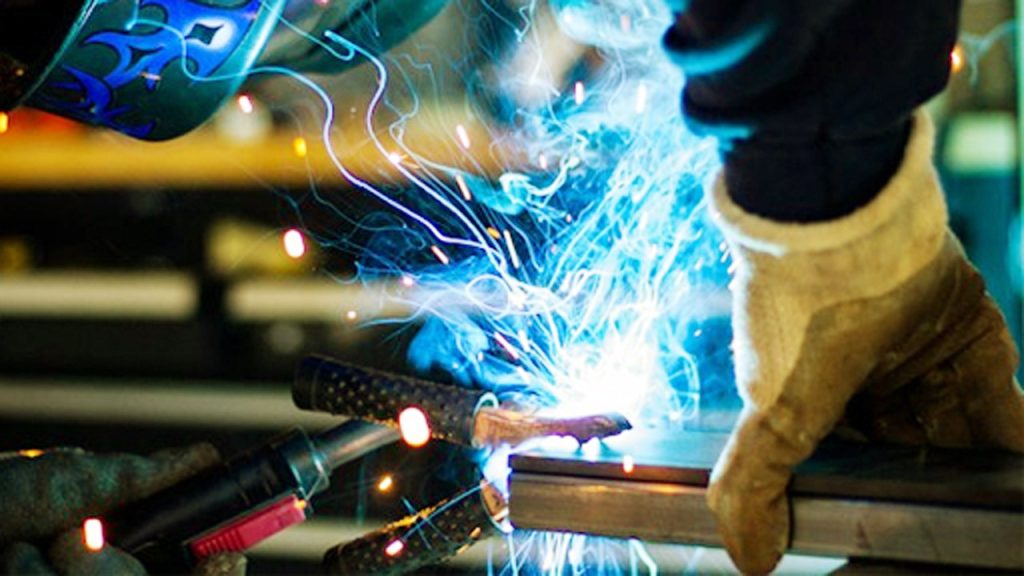
If you’ve ever tried welding, you’ve probably noticed tiny molten metal droplets flying around. Some of them land on your workpiece, your welding table, and sometimes even your clothes. That’s spatter—one of the most common challenges welders face. When I first started welding, spatter was something I constantly battled. It made my welds look messy, and cleaning up afterward took forever.
If you’re dealing with the same issue, don’t worry. I’ve been there, and I can help you understand what causes welding spatter and how to reduce it.

Image by weldingis
Spatter in Welding
Spatter in welding refers to small molten metal droplets that are expelled from the weld pool during the welding process. These droplets solidify once they land on a surface, leaving behind tiny metal beads that can make your workpiece look rough and untidy.
It mostly happens when the arc is unstable or when the welding settings aren’t properly adjusted. The amount of spatter varies depending on the welding method, materials, and operator skill. While some welding techniques naturally produce more spatter, others create very little.
What Causes Spatter in Welding?
There are several reasons why spatter happens, and understanding them can help you reduce or prevent it. Here are the main causes:
Incorrect Voltage and Amperage Settings
Welding machines have specific voltage and amperage ranges for different materials and thicknesses. If the settings are too high or too low, the arc becomes unstable, leading to excess spatter.
- Too high voltage – The arc becomes too long, and the molten metal sprays unpredictably.
- Too low voltage – The arc struggles to maintain stability, causing irregular metal deposition.
Poor Wire Feed Speed in MIG Welding
In MIG welding, wire feed speed plays a crucial role. If the speed is too fast, it forces excess metal into the weld pool, creating spatter. If it’s too slow, the arc becomes erratic, also leading to spatter.
Dirty or Contaminated Metal
Rust, oil, grease, or paint on the base metal can cause serious spatter problems. Contaminants interfere with the welding process, making the arc unstable and leading to excess metal droplets being expelled.
Using the Wrong Shielding Gas
If you’re welding with MIG or TIG, shielding gas is essential for arc stability. Using the wrong type or incorrect gas flow rate can create turbulence around the arc, leading to more spatter.
- Pure CO₂ tends to produce more spatter than a mixed gas like 75% Argon and 25% CO₂.
- Too much gas flow can cause turbulence, while too little gas fails to protect the arc properly.
Holding the Welding Torch at the Wrong Angle
Your torch angle significantly affects spatter. Holding it at an incorrect angle can make the arc unstable. The ideal angle depends on the welding method:
- MIG welding – Keep a 10-15 degree angle when pushing or dragging the torch.
- Stick welding – A slight drag angle helps maintain a stable arc.
Poor Quality or Improper Electrode Selection
In stick welding (SMAW) or MIG welding, the type of electrode or wire you use makes a big difference.
- Low-quality or moist electrodes can cause excess spatter.
- Choosing the wrong wire diameter can result in improper arc performance.
Welding Too Fast or Too Slow
Your travel speed affects how much spatter you produce. If you move too fast, the arc can become unstable. If you move too slow, the excess heat builds up, causing more molten metal to splash out.
Spatter Levels in Different Welding Methods
Some welding methods naturally create more spatter than others. Let’s look at how different processes compare:
| Welding Method | Spatter Level | Notes |
|---|---|---|
| Stick Welding (SMAW) | High | Due to flux coating burning off |
| MIG Welding (GMAW) with CO₂ | Moderate to High | Pure CO₂ produces more spatter |
| MIG Welding with Argon Mix | Low | Cleaner welds, less spatter |
| Flux-Cored Welding (FCAW) | High | Flux creates slag and additional spatter |
| TIG Welding (GTAW) | Very Low | Produces little to no spatter |
How to Reduce Spatter in Welding
If you want cleaner welds with minimal spatter, here are some proven tips to help:
Optimize Your Welding Settings
Always adjust your voltage, amperage, and wire feed speed according to the thickness of the metal. If you’re unsure, consult the welder’s manual or a settings chart to get the right parameters.
Use the Right Shielding Gas
If you’re using MIG welding, consider using a 75% Argon / 25% CO₂ gas mix. It produces a more stable arc and results in less spatter than pure CO₂.
Keep Your Metal Clean
Before welding, clean your base metal using a wire brush, grinder, or sandpaper to remove rust, dirt, or oil. This prevents contamination and helps achieve a more stable arc.
Hold the Torch at the Correct Angle
Maintain a proper torch angle (10-15 degrees) for better arc control. Avoid extreme angles, as they can lead to excess spatter.
Use High-Quality Electrodes and Wire
Cheap or improperly stored electrodes absorb moisture, causing instability in the arc. Always use fresh, high-quality welding wire or rods for the best results.
Adjust Your Travel Speed
Find a steady and controlled speed. Moving too fast causes arc instability, while moving too slow creates excess heat and more spatter.
Use Anti-Spatter Spray
If you’re still dealing with spatter, applying an anti-spatter spray on your workpiece and torch nozzle can help prevent metal droplets from sticking.
How to Remove Welding Spatter
Even with the best techniques, some spatter is unavoidable. Here’s how to clean it up effectively:
- Wire Brush – For light spatter, a stiff wire brush can remove small metal beads.
- Chipping Hammer – Works well for thicker spatter deposits.
- Angle Grinder – If spatter is stuck firmly, use an angle grinder to smooth the surface.
- Anti-Spatter Spray – Prevents spatter from sticking, making cleanup easier.
Is Spatter a Sign of a Bad Weld?
Not necessarily, but excessive spatter usually indicates a problem with technique or machine settings. While some welding methods naturally produce more spatter, an experienced welder can still control and minimize it. If you see too much spatter, take a step back and check your voltage, amperage, wire feed speed, and electrode selection. Making small adjustments can make a big difference.
Conclusion
Spatter is one of those things that every welder encounters, but it doesn’t have to ruin your welds. Once I started paying attention to welding settings, technique, and material preparation, I noticed a significant reduction in spatter. If you’re struggling with too much spatter, try adjusting your voltage, shielding gas, and travel speed. A little fine-tuning can make a big difference in creating cleaner and more professional-looking welds.
With practice, you’ll learn how to control spatter and focus on getting strong, high-quality welds. So, don’t let spatter discourage you—keep welding, keep improving, and you’ll see the results.
FAQs
Why does my MIG welder produce so much spatter?
It could be due to incorrect voltage, poor wire feed speed, or using pure CO₂ gas. Adjust your settings and try an Argon/CO₂ mix for cleaner welds.
Can I completely eliminate welding spatter?
Not entirely, but you can significantly reduce it by using the right settings, technique, and shielding gas.
Does spatter affect the strength of a weld?
Spatter itself doesn’t weaken the weld, but if it’s excessive, it might indicate poor arc stability, which can lead to weak welds.
What is the best way to remove welding spatter?
Use a wire brush, chipping hammer, or grinder to remove spatter. Applying anti-spatter spray beforehand makes cleanup easier.
Does flux-core welding create more spatter?
Yes, flux-core welding tends to produce more spatter because of the burning flux. Proper technique and quality wire can help minimize it.