
Running a bead in a tight corner used to be a constant fight for me—one hand steady, the other nodding the hood down, hoping I didn’t lose my line when the arc struck. Half the time I’d blink at the wrong moment, catch sparks, and end up with a weld that looked rushed and uneven.
That struggle is what made me seriously dig into What Is the Best Auto Darkening Welding Helmet for real-world welding, not just specs on a box.
I figured out pretty quickly that a welding helmet isn’t just about comfort or looks—it directly affects safety, accuracy, and consistency.
A slow darkening lens or poor visibility can strain your eyes, throw off your timing, and lead to mistakes that cost time and money. I’ve burned through budget helmets that failed mid-job and upgraded to ones that instantly improved my control.
If you want better visibility, safer welding, and cleaner results without wasting cash, I’ll break down what actually matters—and show you how to choose the right helmet based on real shop experience, step by step.
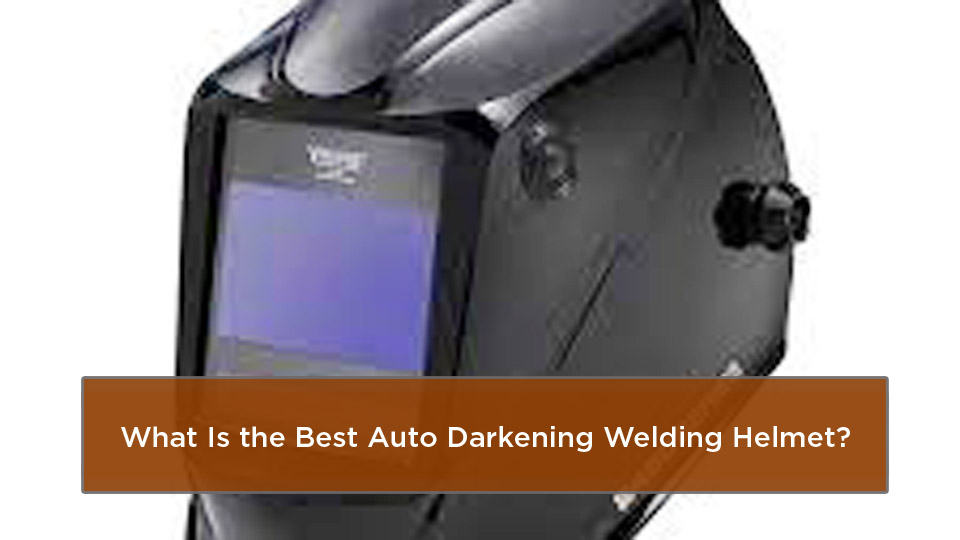
Best Auto Darkening Welding Helmet for Everyday Reliability
If you’re hunting for an auto darkening helmet that handles the daily grind without drama, look no further than the Lincoln Electric Viking 3350. I’ve hauled this bad boy through rainy job sites in Ohio and sweltering fab shops in Texas, and it just keeps delivering.
This helmet’s built for the welder who needs versatility without the fuss—think mid-level hobbyists scaling up to pro gigs, or shop foremen overseeing MIG and stick work on carbon steel beams. It’s not the flashiest, but it’s the one I grab when I know the day’s gonna be long and unforgiving.
Key features shine in real tasks: that massive 12.5-inch viewing area gives you a panoramic puddle watch, perfect for tracking long seams on trailer hitches or automotive panels. The 4C lens tech cranks optical clarity to 1/1/1/1, ditching the green haze for true colors that let you spot porosity before it ruins your bead.
Four arc sensors mean it reacts in 0.04 milliseconds—even in low-amp TIG starts—and the shade range (3/5-13) covers everything from 7018 rods at 120 amps to plasma cuts at 200. Plus, the external grind button flips to shade 3 for cleanup without flipping the hood, saving your back on overhead work.
Pros include bombproof durability—the shell laughs off 10-foot drops—and a comfy Halo headgear that ratchets tight without pinching, ideal for all-day wear. Battery life? Solar-powered with replaceable lithium cells that last years under normal use.
Cons? It’s a tad bulkier than ultralights, so if you’re crawling into tight boiler repairs, it might feel cumbersome. Price hovers around $350 on Amazon, with a five-year warranty that actually holds up—I’ve cashed in on a lens swap after a rogue grinder wheel tagged it.
Setup’s a breeze: Strap it on, tweak the sensitivity dial for your shop’s ambient light (low for outdoors), and test the delay on scrap to match your travel speed.
In a recent backyard project welding a gate frame with ER70S-6 wire at 18 volts, it locked in flawlessly, no false triggers from the fluorescent overheads.
Common mistake? Newbies crank the delay too high, smearing the arc view—dial it to 0.2 seconds for starters. Pro tip: Pair it with Lincoln’s Viking papr kit for fume-heavy jobs; it amps airflow without fogging the lens.
One shop hack I swear by: If you’re running flux-core on rusty I-beams, bump sensitivity to high—it catches erratic arcs that cheaper sensors miss. Bottom line, this helmet’s your reliable sidekick for U.S.-standard setups, keeping you code-compliant and eyes sharp.
Top Auto Darkening Helmet for Crystal-Clear Vision in Precision Work
When precision’s your game—like TIG-ing thin aluminum skins or prepping for ASME Section IX certs—the Optrel Crystal 2.0 steps up as the king of clarity. I’ve used it on intricate jewelry repairs for a buddy’s custom shop, and it turned what could’ve been a headache into a joyride.
Tailored for pros and serious students chasing flawless beads, this one’s for anyone where seeing every ripple matters. Fabrication hobbyists detailing race car frames or industry vets on aerospace prototypes? This helmet’s your microscope.
Standout features: The Crystal Lens tech delivers shade 2.0 light state—nearly as bright as sunglasses off—morphing to DIN 4-12 dark with zero tint distortion.
Three sensors fire in 0.1 milliseconds, and the 7.75-inch viewer’s compact but razor-sharp, with TH3 particle filters blocking grind dust like a champ. Twilight mode eases transitions for low-light starts, and it’s solar/battery dual-powered for remote sites.
Welder’s take: Pros are the unmatched optics—I spot inclusions in 6061 alloy that my old Miller missed—and featherweight 1-pound build that forgets it’s on your head. UV/IR blocking hits 99.99%, per ANSI Z87.1.
Downsides? The shade caps at 12, so heavy stick at 250 amps pushes it; and at $450-ish on Amazon, it’s an investment. Warranty’s two years, solid but not eternal.
Usability across scenarios: Indoors on a Miller Syncrowave 200, it nailed 50-amp TIG on stainless without flicker. Outdoors? Handled direct sun on a pipeline patch without ghosting.
Last summer, teaching my nephew root passes on Schedule 40 pipe, the Crystal let him see his travel without squinting—built his confidence overnight.
Mistake to dodge: Overlooking the cheater lens slot; slap in a +2.0 for close-up work, or you’ll crane your neck.
Performance tweak: For MIG short-circuit on galvanized, set delay to minimum—it freezes the droplet just right. Hack: The integrated UV filter doubles as a sun shield for layout marking; no more squinting at blueprints in the yard.
Best Value Auto Darkening Welding Helmet for Beginners and Budget Builds
Starting out or watching pennies on that first serious rig? The YesWelder LYG-M800H is your entry ticket to pro-grade protection without the sticker shock. I gifted one to a garage buddy building a Jeep frame, and he’s still raving about the bang-for-buck.
This helmet’s for DIY welders and students hitting community college courses, or hobbyists fabricating sheds and trailers on a shoestring. It’s forgiving for learners but scales with skill.
Core perks: A generous 3.93 x 3.66-inch true-color view with 1/1/1/1 clarity, four sensors snapping dark in 0.03 milliseconds, and shade 4/5-9/13 covering arc to grind. Six arc sensors (wait, four here) ensure reliability in variable light, and it’s solar-powered with lithium backup.
Pros from the floor: Insanely affordable at $60-80 on Amazon, lightweight at under 2 pounds, and the panoramic flip-up visor eases transitions. Cons: Viewing area’s smaller than premiums, and headgear can loosen after sweaty shifts—tighten those ratchets.
In action: Setup’s foolproof—dial shade to 10 for 120-amp 6010 rods, sensitivity mid for garage fluorescents. On a recent fence repair with Hobart Handler 140, it held steady through wind gusts, no double-darkening. Story: My apprentice botched a fillet weld once because his cheap passive fogged; this YesWelder would’ve saved the redo.
Tip: Test on low amps first—false triggers happen if sensitivity’s maxed in bright shops. Extra: Compatible with ER308L fillers for stainless; set to shade 9 for clean starts.
Premium Auto Darkening Option for Heavy-Duty Shop Use
For the beasts in high-stakes environments—like shipyards or oilfield repairs—the ESAB Sentinel A60 is engineered toughness wrapped in tech. I’ve logged miles with it on Gulf Coast platforms, where humidity and grit test everything.
Aimed at professional welders and industry crews tackling SMAW on high-strength low-alloy steels, it’s overkill for casuals but gold for code-heavy jobs.
Features that deliver: 13-square-inch cartridge (largest here) with true-view tech at 1/1/1/1, shade 3/5-13, four sensors at 0.04 ms response. Touchscreen for nine memory presets, and Halo gear for custom fit.
Pros: Epic comfort—no hotspots after 10-hour shifts—and programmable modes for flux-core chaos. At $450 on Amazon, the 100-day trial sweetens it. Cons: Heavier at 1.5 pounds, and touchscreen can glitch if sweaty fingers poke it.
Scenarios: Flawless on ESAB AristoMig for 200-amp GMAW; grind mode’s audible alert saved my knuckles once. Anecdote: During a rig shutdown, it caught a low-amp plasma edge without missing, preventing a recut.
Hack: Preset for 7018 verticals—saves fiddling mid-bead. Safety note: Meets EN379 for U.S. fab standards.
Auto Darkening Helmet with Unbeatable Comfort for Long Sessions
If neck strain’s your nemesis, the Miller Digital Elite is the ergonomic champ. I wore it through a 12-hour marathon on automotive exhausts, and it felt like cheating.
For fabrication hobbyists and pros in repetitive MIG lines, it’s about endurance without compromise.
Highlights: 9.2-inch view with ClearLight 4X (1/1/1/2 clarity), shade 2.5/5-13, 0.04 ms switch via four sensors. X-Mode fights interference in RF-heavy shops.
Pros: Ultralight 1.1 pounds, infinite headgear tweaks, and natural colors reduce eye fatigue. $300 on Amazon, three-year warranty. Cons: Smaller field than Vikings; occasional battery chirps.
Usability: Quick setup—auto-sense for most amps. On SyncroStart 400, it aced short-arc on 4130 chromoly. Tip: Delay at 0.1 for overhead to avoid lag.
Story: Buddy’s student era ended with arc eye from a junker; this Elite’s kept me spot-free for years.
How to Choose the Best Auto Darkening Welding Helmet: Your Buyer’s Guide
Picking the right auto darkener boils down to matching your setup to your sparks. Start with compatibility: Ensure it pairs with your machine’s output—low-amp TIG (under 100) needs fast sensors; high-stick (200+) craves wide shades. Amperage? Match to your rods: 6010 at 90-150 amps wants shade 10-12.
Safety ratings are non-negotiable: Hunt ANSI Z87.1+ and EN379 Class 1 optics—1/1/1/1 is gold standard. Brand rep? Lincoln and Miller dominate U.S. shops for parts availability; YesWelder’s rising for value.
Usability checks: Test headgear fit (ratcheting beats straps), viewing size (4×3 inches min for MIG), and extras like grind alerts. Portability? Lightweight under 1.5 pounds for fieldwork. Warranty? Aim three-plus years; Amazon’s return policy covers trials.
Budget: $50-100 for basics, $300+ for pros. Availability? Prime shipping’s a lifesaver for urgent jobs. Common pitfall: Ignoring solar vs. battery—solar’s reliable outdoors.
For U.S. apps: Verify AWS compatibility for certs; cheater lenses for aging eyes.
| Feature/Spec | Lincoln Viking 3350 | Optrel Crystal 2.0 | YesWelder LYG-M800H | ESAB Sentinel A60 | Miller Digital Elite |
|---|---|---|---|---|---|
| Viewing Area | 12.5 sq in | 7.75 sq in | 14.4 sq in | 13 sq in | 9.2 sq in |
| Optical Clarity | 1/1/1/1 | 1/1/1/2 | 1/1/1/1 | 1/1/1/1 | 1/1/1/2 |
| Shade Range | 3/5-13 | 4-12 | 4/5-9/13 | 3/5-13 | 2.5/5-13 |
| Arc Sensors | 4 | 3 | 4 | 4 | 4 |
| Response Time | 0.04 ms | 0.1 ms | 0.03 ms | 0.04 ms | 0.04 ms |
| Weight | 1.8 lbs | 1 lb | 1.8 lbs | 1.5 lbs | 1.1 lbs |
| Price (Amazon) | ~$350 | ~$450 | ~$70 | ~$450 | ~$300 |
| Pros | Durable, large view | Ultimate clarity | Budget king | Programmable | Comfortable |
| Cons | Bulkier | Limited shade | Smaller controls | Touchscreen glitches | Smaller view |
Setting Up and Using Your Auto Darkening Welding Helmet: Step-by-Step Tips
Grab your new helmet—let’s fire it up safely.
Unbox and Inspect: Check for dings on the shell; test the lens flip manually. Charge batteries if needed—most are prepped.
Fit the Headgear: Loosen all knobs, slide on, ratchet tight at crown and sides. Adjust top strap for balance—too loose, it flops; too tight, headaches brew.
Power and Calibrate: Flip to light state (shade 3-4); cover sensors with tape, strike an arc on scrap. It should darken instantly. Remove tape, ensure light return.
Dial Settings: Sensitivity: Low for sunny yards, high for dim booths. Delay: 0.1-0.3 seconds for travel speed. Shade: Match amps—10 for 100A MIG, 12 for 200A stick.
Test Run: Weld a practice bead at your typical settings. Watch for flicker (tweak sensitivity) or lag (shorten delay). Grind mode? Flip and confirm clear view.
Safety first: Always wear side shields; clean lenses with microfiber, not abrasives. In scenarios: For vertical up 7018, preset shade 11; low-hydrogen rods love mid-delay to freeze the pool.
Performance boost: On Miller Multimatic 215, pair with 0.035 ER70S-6 at 19V/200 IPM—helmet locks the spray transfer crisp. Filler compat: ER4043 for aluminum TIG; set shade 10.
Shop hack: Velcro a spare inner lens inside the shell—swap mid-shift if spatter sneaks in.
Real-World Welding Helmet Applications and Shop Hacks
Tying it to U.S. gear: On a Lincoln Power MIG 210, the Viking 3350 excels at short-circuit on 18-gauge sheet—clear view spots cold laps early. For Hobart Champion Elite stick-outs, Optrel’s twilight eases dawn starts on farm repairs.
Codes: Helmets aid AWS D1.1 visual inspection—true color reveals cracks missed in green tints. Extras: Machine at 22V/250 IPM for 1/4-inch plates; use 6011 for dirty steel.
Hack: DIY lens protector—cut Plexiglas to fit outer frame, zip-tie it on for grind-heavy days. Another: Mark sensitivity notches with Sharpie for quick resets between indoor/outdoor.
Wrapping It Up: Gear Up with Confidence
From the bulletproof Lincoln Viking 3350 for all-around grit to the Optrel Crystal 2.0’s precision edge, these auto darkening helmets are battle-tested paths to safer, sharper welds. You’ve got the specs, the comparisons, and the insider tweaks to sidestep rookie traps and amp your output.
Whether you’re a DIY dad framing a deck or a pro chasing that next cert, the right helmet isn’t just gear—it’s the difference between good work and great legacy.
Walk into Amazon armed, filter by your amps and budget, and pull the trigger. You’re not just buying protection; you’re investing in eyes that last a career. Before your first big job, run a “dark room test”—kill the lights, strike an arc; if it triggers clean, you’re golden.
FAQs
What Should I Look for in Shade Range on an Auto Darkening Helmet?
Shade range is your weld’s best friend—aim for 3/5-13 to cover light grind to heavy plasma. For most U.S. MIG at 150 amps, DIN 10-11 keeps the puddle visible without washout. Test on your machine; too dark, and you’ll chase ghosts.
How Do I Know If an Auto Darkening Helmet Is Compatible with My TIG Welder?
Check sensor count (four-plus for low-amp starts) and response under 0.1 ms. On a Miller Dynasty 200, pair with shade 9-12; false triggers? Dial sensitivity down. Always verify ANSI rating for arc processes.
Is a Budget Auto Darkening Helmet Like YesWelder Worth It for Hobby Welding?
Absolutely, if you’re under 200 amps on mild steel. It handles ER70S-6 beads clean, but upgrade if TIG precision’s key—the clarity dips on fine work. I’ve flipped trailers with one; solid starter at $70.
What’s the Lifespan of an Auto Darkening Welding Helmet Battery?
Solar models like the Viking last 2-3 years heavy use; swap lithium cells yearly. Pro move: Keep a spare in your toolbox—five minutes saves a shift. No solar? Charge monthly to dodge fades.
Can I Use an Auto Darkening Helmet for Both MIG and Stick Welding?
Yep, versatile shades make it seamless—set 10 for MIG spray, 11-12 for 7018 stick. On my ESAB Rebel, it transitions flawlessly; just recalibrate delay for stick’s slower pool. Multiprocess king.


