When I first started learning about welding, I quickly realized that it’s not just about joining two pieces of metal together. It’s an intricate process that requires precision and a deep understanding of the materials and methods involved.
One of the things that stuck out to me the most was the importance of identifying and avoiding welding defects. These flaws can compromise the strength and appearance of a weld, leading to failure down the line.
Welding defects can occur for many reasons: incorrect welding techniques, poor preparation, or even external environmental factors. While there are numerous potential problems, seven common defects tend to come up most often.
These are porosity, incomplete penetration, undercutting, cracks, slag inclusions, excessive spatter, and warping. Let’s take a closer look at each of these and understand how they form, what impact they have, and how we can avoid them.

Image by researchgate
1. Porosity
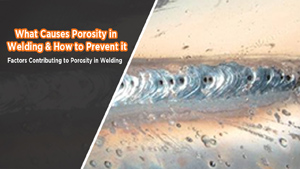
Porosity is one of the most frequent welding defects I’ve encountered. It occurs when small bubbles or voids are trapped within the weld metal. These bubbles form because of the gases that fail to escape before the weld solidifies. This results in weak points within the weld that can compromise its integrity.
Causes of Porosity
Porosity usually happens because of contamination. Oils, moisture, or rust on the metal surface can release gases when heated. If the shielding gas isn’t adequate, air from the environment can also get trapped inside the weld.
Prevention
The best way to prevent porosity is through proper surface preparation. Make sure to clean the metal thoroughly before welding. Additionally, check that your shielding gas is correctly set up and working efficiently.
Impact
The issue with porosity is that it creates holes within the weld, which weakens the entire structure. If left unchecked, the weld might fail under stress, especially in critical applications like pipelines or structural components.
Incomplete Penetration
When I first tried out welding, I quickly learned the importance of penetration. Incomplete penetration happens when the weld doesn’t extend all the way through the joint. Essentially, the welded area is only bonded on the surface, leaving the core of the joint weak and vulnerable.
Causes of Incomplete Penetration
This defect can result from insufficient heat, incorrect joint design, or improper welding techniques. In some cases, if the gap between the pieces being welded is too narrow, it restricts the flow of molten metal, preventing full penetration.
Prevention
To avoid incomplete penetration, I always recommend adjusting the heat and making sure the welding torch is angled properly. Also, ensuring that the joint is appropriately prepared (proper gap, bevel, etc.) is essential.
Impact
A weld with incomplete penetration is more prone to failure, especially under heavy loads or stress. It lacks the strength required for certain applications, and this can lead to dangerous situations in structural projects.
3. Undercutting
Undercutting was a defect that really frustrated me when I first started out. It refers to a groove that forms at the edge of the weld, essentially weakening the surrounding metal. Instead of a smooth transition between the base metal and the weld, there’s a sharp dip, which acts as a stress concentrator.
Causes of Undercutting
Typically, undercutting happens when the heat is too high or the welding speed is too fast. The excessive heat melts away the base metal, creating a groove that doesn’t get filled with enough weld material.
Prevention
Reducing the welding speed or lowering the heat settings can help prevent undercutting. I’ve found that maintaining a consistent and controlled pace during welding makes a big difference. Also, using the correct electrode angle can help fill in the groove properly.
Impact
Undercutting weakens the area around the weld, making it more susceptible to cracking and failure. This is especially concerning in situations where the weld is subject to dynamic or cyclic loading.
4. Cracks
Cracks are among the most dangerous welding defects. When I first encountered them, I immediately knew something was seriously wrong. Cracks can occur either during the welding process or afterward as the weld cools and solidifies. They can be surface-level or extend deep into the weld.
Causes of Cracks
There are multiple reasons why cracks form, such as excessive stress on the weld, rapid cooling, or using incompatible materials. If the welding is done too quickly, the weld can cool unevenly, causing it to crack.
Prevention
Proper preheating and post-weld heat treatment are essential to reduce the risk of cracks. Also, avoiding sharp transitions in the weld profile and ensuring the use of compatible materials will help minimize the chances of cracks forming.
Impact
Cracks are critical defects because they significantly compromise the structural integrity of the weld. They can propagate under stress and lead to catastrophic failure. In most cases, cracked welds need to be ground out and re-welded.
5. Slag Inclusions
Slag inclusions are another common welding defect that can weaken the weld if not addressed properly. It occurs when non-metallic materials (such as slag from the flux) get trapped in the weld, preventing proper fusion.
Causes of Slag Inclusions
Slag inclusions are often caused by poor cleaning between weld passes or improper welding technique. If the slag from the previous pass isn’t removed, it can get trapped in the subsequent weld pass.
Prevention
I always make sure to clean the weld thoroughly between passes. Proper technique, such as controlling the angle and speed of the torch, can also help ensure that slag doesn’t get trapped.
Impact
Slag inclusions can reduce the overall strength of the weld and act as stress points, leading to potential failure. It’s especially problematic in multi-pass welds where inclusions can weaken each layer.
6. Excessive Spatter
When I was learning welding, I found excessive spatter to be one of the most frustrating defects. Spatter refers to the small droplets of molten metal that are ejected from the weld and land on the surrounding area. While it doesn’t necessarily weaken the weld, it can make the finished product look messy and unprofessional.
Causes of Excessive Spatter
Spatter is usually caused by incorrect welding parameters, such as excessive voltage or current. It can also happen if the electrode is held too close to the workpiece or if the shielding gas is not sufficient.
Prevention
Using the correct welding parameters, such as adjusting the voltage and current settings, can help minimize spatter. Additionally, holding the electrode at the correct distance from the workpiece can reduce the amount of spatter produced.
Impact
While excessive spatter doesn’t typically weaken the weld itself, it can require additional cleanup, which is time-consuming. In some cases, the spatter can cause minor surface imperfections that need to be ground off.
7. Warping
Warping was one of the defects that puzzled me early on. I would finish a weld, and then later, I’d notice that the metal was bent or distorted. Warping occurs because of the uneven heating and cooling of the metal during the welding process.
Causes of Warping
The intense heat from welding causes the metal to expand and contract. If this expansion and contraction aren’t uniform, it results in warping. The thickness of the material and the amount of heat input are also factors that contribute to this defect.
Prevention
To prevent warping, I’ve found it’s crucial to use proper clamping and fixturing to hold the metal in place. Preheating the material and using controlled, intermittent welding techniques can also help minimize distortion.
Impact
Warping can make the final product look unprofessional, and in extreme cases, it can make the parts unusable. It’s essential to address warping early in the welding process to avoid costly rework.
Comparison Table of Welding Defects
| Defect | Cause | Impact | Prevention |
|---|---|---|---|
| Porosity | Contaminated surface, inadequate shielding gas | Weakens weld, reduces strength | Clean surface, check gas flow |
| Incomplete Penetration | Low heat, incorrect joint design | Weak weld, prone to failure | Adjust heat, improve joint preparation |
| Undercutting | Excessive heat, high welding speed | Weakens edge of the weld | Reduce heat, control welding speed |
| Cracks | Stress, rapid cooling, incompatible materials | Catastrophic failure | Preheat, post-weld heat treatment |
| Slag Inclusions | Poor cleaning, improper technique | Reduces strength, causes stress points | Clean between passes, proper technique |
| Excessive Spatter | Incorrect settings, poor technique | Aesthetic issues, extra cleanup | Adjust parameters, maintain distance |
| Warping | Uneven heating/cooling, material thickness | Distorts parts, affects usability | Use clamps, preheat, controlled welding |
Final Thoughts
In my experience, welding defects can be incredibly frustrating, especially when they compromise the integrity of your work. But with the right techniques and attention to detail, many of these defects can be avoided. If you’re mindful of these common issues, you’ll find that your welding projects will not only look better but perform better in the long run.
I hope this helps you better understand the seven common welding defects and gives you some insight into how to prevent them. Whether you’re new to welding or just looking to brush up on the basics, tackling these defects head-on will definitely improve your results.