If you’ve ever had a weld turn porous or watched spatter fly everywhere, chances are the gas setup wasn’t quite right. I’ve seen solid welds fall apart simply because the wrong shielding gas was chosen for the job. Over time, working with MIG, TIG, and even oxy-fuel setups taught me that welding gases matter just as much as amperage or technique.
Understanding what gases are used in welding helps you control arc stability, penetration, bead appearance, and overall weld strength. In this guide, I’ll break down the most common welding gases, explain what each one actually does, and share practical tips from the shop so you can choose the right gas every time and get cleaner, stronger welds.

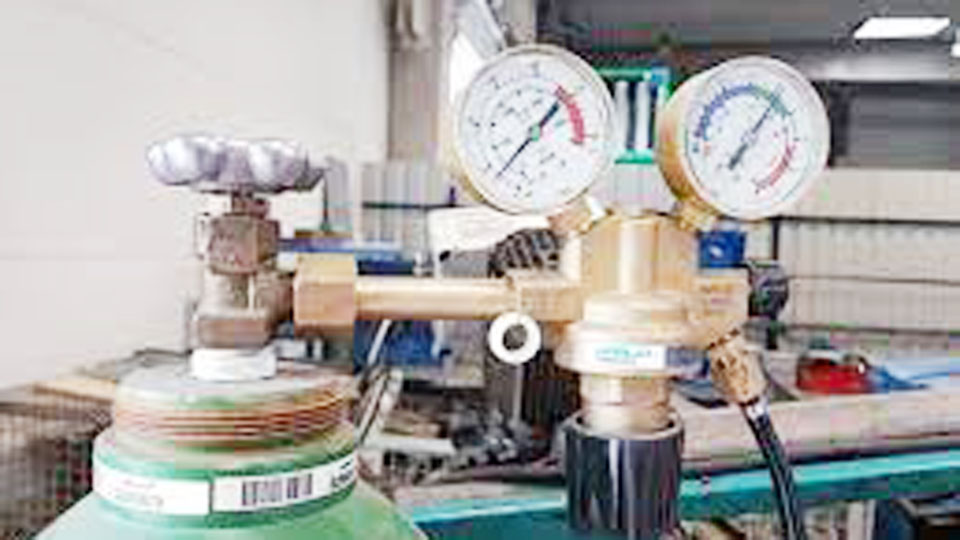
Image by machinemfg
Why Are Gases Important in Welding?
Before we dive into the types of gases, it’s important to know why gases are even used in welding. The main purpose of shielding gases is to protect the molten weld pool from atmospheric contamination. When metal is heated to its melting point, it becomes reactive with the air around it.
This can lead to defects like porosity or oxidation in the weld. Shielding gases provide a protective barrier around the weld, ensuring that the final result is strong and free of impurities.
In some welding methods, gases are also used to increase the heat and control the shape and stability of the arc. The choice of gas can directly impact the quality, appearance, and strength of the weld.
Types of Welding Gases
There isn’t just one gas used in welding. Different gases are chosen based on the welding method and the type of metal being welded. Here’s a look at some of the most commonly used gases in welding:
1. Argon
Argon is by far the most common shielding gas used in welding. It’s an inert gas, which means it doesn’t react with other substances. This quality makes it perfect for shielding the weld from atmospheric contamination. Argon is especially popular in Gas Tungsten Arc Welding (GTAW or TIG) and Gas Metal Arc Welding (GMAW or MIG).
Uses: Argon is widely used for welding non-ferrous metals like aluminum, magnesium, and titanium. It’s also used in combination with other gases for steel welding.
Advantages
- Provides excellent arc stability.
- Produces clean and aesthetically pleasing welds.
- Suitable for welding thin materials.
Disadvantages
- Argon by itself may not provide enough heat for welding thicker metals.
- More expensive compared to some other gases.
2. Carbon Dioxide (CO2)
Carbon dioxide is the only reactive gas commonly used in welding. While it doesn’t offer the same arc stability as argon, it has its own benefits. It’s mainly used in MIG welding because it can provide deep penetration in thick materials. CO2 is also the most cost-effective shielding gas, which makes it appealing for many applications.
Uses: Primarily used in MIG welding for carbon steel. It can be used on its own or mixed with argon.
Advantages
- Offers deep weld penetration, making it good for thick metals.
- Inexpensive compared to inert gases like argon.
- Creates a strong weld.
Disadvantages
- Higher levels of spatter compared to argon.
- Produces a harsher arc and less visually appealing welds.
- Can lead to oxidation if not used correctly.
3. Helium
Helium is another inert gas used in welding, though it’s not as common as argon due to its cost. Helium creates a hotter arc than argon, which can be useful for welding thicker materials. It’s often mixed with argon to balance cost and performance, especially in TIG welding of aluminum or copper.
Uses: Used in TIG welding for non-ferrous metals like aluminum and copper. Often mixed with argon for MIG welding.
Advantages
- Produces a hotter arc, suitable for thicker metals.
- Can be mixed with argon to optimize performance.
- Provides good penetration and faster welding speeds.
Disadvantages
- More expensive than argon and CO2.
- The hotter arc can be challenging to control for beginners.
4. Oxygen
While not used alone, small amounts of oxygen can be added to other shielding gases like argon. The addition of oxygen improves the arc stability and helps with the fusion of the weld. Typically, oxygen is added in low percentages (between 1-9%) for welding stainless steel and low alloy steels.
Uses: Mixed with argon for MIG and TIG welding of carbon steel and stainless steel.
Advantages
- Enhances arc stability.
- Improves penetration.
- Helps reduce surface tension in the weld.
Disadvantages
- Adding too much oxygen can cause oxidation and weaken the weld.
- Not suitable for non-ferrous metals like aluminum or magnesium.
5. Hydrogen
Hydrogen is used as a shielding gas in some specialized welding processes. It’s commonly added to argon for welding stainless steel, where it helps improve the weld’s surface finish. However, due to its reactivity, hydrogen isn’t suitable for all materials.
Uses: Mainly used in TIG welding of stainless steel.
Advantages
- Improves weld surface appearance.
- Enhances arc heat, which allows for faster welding.
Disadvantages
- Can cause porosity if used improperly.
- Not suitable for materials prone to hydrogen embrittlement, such as carbon steels.
Common Gas Mixtures Used in Welding
Sometimes, a single gas doesn’t offer all the characteristics needed for a perfect weld. That’s where gas mixtures come in handy. By mixing different gases, you can get the benefits of each, such as improved arc stability, better penetration, or reduced spatter.
Here are some common gas mixtures used in welding:
Argon-CO2 Mixtures
This is the most common mixture for MIG welding. A typical blend is 75% argon and 25% CO2, which offers a balance between arc stability and penetration. For thinner materials, a blend with less CO2 (like 90% argon, 10% CO2) is often used to reduce spatter.
Argon-Helium Mixtures
When welding thicker aluminum or copper, a mixture of argon and helium can provide better heat input and faster welding speeds. The ratio can vary, but a 50-50 blend is common for balancing cost and performance.
Argon-Oxygen Mixtures
Adding a small amount of oxygen (1-5%) to argon improves weld penetration and arc stability when welding carbon or stainless steel. This mixture is popular for MIG welding.
How to Choose the Right Gas for Welding
Choosing the right gas isn’t always straightforward. It depends on factors like the type of metal, the welding method, and the desired outcome. Here’s what you should consider:
Type of Metal
Some gases work better with specific metals. For instance, argon is ideal for non-ferrous metals like aluminum, while CO2 is better suited for thicker steel.
Welding Method
Certain gases pair better with specific welding techniques. Argon is often the go-to for TIG welding, while MIG welders frequently use mixtures of argon and CO2.
Thickness of Material
If you’re working with thick materials, gases like helium or CO2 may help provide the heat needed for deep penetration.
Cost
While argon may be the preferred gas, it’s also more expensive than CO2. For budget-conscious projects, using a mixture can provide a good balance between cost and weld quality.
Comparison of Common Welding Gases
To make it easier to understand the differences between the gases, here’s a comparison table summarizing their main features:
| Gas | Type | Common Welding Methods | Benefits | Limitations |
|---|---|---|---|---|
| Argon | Inert | TIG, MIG | Good arc stability, clean welds | More expensive, less heat for thick metals |
| Carbon Dioxide (CO2) | Reactive | MIG | Deep penetration, cost-effective | More spatter, harsher arc |
| Helium | Inert | TIG, MIG | Hotter arc, suitable for thick materials | Expensive, challenging for beginners |
| Oxygen | Reactive | MIG, TIG | Enhances arc stability, improves fusion | Can cause oxidation, not suitable for non-ferrous metals |
| Hydrogen | Reactive | TIG | Improves surface finish | Risk of porosity, not for carbon steels |
Practical Example: Selecting a Gas for MIG Welding Steel
Let’s say you’re planning to weld a steel frame using MIG welding. The first choice would typically be a mixture of argon and CO2, like a 75-25 blend. This mix provides a good balance between arc stability and penetration, making it suitable for steel of varying thickness. If you’re working with thinner steel, you might opt for a higher argon content (90% argon, 10% CO2) to reduce spatter.
On the other hand, if you’re working on thicker materials and need deeper penetration, using straight CO2 might be a better option despite the increased spatter. The choice ultimately depends on your specific needs and welding conditions.
Conclusion
The choice of gas in welding plays a huge role in the quality of the final weld. Understanding the different gases and how they interact with metals can make all the difference. Argon, CO2, helium, oxygen, and hydrogen each bring unique properties that can help you achieve a strong and clean weld, depending on the situation.
If you’re working on a project, don’t overlook the importance of picking the right gas. It’s not just about melting metal together; it’s about creating a bond that’s strong, clean, and durable.
Whether you’re welding for a hobby or a profession, having a good understanding of shielding gases will definitely improve your welding results