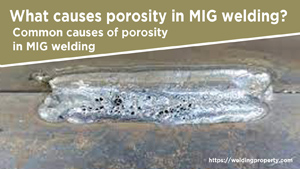
One thing that confused me early in my welding journey was whether you could actually MIG weld with flux core wire and shielding gas at the same time. Most welders hear “flux core” and instantly think no gas needed — but that’s not always true.
Once I started experimenting with dual-shield setups, I realized how much smoother the arc control, penetration, and bead appearance could be when done right. The catch? You’ve got to match your wire type, metal thickness, and gas blend carefully, or you’ll end up with porosity or excessive spatter.
This combination can deliver serious weld strength and productivity, especially on heavy steel or structural jobs, but it’s easy to get wrong if you treat it like standard MIG or flux core welding. In this guide, I’ll walk you through exactly how MIG welding with flux core wire and shielding gas works — and how to dial it in for cleaner, stronger, and more consistent welds.

Image by thefabricator
Understanding Flux Core Wire in MIG Welding
I remember when I first unboxed my MIG welder and stared at the spool options like they were alien tech. Flux core wire is a tubular electrode filled with flux – that powdery stuff that melts to create a protective slag over your weld pool.
In MIG welding, which stands for Metal Inert Gas but often gets used loosely for wire-fed processes, this wire feeds continuously through your gun.
How does it work? The arc melts the wire and base metal, the flux generates gases and slag to shield from oxygen and nitrogen in the air, preventing defects like porosity. When you add shielding gas, it’s like double protection – the gas blankets the area while the flux handles deoxidizing and stabilizing the arc.
I use this on mild steel projects mostly, but it shines on low-alloy steels too. Why choose it? For thicker plates or out-of-position welds, like overhead on a bridge repair I did once – the slag supports the pool, so it doesn’t sag. Just remember, clean your metal first; mill scale or rust can trap contaminants.
One time, I was helping a student fabricate a gate, and he skipped prep work. Ended up with worm tracks in the bead – those ugly lines from gas pockets. Lesson learned: grind or wire brush your joints for better fusion.
Self-Shielded vs Gas-Shielded Flux Core: What’s the Difference?
Self-shielded flux core (FCAW-S) relies solely on the flux to generate shielding gases – no external tank needed. It’s portable, great for outdoor work where wind blows away gas clouds. I grab it for quick farm repairs, like fixing a fence post in a breeze.
Gas-shielded, or dual shield (FCAW-G), pairs the wire with external gas like CO2 or argon/CO2 mixes. This combo enhances arc stability, reduces spatter, and improves deposition rates – meaning you lay down more weld metal faster. Use it indoors or in controlled environments for heavy fab, like building structural frames.
When to pick one over the other? If you’re a hobbyist welding thin sheet metal in your garage, self-shielded might suffice, but for pro-level integrity on thicker stock, gas-shielded wins. Pros: better penetration and less smoke. Cons: you need that gas bottle, and wind is still an enemy.
I once switched to gas-shielded on a job site after self-shielded gave me erratic arcs on galvanized steel – the gas helped burn through contaminants smoother. Semantic note: terms like “dual shield welding” or “gas-protected flux core” pop up in searches, but it’s all about that extra layer of protection.
Why Use Shielding Gas with Flux Core Wire?
In my experience, it’s about boosting performance. The gas – usually 100% CO2 for deeper penetration or 75/25 argon/CO2 for smoother beads – complements the flux, creating a stable arc that minimizes defects.
This matters for weld integrity: without proper shielding, oxygen sneaks in, causing bubbles that weaken the joint. On safety, a solid weld prevents failures in load-bearing parts. Cost-wise, while gas adds expense, the faster welding speed pays off in labor savings – I’ve finished jobs hours earlier.
Practical know-how: For mild steel, CO2 gives good bite but more spatter; argon mix reduces cleanup. Use it when welding over rust or paint, as the flux deoxidizes better with gas support.
On a pipeline repair, wind was light, so I used gas-shielded – got cleaner welds that passed inspection first try, unlike a buddy who stuck with self-shielded and had to grind out porosity.
Common mistake: Using self-shielded wire with gas accidentally – it wastes gas and can alloy the weld oddly, making it brittle. Fix: Check your wire label; if it’s T-1 or similar for gas, you’re good.
Choosing the Right Flux Core Wire and Shielding Gas
Picking wire is like choosing tools – match it to the job. Common types: E71T-1 for all-position welding on mild steel, great for vertical ups. It’s rutile-based, easy to control with low spatter.
For high-strength steels, go E81T or higher. Wire diameters? .035-inch for general use, .045 for thicker materials – handles higher amps without burning through.
Gas options: 100% CO2 for budget and penetration, but expect more cleanup. 75/25 mix for less spatter and better bead appearance. Dual C/M wires work with either.
Tips: Store wire dry to avoid moisture-induced porosity. I keep mine in a heated cabinet. Compatibility: Ensure wire matches base metal tensile strength – overmatching can cause cracks.
Personal story: Early on, I used wrong gas on a T-1C wire – spatter everywhere. Switched to proper mix, and beads looked pro. Semantic keywords: “flux cored electrode selection,” “shielding gas mixtures for FCAW.”
| Wire Type | Positions | Gas Required | Best For | Pros | Cons |
|---|---|---|---|---|---|
| E71T-1C | All | 100% CO2 | Mild steel, structural | High deposition, good penetration | More spatter |
| E71T-1M | All | 75/25 Ar/CO2 | Fabrication, thin to thick | Smooth arc, low spatter | Higher cost |
| E70T-4 | Flat/Horizontal | Self-shielded (but can gas) | Heavy plate | Fast, deep weld | Limited positions |
Setting Up Your MIG Welder for Flux Core with Gas
Step-by-step time – grab your helmet. First, polarity: DCEP (electrode positive) for most gas-shielded wires. Reverse from self-shielded’s DCEN.
Install wire: Use V-knurled drive rolls to grip the soft tube without crushing. Tension just enough to feed straight.
Gas setup: Regulator to 20-35 CFH – too low causes porosity, too high wastes gas and pulls in air.
Voltage and wire speed: Start at manufacturer chart, say 18-22 volts for .035 wire on 1/4-inch steel, 300-400 IPM speed. Tweak for flat bead.
Joint prep: Bevel edges on thick plates for full penetration. Clean to bare metal.
Teaching a hobbyist, he set voltage too high – birdnesting wire everywhere. Dropped it, and he nailed his first fillet.
Safety: Full PPE, good ventilation for fumes.
Techniques for Successful Welds
Drag technique: Pull the gun toward you at 10-30 degrees for flat welds, 5-15 for vertical.
Stick-out: 3/4 to 1 inch – longer for higher deposition, but watch for burnback.
Travel speed: Steady to avoid slag inclusions; too fast leaves undercut.
Out-of-position: Gas-shielded excels here – flux shelf holds the pool. Weave slightly for wider beads.
Tip: Preheat thick materials to reduce cracking. On stainless, use tri-mix gas for better flow.
Mistake fix: Spatter buildup? Lower voltage or check gas flow.
Pros and Cons of MIG Welding with Flux Core and Gas
Pros:
- Higher productivity: Faster than solid wire on thick stuff.
- Better on contaminated metals: Flux cleans as you go.
- Stronger welds: Deeper penetration, good fusion.
- Versatile positions: Overhead without sagging.
Cons:
- Slag removal: Chip between passes.
- Gas dependency: Not ideal for high wind.
- Cost: Wire and gas add up for small jobs.
- Fumes: More than solid MIG, so vent well.
Compared to self-shielded: Cleaner, less smoke, but less portable.
Table for quick ref:
| Aspect | Gas-Shielded Flux Core | Self-Shielded Flux Core | Solid Wire MIG |
|---|---|---|---|
| Shielding | Gas + Flux | Flux only | Gas only |
| Penetration | High | Medium | Variable |
| Spatter | Low-Medium | High | Low |
| Outdoor Use | Limited | Excellent | Limited |
| Cost | Medium | Low | Low-Medium |
Common Mistakes and How to Avoid Them
Big one: Wrong polarity – causes erratic arc. Always check DCEP.
Improper stick-out: Too short burns tip, too long causes worm tracking. Aim consistent.
Inadequate cleaning: Leads to inclusions. Grind thoroughly.
Gas issues: Leaks or wrong mix = porosity. Test flow at nozzle.
A pro welder I know forgot slag removal on multi-pass – X-ray showed defects, had to redo the whole beam.
Fixes: Slow down travel, maintain angle, practice on scrap.
Real-World Applications in the US
In US shops, this is standard for AWS-coded work like D1.1 structural. I’ve used it on oil rigs (thick pipe), auto frames (mild steel), and even art sculptures (creative joints).
For students: Start with flat beads, move to T-joints.
Hobbyists: Great for trailer builds – strong, quick.
Pros: Pipeline, shipbuilding per US codes.
Settings example: For 1/4-inch mild steel, 20V, 350 IPM, 25 CFH 75/25 gas.
Key Takeaways and Final Thoughts
You’ve got the scoop on MIG welding with flux core wire and shielding gas – from setup to troubleshooting. Choose gas-shielded for productivity and quality on thicker, positioned welds; match wire and gas to your material; prioritize prep and safety for solid results.
You’re now geared up to tackle projects with confidence, whether it’s a DIY gate or pro fabrication. Always test your settings on scrap first – it’ll save you grief and filler.
FAQs
Can you use regular flux core wire with shielding gas?
No, regular self-shielded flux core isn’t designed for gas – it wastes gas and can change weld properties negatively. Use dual shield wire for gas combos.
What gas is best for flux core welding?
For gas-shielded, 100% CO2 for penetration or 75/25 argon/CO2 for less spatter. Check wire specs – C for CO2, M for mix.
When should I use flux core with gas over solid wire MIG?
Opt for it on thicker metals, dirty surfaces, or out-of-position welds where you need better deposition and support from slag.
Is flux core welding with gas suitable for beginners?
Absolutely, once you grasp basics – it’s forgiving on prep, but practice polarity and settings to avoid common pitfalls like porosity.
How do I fix porosity in gas-shielded flux core welds?
Check gas flow (20-35 CFH), ensure no leaks, clean metal thoroughly, and maintain proper stick-out to prevent air intrusion.