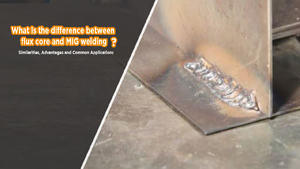
Flux core welding, also known as FCAW (Flux-Cored Arc Welding), is a welding technique that utilizes a tubular electrode filled with flux materials. The electrode is fed continuously through the welding gun, and as it melts, it creates a protective shield around the molten metal. This shield is formed by the flux materials, which release gases and form a slag, preventing oxidation and contamination during the welding process.
The flux core welding process is similar to MIG (Metal Inert Gas) welding, with the main difference being the presence of the flux-filled electrode. The flux inside the electrode not only acts as a shielding gas but also provides additional alloying elements to the weld metal, improving its strength and performance.
Flux core welding can be performed using either direct current (DC) or alternating current (AC), depending on the specific requirements of the project. DC polarity is commonly used for most applications, as it provides better control and stability during the welding process.

Photo by weldinginfo
This welding method can be done with or without shielding gas. In self-shielded flux core welding, the flux materials within the electrode produce the necessary shielding gases when they are heated and react with the atmosphere.
Gas-shielded flux core welding requires the use of an external shielding gas, such as carbon dioxide or a mixture of carbon dioxide and argon, to protect the weld from the surrounding air. Flux core welding offers several advantages over other welding methods, making it a popular choice in various industries. Let’s explore some of these benefits in the next section.
Advantages and disadvantages of flux core welding
Advantages of flux core welding
Higher deposition rates
Flux core welding has a higher deposition rate compared to other welding methods, such as stick welding or TIG welding. This means that more weld metal can be deposited in less time, increasing productivity and efficiency.
Deep penetration
Flux core welding is known for its deep penetration capabilities. The combination of the flux materials and the high heat produced by the arc allows the weld to penetrate deep into the base metal, resulting in stronger and more robust welds.
Versatility
Flux core welding can be used on a wide range of materials, including carbon steel, stainless steel, and even some non-ferrous metals. This versatility makes it suitable for various applications in industries such as construction, manufacturing, and automotive.
Cost-effective
Flux core welding offers cost savings compared to other welding methods. The higher deposition rates and increased productivity mean that less time and materials are required to complete a weld, resulting in reduced labor and material costs.
All-position welding
Flux core welding is capable of welding in all positions, including vertical and overhead. This makes it a versatile option for projects that require welding in challenging positions or tight spaces.
Disadvantages of flux core welding
Higher fume and spatter
Flux core welding produces more fumes and spatter compared to other welding methods. The flux materials used in the electrode can release more smoke and create more spatter, requiring proper ventilation and safety measures.
Limited to thicker materials
While flux core welding is excellent for welding thicker materials, it may not be as suitable for thin materials. The high heat and deep penetration can lead to excessive distortion or burn-through on thinner metals.
Surface cleaning and preparation
Flux core welding requires thorough cleaning and preparation of the base metal surface. Any contaminants, such as rust, paint, or oil, can negatively affect the quality of the weld, leading to defects or weak joints.
Overall, flux core welding offers numerous advantages that make it a preferred choice in many industries. Its ability to provide high deposition rates, deep penetration, and versatility make it an invaluable tool for various applications.
It is essential to consider the disadvantages, such as increased fumes and spatter, and the limitations when working with thinner materials.
Applications of flux core welding
Flux core welding finds extensive applications across several industries due to its unique characteristics and benefits. Let’s explore some of the key applications of this versatile welding method:
Construction and infrastructure
Flux core welding is widely used in the construction industry for welding structural steel components. It is the preferred method for joining steel beams, columns, and bridges, where strong and durable welds are crucial for maintaining structural integrity. The deep penetration and high deposition rates of flux core welding ensure that the welds can withstand heavy loads and provide long-lasting performance.
Shipbuilding
Flux core welding plays a vital role in shipbuilding, where welding is required for joining various steel plates and sections. The ability of flux core welding to handle thicker materials makes it suitable for the heavy-duty requirements of shipbuilding. It is used for welding hulls, decks, bulkheads, and other critical structural components, ensuring the strength and durability of the vessel.
Automotive manufacturing
Flux core welding is commonly used in the automotive industry for the fabrication of vehicle frames, chassis, and other structural components. The high deposition rates and deep penetration capabilities of flux core welding make it an efficient method for joining thick metal sheets, providing the necessary strength and rigidity to withstand the demands of automotive applications.
Oil and gas industries
Flux core welding finds extensive use in the oil and gas industries for welding pipelines, storage tanks, and other infrastructure components. The ability to handle thicker materials, combined with the high-quality welds produced by flux core welding, makes it ideal for the demanding conditions of this sector.
The deep penetration ensures proper fusion between the weld and the base metal, ensuring the integrity and longevity of the welded components.
Heavy machinery manufacturing
Flux core welding is popular in heavy machinery manufacturing, where the fabrication of robust and durable equipment is essential. It is used for welding components such as frames, booms, buckets, and other structural elements of heavy machinery. The high deposition rates and deep penetration capabilities optimize productivity and ensure that the welds can withstand the harsh conditions encountered in heavy machinery applications.
These are just a few examples of the wide-ranging applications of flux core welding. Its versatility, combined with the strength and reliability of the welds it produces, makes it a go-to option for various industries. Whether you are involved in construction, manufacturing, or infrastructure development, flux core welding provides a cost-effective solution with exceptional performance.
Flux core welding vs other welding methods
Flux core welding offers several advantages over other welding methods, such as stick welding (SMAW) and gas metal arc welding (GMAW/MIG). Let’s compare flux core welding with these methods to understand the differences and benefits.
Flux core welding vs stick welding (SMAW)
Stick welding, also known as shielded metal arc welding (SMAW), is a popular welding method that uses a consumable electrode coated with a flux. The flux coating provides the necessary shielding gases and flux materials to protect the weld from contaminants.
Advantages of flux core welding over stick welding:
Higher deposition rates
Flux core welding has higher deposition rates compared to stick welding. The continuous feeding of the electrode in flux core welding allows for faster welding speeds and increased productivity.
All-position welding
Flux core welding is capable of welding in all positions, including vertical and overhead. Stick welding, on the other hand, may be more challenging and less efficient when welding in these positions.
Deep penetration
Flux core welding provides deeper penetration than stick welding, resulting in stronger and more robust welds. This is particularly advantageous when welding thick materials or joining components that require high strength.
Advantages of stick welding over flux core welding:
Portability
Stick welding equipment is generally more portable and versatile compared to flux core welding equipment. Stick welding machines are compact and can be used in remote locations or areas with limited access to power.
Simplicity
Stick welding is relatively simpler to learn and operate compared to flux core welding. The electrode used in stick welding is easy to handle, and the technique does not require additional shielding gases or complex equipment setup.
Flux core welding vs gas metal arc welding (GMAW/MIG):
Gas metal arc welding (GMAW), commonly known as MIG (Metal Inert Gas) welding, is another widely used welding method that utilizes a continuous wire electrode and a shielding gas to protect the weld from the atmosphere.
Advantages of flux core welding over GMAW/MIG welding:
Higher deposition rates
Flux core welding generally has higher deposition rates compared to GMAW/MIG welding. The flux-filled electrode in flux core welding allows for faster welding speeds and increased productivity.
Deep penetration
Flux core welding provides deeper penetration than GMAW/MIG welding, resulting in stronger and more robust welds. This is particularly advantageous when welding thicker materials or joining components that require high strength.
Wind tolerance
Flux core welding is more tolerant of windy or drafty conditions compared to GMAW/MIG welding. The flux materials in the electrode create a protective shield that is less affected by external airflow, ensuring better weld quality in challenging environments.
Advantages of GMAW/MIG welding over flux core welding:
Cleaner welds
GMAW/MIG welding typically produces cleaner welds with minimal spatter compared to flux core welding. The absence of flux materials in the electrode reduces the risk of slag inclusion or other welding defects.
Better control
GMAW/MIG welding offers better control over the welding process, including arc length, wire feed speed, and voltage settings. This makes it suitable for applications that require precise control and delicate welds.
It is important to note that the choice between flux core welding, stick welding, or GMAW/MIG welding depends on various factors, including the specific requirements of the project, the materials being welded, and the skill level of the welder. Each welding method has its advantages and disadvantages, and selecting the most suitable method is crucial for achieving high-quality welds.
Safety precautions for flux core welding
Flux core welding, like any other welding process, requires proper safety precautions to ensure the well-being of the welder and those in the surrounding area. Here are some essential safety measures to follow when performing flux core welding:
Personal protective equipment (PPE)
Wear appropriate PPE, including a welding helmet with a proper shade lens, welding gloves, flame-resistant clothing, and safety shoes. The PPE should provide protection against sparks, UV radiation, and potential hazards associated with welding.
Proper ventilation
Ensure that the welding area is well-ventilated to disperse welding fumes and gases. Welding produces hazardous fumes, including metal oxides and shielding gases, which can be harmful if inhaled. Use exhaust fans, open doors, or work in outdoor areas whenever possible.
Fire safety
Keep a fire extinguisher nearby and be aware of potential fire hazards. Welding generates intense heat and sparks, which can ignite flammable materials. Clear the welding area of any combustible substances and, if necessary, use fire-resistant blankets or barriers to protect nearby objects.
Eye protection
Use a welding helmet with an appropriate shade lens to protect your eyes from the intense UV radiation produced during welding. Ensure that the helmet fits securely and covers the entire face to prevent exposure to harmful radiation.
Electrical safety
Ensure that the welding equipment is properly grounded and that electrical connections are secure. Avoid touching live electrical parts and cables with wet gloves or clothing to prevent electric shock.
Welding area safety
Keep the welding area clean and free from clutter to minimize tripping hazards. Secure cables and hoses to prevent accidental damage or entanglement. Inform others in the vicinity about the welding operation and establish a safe working distance to prevent accidental contact with the arc or hot weld metal.
Training and supervision
Obtain proper training and certification for flux core welding. Follow industry best practices and guidelines for safe welding procedures. If you are new to welding, seek guidance from experienced welders or instructors to ensure proper technique and safety.
Following these safety precautions will help minimize the risks associated with flux core welding and create a safe working environment. Always prioritize safety and take necessary steps to protect yourself and others during welding operations.
Choosing the right equipment for flux core welding
Choosing the right equipment is crucial for achieving optimal results in flux core welding. Here are some factors to consider when selecting equipment for your flux core welding projects:
Welding machine
Select a welding machine that is specifically designed for flux core welding. Look for machines that offer adjustable voltage and wire feed speed settings, as these allow for greater control over the welding process. Consider the power requirements and ensure that the machine is compatible with your power source.
Wire feeder
A wire feeder is an essential component of flux core welding equipment. Choose a wire feeder that is compatible with the welding machine and can accommodate the wire diameter and spool size required for your projects. Look for features such as adjustable wire feed speed and tension control for optimal performance.
Electrode wire
The choice of electrode wire will depend on the type of flux core welding you are performing. For self-shielded flux core welding, select a wire that is designed for self-shielding applications. For gas-shielded flux core welding, choose a wire that is compatible with the shielding gas you intend to use. Consider factors such as wire diameter, material composition, and flux type when selecting the electrode wire.
Shielding gas
If you are using gas-shielded flux core welding, you will need to choose the appropriate shielding gas. Common shielding gases used in flux core welding include carbon dioxide (CO2) and mixtures of carbon dioxide and argon. Consult the welding wire manufacturer’s recommendations to determine the optimal shielding gas for your specific welding application.
Welding gun
Select a welding gun that is compatible with your welding machine and wire feeder. Consider factors such as the length of the gun, the type of handle, and the availability of consumables such as contact tips and nozzles. Ergonomics and comfort are also important considerations, as they can affect the welder’s control and maneuverability during welding.
Accessories and consumables
Ensure that you have the necessary accessories and consumables for flux core welding. This may include contact tips, nozzles, drive rolls, and wire spools. Consider having spare parts on hand to minimize downtime in case of equipment failure or wear.
Final Thoughts
Flux core welding is a versatile and efficient welding technique that utilizes a tubular electrode filled with flux materials to create a protective shield around the molten metal. This method offers several advantages, including higher deposition rates, deep penetration capabilities, versatility in welding various materials, cost-effectiveness, and the ability to weld in all positions.
It is important to consider the disadvantages such as increased fumes and spatter, limitations with thinner materials, and the need for thorough surface cleaning and preparation. Flux core welding finds applications in industries such as construction, shipbuilding, automotive manufacturing, and the oil and gas industry, where its strength, durability, and efficiency are highly valued.