If you’ve ever tried TIG welding aluminum and ended up with a flickering, unstable arc, you’re not alone. I’ve burned through more tungstens than I’d like to admit before figuring out the trick. The truth is, welding aluminum plays by its own rules — and learning how to grind tungsten for TIG welding aluminum can make or break your weld quality.
Unlike steel, aluminum needs an AC current that constantly switches polarity, which means your tungsten tip takes a beating. The shape and finish of that tip decide whether your arc is smooth and controlled or dancing all over the puddle.
Once I learned how to grind and prep my tungsten specifically for aluminum, my welds went from grainy and inconsistent to shiny, even beads that actually looked professional.
In this guide, I’ll walk you through exactly how to grind tungsten for aluminum TIG — what shape to aim for, which grit works best, and a few small tricks I use to keep the arc stable and the tip lasting longer. Let’s get your tungsten dialed in so you can lay down those clean, stacked-dime aluminum welds every time.
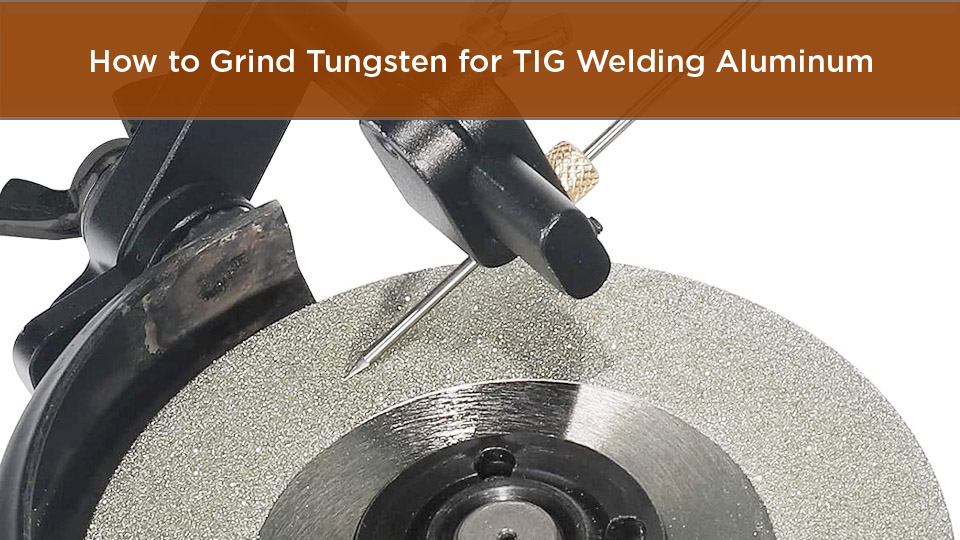
Image by ubuy
Why Proper Tungsten Prep is Crucial for Aluminum TIG Welding
Aluminum TIG is all about that AC waveform—high-frequency start, cleaning on the positive half-cycle, penetration on the negative. Your tungsten is the heart of the arc. Grind it wrong, and you’re fighting contamination from day one.
I’ve seen rookies grab a 1/16-inch red thoriated rod, pencil-point it like DC steel, and watch it melt into a blob on the first strike. Boom—unstable arc, ball too big, tungsten inclusions ruining the weld.
On the flip side, a properly tapered blue lanthanated holds that perfect little ball, giving you a wide, forgiving arc for aluminum’s oxide layer.
Real talk: Safety first. Dust from grinding—especially thoriated—carries thorium oxide. I always wear a respirator and grind outside or under a shop vac. In the US, OSHA pushes for dust control, and it’s non-negotiable if you’re welding daily.
Good prep means easier starts, longer electrode life, and welds that pass visual and bend tests every time.
Best Tungsten Electrodes for TIG Welding Aluminum
Not all tungstens are created equal. For aluminum, we’re talking AC, so skip the sharp DC points. Here’s my go-to lineup, based on thousands of amps run.
| Tungsten Type | Color | Diameter Reco | Pros | Cons | Best For |
|---|---|---|---|---|---|
| 2% Lanthanated | Gold/Blue | 3/32″ or 1/8″ | Versatile AC/DC, stable arc, long life, non-radioactive | Slightly pricier | Everyday aluminum, inverters like Miller Dynasty |
| Zirconiated | White/Brown | 1/16″-3/32″ | Great balling, clean arc, high amps | Shorter life on DC | Thick plate, transformer machines |
| Pure | Green | 1/8″ | Balls perfectly, cheap | Contaminates easy, spits on inverters | Old-school AC, thin sheet |
| LaYZr Tri-Mix | Purple/Gray | 3/32″ | Ultimate stability, low amps to high | Harder to find | Pros wanting one rod for all |
| 2% Ceriated | Gray | 1/16″ | Low-amp starts, thin material | Melts faster on thick | Hobbyists, small repairs |
My pick? 2% lanthanated every time. I’ve run it on everything from 5052 sheet to 1/4-inch 6061 castings. Stock up from suppliers like CyberWeld or local Airgas—aim for USA-made for consistency.
Pro insight: Match diameter to amps. Under 100A? 1/16″. 100-200A? 3/32″. Over 200? 1/8″. Too small, it overheats; too big, sloppy arc.
Should You Grind or Ball Your Tungsten for Aluminum TIG?
Here’s the debate I hear in every shop: Ball it first or grind and let it form naturally?
Short answer: Grind to a taper, then let AC ball it.
Pure traditionalists strike an arc on copper scrap at 200+ amps to melt a ball. Works, but risky—drop it in the puddle, and you’re contaminated.
My method: Grind a 22-30 degree taper with a dime-flat tip. Fire up on aluminum scrap. The AC balance (60-70% EN) naturally forms a 1.5x diameter ball. Stable, repeatable, no guesswork.
When to ball intentionally:
- Transformer machines (Syncrowave 200)—more DCEP, bigger balls.
- High-frequency issues—pre-ball smooths starts.
Last week, a buddy’s inverter Dynasty was spitting. Turned out his “balled” green was 3x too big. Reground to taper—boom, perfect.
Visual check: Ball bigger than rod? Reground. Pointy? More cleaning action needed.
Step-by-Step Guide: How to Grind Tungsten for Aluminum TIG
Grab your gear: Dedicated grinder, vice, safety glasses, respirator. Let’s do this.
Step 1: Cut to Length
Snip 6-8 inches with bolt cutters or Dremel. Clean end flat.
Step 2: Choose Your Grind Angle
For aluminum: 22.5° for wide puddle (thin sheet), 30° for general, 45° blunt for thick.
Hack: Use a CK Worldwide gauge or eyeball 2.5x diameter taper.
Step 3: Grind Longitudinally
- Tool: Bench grinder (fine wheel), belt sander (80-120 grit SiC), or CK Turbo Sharp.
- Hold tungsten parallel to wheel—never sideways! Side grind = helical grooves = wandering arc.
- Light pressure, spin rod slowly. Aim for smooth silver finish.
- Flatten tip: Dime width (10% diameter).
Time: 30 seconds per side.
Step 4: Inspect and Clean
Mirror shine? Good. Dull or grooves? Redo. Wipe with acetone.
Step 5: Test Ball on Scrap
Strike arc at 150A. Adjust AC balance if needed. Perfect ball = ready.
Video in your head: Rod spins in drill chuck against belt—effortless pro point.
Common fix: Overheated (blue)? More post-flow argon.
Best Tools and Grinders for Sharpening Tungsten
Don’t skimp—contaminated grinder ruins rods.
- Budget ($20): 4.5″ angle grinder with diamond wheel + guide. But: Dusty, inconsistent.
- Shop Standard ($100): CK Worldwide Turbo Sharp—adjustable angles, vac port, 5-stars.
- Pro ($50): Belt/disc combo (Harbor Freight SiC belts).
- Luxury: CK CK Flex Head—portable beast.
My setup: Eastwood bench grinder dedicated to tungsten. Shop vac hose attached. Zero contamination.
Tip: Label it “TUNGSTEN ONLY.” Steel grinders cross-contaminate.
Machine Settings for Flawless TIG Aluminum Welds
Tungsten’s only half the battle. Dial in your Miller, Lincoln, or ESAB.
| Material Thickness | Amps | Gas Flow (Argon) | AC Balance | Frequency | Cup Size |
|---|---|---|---|---|---|
| 1/16″ | 60-90 | 15-20 CFH | 70% EN | 100-120 Hz | #5 Gas Lens |
| 1/8″ | 100-140 | 20-25 CFH | 65% EN | 90-110 Hz | #6 |
| 1/4″ | 160-220 | 25-30 CFH | 60% EN | 80-100 Hz | #7/#8 |
- Post-flow: 15-20 sec (prevents oxidation).
- HF: Always on.
- Pedal: Feather amps—start high, drop for control.
Student last month cranked 80% balance—dirty welds. Dropped to 65%—mirror finish.
Filler: 4043 for most, 5356 for strength. Clean with stainless brush!
Joint Prep and Filler Tips for Aluminum Success
Grind tungsten? Now prep the metal.
- Clean: Acetone wipe, then dedicated Al brush. Oxide removers like Aqua Clean.
- Joint: 60° bevel, 1/16″ land for butt welds.
- Fit-up: Tight—no gaps over 1/8″.
- Tack: HF start, minimal heat.
Mistake: Mill scale left? Porosity city.
Common Tungsten Grinding Mistakes and Quick Fixes
- Side Grinding: Arc wanders. Fix: Longitudinal only.
- Too Sharp: Balls uneven. Fix: Blunt taper.
- Contaminated Grinder: Inclusions. Fix: Dedicated tool.
- Over-Balling: Drops off. Fix: Reground every 10-20 min.
- Skipping Safety: Dust lungs. Fix: Respirator + vac.
I’ve fixed all these—learn from my scars.
Advanced Shop Tips for Pro-Level Aluminum TIG
- Store Right: Plastic tubes, upright.
- Extend Life: Gas lens diffuser—20% less flow needed.
- High-Freq Hack: Clean contacts yearly.
- Thick Plate: Pre-heat to 200°F.
- DIY Frame: Use 4043, weave for width.
Personal story: Built a 20-ft trailer—lanthanated taper, 65% balance. Passed DOT inspection first try.
Conclusion
There you have it—how to grind tungsten for TIG welding aluminum from cut to arc. Key takeaways: Pick lanthanated, taper grind longitudinally, let AC ball it, dial 65% balance. You’re now armed to lay beads that shine, save time, and build pride-worthy projects.
Before every session, strike on scrap. Tweak one variable—watch the magic. Hit that pedal confidently. Your welds are waiting.
FAQ
What angle should I grind tungsten for aluminum TIG?
Aim for 22-30 degrees taper with a small flat. Too sharp melts; too blunt lacks focus.
Can I use thoriated tungsten for aluminum?
Sure, but lanthanated’s safer and better on inverters. Grind with dust control.
How do I know if my tungsten ball is too big?
If over 1.5x diameter or wobbly arc—reground immediately.
What’s the best grinder for beginners?
CK Turbo Sharp—foolproof angles, vac-ready. Under $150.
Why does my tungsten keep contaminating aluminum welds?
Side-ground or dirty tool. Switch to dedicated longitudinal grind.