Dialing in a MIG weld isn’t always just about voltage and wire speed. There are times when the arc feels too harsh, spatter is everywhere, and the bead just won’t smooth out no matter how steady your hand is. That’s usually the moment you start digging into settings like How to Set Inductance on a MIG Welder and realize how much control you’ve been leaving on the table.
In real shop work, inductance can completely change how your arc behaves. Too low, and the arc gets aggressive with more spatter. Too high, and it turns soft and sluggish, making it harder to control penetration. I’ve had jobs where a small tweak to inductance made the difference between constant cleanup and a clean, controlled weld right off the gun.
That’s why this setting matters more than most beginners realize. Getting it right can improve bead appearance, reduce spatter, and make your welding feel smoother and more predictable.
I’ll walk you through how to set inductance step by step, what changes to look for, and how to fine-tune it based on your material and position.
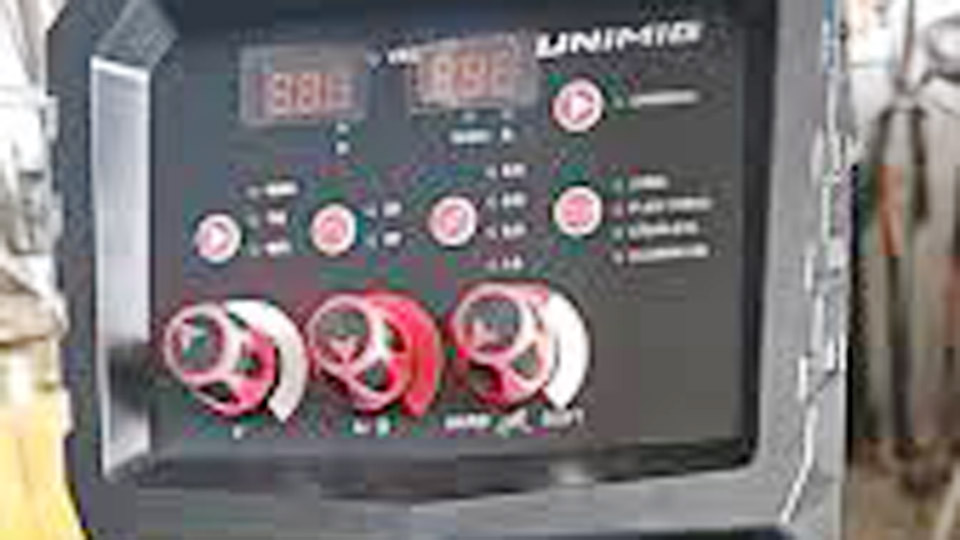
Image by UNIMIG Welders Club
What Is Inductance in MIG Welding and How Does It Actually Work?
Inductance controls the rate at which welding current rises after the wire shorts into the molten puddle. In short-circuit MIG (the mode most hobbyists and many pros use for thinner materials or out-of-position work), the wire touches the pool, current spikes to pinch off a droplet, then the arc reignites.
Inductance slows or speeds that current rise by creating a magnetic field that opposes sudden changes in current flow.
Low inductance lets current ramp up quickly. You get a crisp, aggressive arc with higher short-circuit frequency. This produces a more “pinpoint” bead but often comes with more spatter and a puddle that doesn’t wet out as nicely at the edges.
High inductance slows the current rise. Each short-circuit cycle lasts longer, giving the puddle more time to absorb heat and flow. The arc softens, spatter drops, and the bead tends to be flatter and wider with better toe wetting.
Too high, though, and the arc can get mushy, lose drive, or cause the wire to stub into the pool without enough heat to clear properly.
Think of it like the difference between snapping your fingers quickly versus letting a slow, controlled push. The machine still delivers the same average amperage set by wire speed, but the “shape” of each current pulse changes.
Many US machines like certain Miller, Lincoln, or Hobart models offer adjustable inductance, often as a percentage (0-100%) or a 1-10 dial. Cheaper or older transformer machines usually fix it internally at a compromise setting.
Why Inductance Matters in Real Shop Situations
In practice, inductance directly impacts safety, quality, and cost. High spatter from low inductance means more flying sparks — a fire hazard in shops with flammables nearby and more post-weld cleanup. Poor wetting leads to lack of fusion or cold laps, which can fail inspection or cause cracks under load on repair jobs.
On thin material (like 18-20 gauge auto sheet), wrong settings cause burn-through or distortion. On thicker plate, inadequate wetting leaves undercut or convex beads that need extra grinding before painting or powder coating.
In production or fab work, dialing inductance right can let you run cheaper 100% CO2 gas instead of 75/25 mixes while keeping spatter manageable, saving money over time.
I’ve seen beginners chase “perfect” voltage and wire speed for hours, never touching inductance, only to get frustrated with a harsh arc. Pros know it as the final tweak after joint prep and gas flow are solid.
How to Set Inductance on a MIG Welder: Step-by-Step Guide
Start with the basics dialed in before touching inductance. Clean the metal thoroughly — mill scale, rust, oil, or paint will ruin any setting. Use a grinder or wire wheel, then wipe with acetone or a dedicated weld cleaner.
Choose wire and gas
For mild steel, .030″ or .035″ ER70S-6 wire is versatile. Pair with 75/25 Ar/CO2 for most work or straight CO2 if your machine and settings allow it. Stainless or aluminum need different wire and gas — more on that later.
Set material thickness-based starting points
Use the rule of thumb — roughly 1 amp per 0.001″ of thickness. For .030″ wire on mild steel, common ranges are 40-145 amps depending on thickness. Consult your machine’s chart or door sticker for voltage and wire speed (IPM) baselines.
Establish voltage and wire speed first
Set wire speed to control amperage/heat input and penetration. Voltage sets arc length and bead width. Run a test bead on scrap of the same material and thickness. Listen for a steady “frying bacon” or “sizzling” sound — not a crackling explosion or a humming mush.
Adjust inductance
Begin at mid-range — around 30-50% or 4-6 on a 1-10 scale. Weld another test pass.
- If the arc feels harsh, spatter is flying everywhere, and the bead is narrow with poor wetting → increase inductance.
- If the arc sounds too soft, the puddle is overly fluid, you get stubbing or lack of penetration → decrease inductance.
Fine-tune while watching the puddle
Push or pull technique affects results too. I usually push for better shielding on flat work. High inductance often pairs well with a slight push angle for smoother flow.
Make small changes — 5-10% at a time — and run short beads. Note the settings on tape inside the machine cover or in a shop notebook. Conditions like electrode stick-out (keep 3/8″ to 1/2″), travel speed, and joint type all interact.
Always wear proper PPE: helmet with good lens, gloves, jacket, and boots. Work in a well-ventilated area or use fume extraction — MIG fumes aren’t forgiving.
Inductance Settings for Different Materials and Thicknesses
Mild Steel
- Thin (under 1/8″): Start lower inductance for a crisper arc that minimizes burn-through. Around 20-40% helps control heat while maintaining good fusion.
- Medium to thick (1/8″ and up): Higher inductance (50-80% or more) improves wetting on fillets or butt joints, especially with 100% CO2. The puddle flows better into the toes without excessive convexity.
Stainless Steel
Stainless puddles are sluggish and don’t wet as easily. Higher inductance softens the arc and helps the bead spread nicely without undercut. I often run 60-90% on .035″ wire with tri-mix gas. Watch for sugar or oxidation — proper gas coverage is critical.
Aluminum
Most aluminum MIG is done in spray transfer, where inductance has less noticeable effect. But in short-circuit mode on thin aluminum, moderate to higher settings can help control the hot, fluid puddle and reduce burn-through. Use 100% argon and push technique aggressively.
Real-world example
Repairing a mild steel truck frame (1/4″ material) with .035″ wire. Base settings: 19-20 volts, 250-300 IPM wire speed. At low inductance the arc was snappy but left spatter everywhere and the bead sat tall. Bumping to 70% inductance quieted the arc, flattened the profile, and the toes tied in beautifully with almost no cleanup.
Common Mistakes Beginners and Pros Make with Inductance
- Ignoring it completely and blaming voltage or wire speed for a bad arc.
- Setting it too high on thin material, causing the wire to stub or the puddle to run away before freezing.
- Forgetting that changing wire diameter or gas mix requires re-checking inductance — .045″ wire behaves differently than .030″.
- Not cleaning the contact tip or gun liner, which mimics bad inductance by causing erratic feeding.
- Running excessive stick-out, which drops effective voltage and makes inductance adjustments feel ineffective.
Pros sometimes over-rely on high inductance for “pretty” beads without checking penetration. A beautiful surface bead with no root fusion is worthless on a load-bearing part.
Comparison: Low vs. High Inductance in Practice
Here’s a quick table based on shop-tested observations with .035″ mild steel wire and 75/25 gas:
| Aspect | Low Inductance (0-30%) | High Inductance (60-100%) |
|---|---|---|
| Arc Sound | Crisp, crackling, higher frequency shorts | Softer, humming, longer arc time |
| Spatter | Higher, more cleanup | Significantly lower |
| Puddle Behavior | Stiffer, narrower bead, less wetting | Fluid, wider/flatter bead, better toe fusion |
| Best For | Thin material, root passes, vertical-up where control matters | Thicker material, flat/horizontal fillets, appearance-critical welds |
| Risks | Excessive spatter, undercut | Stubbing if too high, potential lack of penetration on thick joints |
| Typical Travel Speed | Faster possible | Slightly slower for optimal flow |
Adjust based on your machine. Some inverters simulate inductance digitally and respond differently than older transformer units.
Joint Preparation and Other Settings That Affect Inductance Results
Inductance can’t fix bad prep. Bevel heavy plates for better access and penetration. Maintain consistent gap — too wide and even perfect inductance won’t bridge it without burn-through or lack of fusion.
Amperage ranges matter: For .030″ wire, 40-145 amps covers most light fab. .035″ handles 50-180 amps comfortably. Electrode (wire) diameter directly influences current density and how inductance feels. Smaller wire needs higher speed for the same amps and often responds better to moderate inductance.
Shielding gas flow: 15-25 CFH is standard. Too low and you get porosity regardless of inductance. Too high and you create turbulence that sucks in air.
Position matters too. Out-of-position (vertical or overhead) often benefits from slightly lower inductance for a faster-freezing puddle that won’t sag.
Safety Considerations Every Welder Should Remember
Inductance adjustments don’t change the core hazards. Always ground properly to avoid stray current. Check cables for damage — inductance works through the entire circuit. Hot work permits in industrial settings, fire watches, and proper ventilation remain non-negotiable. Fumes from galvanized or coated metals are especially toxic.
If you’re a student or new in the trade, practice on scrap first. Write down successful combinations for common jobs — thickness, wire type, gas, voltage, WFS, inductance, and travel speed. That notebook becomes gold after a few months.
When to Use Other Transfer Modes or Advanced Controls
Once you master short-circuit with inductance, experiment with spray or pulsed MIG on machines that offer it. Spray transfer (higher voltage/wire speed) is less dependent on inductance but still benefits from proper base settings.
Some modern US machines have synergic modes or preset programs that automatically suggest inductance — use them as starting points, then tweak.
Slope control (on some industrial machines) is related but different from inductance. Slope limits maximum short-circuit current, while inductance controls the rate of rise. Many newer inverters combine or simulate both.
Practical Tips from Years on the Floor
- Test on the same material and thickness you’ll weld for real. Scrap from the job is best.
- Listen more than you look at first — the arc sound tells you a lot about inductance.
- For open-root welds needing full penetration from one side, higher inductance often helps by keeping the arc on longer.
- When running very low wire speeds (for thin stuff), higher inductance can stabilize the arc surprisingly well.
- Keep your gun angled consistently. A 10-15° push usually works with higher inductance settings.
- Clean the nozzle and tip frequently. Spatter buildup changes arc characteristics fast.
On a recent fab job building steel brackets for equipment, I had to weld 3/16″ to 1/4″ plate in the flat. Starting at 50% inductance gave okay results, but bumping to 75% with a slight voltage increase produced beads that needed almost zero grinding before coating. The time saved paid for the gas and wire used in testing.
Taking Your MIG Welding to the Next Level
You now understand that setting inductance isn’t guesswork — it’s a deliberate adjustment to how current behaves during metal transfer. Combine it with solid joint prep, correct amperage ranges for your wire diameter, proper gas and technique, and you’ll produce consistent, strong welds with minimal defects.
Treat every machine like it has its own personality. What works at 50% on your Miller might need 70% on a Lincoln of similar specs. Spend an afternoon with scrap of various thicknesses, document everything, and build your own reference chart. That hands-on data beats any generic chart when the real job is on the table and the clock is running.
Mastering how to set inductance on a MIG welder gives you one more tool for cleaner, stronger welds in the real world. Practice it consistently and you’ll notice the difference in every bead you lay down.
FAQ
Does every MIG welder have adjustable inductance?
No. Many entry-level and older transformer machines have it fixed internally at a setting that works for general use. Higher-end or inverter-based US machines (like certain Miller or Lincoln models) offer adjustable controls, often as a percentage or dial. If yours doesn’t, focus on optimizing voltage, wire speed, and technique instead.
How do I know if my inductance is too low or too high?
Too low: loud crackling arc, lots of spatter, narrow bead with poor wetting at the toes. Too high: soft or mushy arc sound, possible stubbing, overly fluid puddle that’s hard to control, or insufficient penetration. Run test beads and adjust in small increments while listening and watching the puddle.
Can inductance settings help when using 100% CO2 gas?
Yes. Straight CO2 often produces more spatter than mixes, but increasing inductance softens the arc and improves wetting, letting you run it more cleanly on thicker material. It’s not a complete fix for bad settings or poor prep, but it helps noticeably and can save on gas costs.
Does changing inductance affect weld penetration?
Indirectly. It doesn’t change average amperage much, but it influences heat distribution and puddle fluidity. Higher settings can improve fusion at the toes without increasing overall heat input dramatically. Always verify penetration with a break test or macro etch on critical parts.
What’s a good starting inductance for general mild steel work?
Try 30-50% (or mid-dial) as a baseline after setting voltage and wire speed. From there, go higher for better appearance and wetting on flat work or thicker metal, lower for thin material or when you need a stiffer puddle in position. Test and adjust — there’s no universal perfect number.