MIG welding is popular for its efficiency and relatively user-friendly setup. Even the best welders encounter issues. If you’re finding your welds aren’t as clean or strong as they should be, you’re not alone. I’ve spent a lot of time learning about these common MIG welding problems and more importantly, how to fix them. Let’s go over some typical issues you might face in MIG welding and the practical ways to get past them.

Image by unimig
MIG Welding Problems
Before we dive into specific issues, it helps to understand why problems happen. MIG welding combines a continuous wire feed and shielding gas to create clean, strong welds. If something goes wrong with either the wire feed or the shielding gas, your weld quality can drop quickly. Other times, issues stem from improper machine settings, poor technique, or material problems.
Excessive Spatter: Messy Side of MIG Welding
One of the first issues many welders notice is excessive spatter. Spatter occurs when small molten metal particles are ejected from the weld puddle, sticking to nearby surfaces. While some spatter is normal, too much can make a weld look unprofessional and requires more cleanup.
Causes of Excessive Spatter
Excessive spatter usually comes down to one of these problems:
High Voltage or Amperage Settings: When voltage or amperage is set too high, it can lead to an unstable arc, creating more spatter.
Improper Wire Feed Speed: If the wire feed speed is too fast or slow, it disrupts the arc’s stability, producing more spatter.
Incorrect Shielding Gas Mix: If the gas mix has too much oxygen or carbon dioxide, it can cause more spatter.
How to Fix Excessive Spatter
To reduce spatter, start by adjusting your voltage and amperage settings. If you’re unsure, try consulting the machine’s settings chart as a baseline.
Check your wire feed speed. A stable, consistent arc will help minimize spatter. Finally, verify you’re using the correct shielding gas mix; for most mild steel projects, a 75% argon/25% CO₂ mix works well.
Porosity: The Problem of Air Bubbles
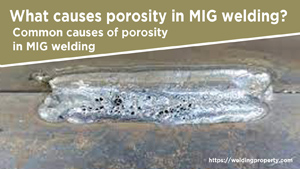
Porosity is another common MIG welding issue that weakens your welds. Porosity happens when small air bubbles get trapped inside the weld, creating holes and weakening the weld’s structural integrity.
Causes of Porosity
Porosity generally stems from:
- Improper Shielding Gas Flow: If the shielding gas flow is too low or too high, it can cause turbulence, allowing air to enter the weld puddle.
- Contaminated Base Metal: Oils, rust, or paint on the metal can release gases when heated, causing porosity.
- Drafty Work Area: Air drafts can blow away your shielding gas, letting oxygen into the weld.
How to Fix Porosity
The first step to fix porosity is to check your shielding gas flow rate. For most MIG welds, 20-25 cubic feet per hour (CFH) should be sufficient.
Also, make sure your base metal is clean before welding. Use a wire brush or grinder to remove any dirt, rust, or paint. Finally, try to shield your workspace from drafts by setting up barriers or welding in a less windy area.
Lack of Fusion: When Welds Don’t Stick
Lack of fusion means the weld bead doesn’t properly join the base metal, which can lead to weak welds that may crack or break under stress. It’s a critical problem because it affects the strength and durability of your weld.
Causes of Lack of Fusion
Lack of fusion is commonly caused by:
- Low Heat Input: If your machine settings are too low, the arc won’t fully melt the base metal, preventing good fusion.
- Poor Technique: If you’re moving the torch too quickly or not angling it correctly, it can result in a lack of fusion.
- Dirty or Oxidized Metal: Impurities on the surface of the metal can act as a barrier, preventing fusion.
How to Fix Lack of Fusion
To achieve good fusion, start by increasing your voltage or amperage settings, which will increase the heat input. Make sure you’re holding the torch at a slight angle and not moving too quickly. Also, clean your base metal thoroughly before starting. When in doubt, a little extra time cleaning the metal can make a world of difference in weld quality.
Burn-Through: Too Much Heat
Burn-through happens when the arc melts right through the metal, creating holes in the weld. This can be frustrating, especially when working with thinner materials.
Causes of Burn-Through
Burn-through typically occurs due to:
- Excessive Heat Input: If your voltage or amperage settings are too high, it can cause the metal to burn through.
- Thin Base Metal: Thinner metals are more prone to burn-through.
- Improper Technique: Holding the torch too close to the weld puddle or lingering too long in one spot can also cause burn-through.
How to Fix Burn-Through
Start by lowering your voltage or amperage settings. If you’re welding thin metal, use a pulsing technique where you move in short bursts rather than a continuous arc. Try using a backing bar, like copper, to absorb excess heat. Copper is great for this purpose because it dissipates heat quickly, reducing the risk of burn-through.
Wire Feed Issues: Keeping Things Moving
Wire feed issues can cause inconsistent welds and interruptions. Whether it’s a wire that won’t feed, jams in the liner, or erratic feeding, these problems can disrupt your weld quality.
Causes of Wire Feed Issues
Common causes include:
- Incorrect Tension on the Feed Rollers: Too much or too little tension can prevent the wire from feeding smoothly.
- Dirty or Damaged Liner: A dirty or kinked liner can cause friction, disrupting wire feed.
- Incorrect Wire Spool Size: Using a spool that’s too big or small for the machine can also cause feed problems.
How to Fix Wire Feed Issues
Start by adjusting the tension on the feed rollers. The goal is to apply enough pressure for smooth feeding without crushing the wire.
Check your liner for any kinks or buildup and clean or replace it if necessary. Lastly, make sure you’re using the correct spool size for your machine, as mismatched spools can lead to feeding problems.
Comparison of Common MIG Welding Issues and Fixes
Here’s a quick comparison table summarizing each of these MIG welding issues along with their causes and solutions:
| MIG Welding Issue | Common Causes | Solution |
|---|---|---|
| Excessive Spatter | High voltage, fast wire feed | Adjust voltage, check wire speed, correct gas mix |
| Porosity | Poor gas flow, contaminated metal | Check gas flow, clean metal, reduce drafts |
| Lack of Fusion | Low heat, poor technique | Increase heat, adjust technique, clean metal |
| Burn-Through | Excessive heat, thin metal | Lower heat, pulse technique, use copper backing |
| Wire Feed Issues | Roller tension, dirty liner | Adjust tension, clean/replace liner, correct spool |
Preventing MIG Welding Issues
While it’s great to know how to fix these issues, it’s even better to prevent them from happening in the first place. Here are a few tips that can help:
Set Up Properly: Take the time to ensure your machine settings are correct and suitable for the material you’re working with.
Practice Technique: Good technique goes a long way. Pay attention to your torch angle, travel speed, and distance from the metal.
Maintain Equipment: Regularly clean your gun liner, check gas hoses, and replace worn-out parts.
Prepare the Base Metal: Clean the metal thoroughly and, if needed, use a grinding tool to remove impurities.
Final Thoughts on MIG Welding Issues
Like any skill, mastering MIG welding takes time, patience, and a willingness to learn from your mistakes. The good news is that once you know what to watch out for, fixing common MIG welding issues becomes a lot easier.
Setting up your machine properly, using clean materials, and practicing good technique can prevent most issues before they even start.